
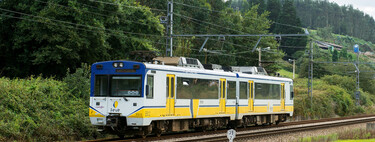
CAF Secures “Contract of the Century” While Facing Legal Challenges
It has been referred to as “the contract of the century,” and for good reason. CAF, the renowned Spanish rail giant, has emerged as the preferred bidder for a monumental contract aimed at revitalizing the Belgian SNCB’s conventional train fleet. This contract could potentially be valued at a staggering 3.4 billion euros. However, the deal is currently shrouded in uncertainty following objections raised by French competitor Alstom .
The pre-agreement between the Belgian SNCB and CAF was confirmed just weeks ago. According to an official statement, the SNCB’s Board of Directors acknowledged the State Council’s resolution and designated CAF as the preferred bidder for the development, manufacture, and supply of AM30 trains . The initial base commitment involves 1.695 billion euros for units accommodating 54,000 places .
The Board of Directors of NMBS (SNCB-National Society of the Belgian Railways) has confirmed CAF as the preferred bidder for the contract aimed at modernizing the Belgian rail fleet.
<img alt="Renfe wanted to renew his fleet in Cantabria and Asturias." width="375" height="142" src="https://i.blogs.es/d505ab/50204068577_e46bf0d43f_k/375_142.jpeg"/>However, the French company Alstom is contesting this decision, asserting that their proposal was not only superior but also €107 million cheaper than the one offered by CAF. Alstom argues that their plan utilizes local Belgian labor, a factor they believe should significantly influence the SNCB’s decision.
Reportedly, Alstom has appealed to the Belgian Council to halt the agreement, banking on the claim that their offer outmatches CAF’s in terms of both cost efficiency and local employment commitments. This appeal underscores a growing friction between French and Spanish interests in the rail industry.
<img alt="Spain has a rail giant in the shadows." width="375" height="142" src="https://i.blogs.es/19914b/flytoget_oaris_auf_dem_eisenbahnversuchsring_velim_-cz-/375_142.jpeg"/>Add to this the transparency issues that have marred previous attempts to award the contract. Earlier this year, the Belgian Council suspended the awarding process, prompting the SNCB to reevaluate their approach. Ultimately, SNCB chose CAF once again, citing compliance with European regulations that preclude local preference in public procurement.
It’s worth noting that the selection of CAF has not come without its controversies. The Belgian courts have requested assurances that CAF’s operations adhere to international law and human rights standards. This request stems from CAF’s involvement in a light rail project in Jerusalem , which extends into Palestinian territories.
The engagement of CAF in this project has raised eyebrows, with organizations like Amnesty International and various advocacy groups calling on CAF to withdraw from the Israeli endeavor. They argue that participation in such a project is not aligned with ethical business practices.
<img alt="A hydrogen train has crossed Spain." width="375" height="142" src="https://i.blogs.es/a34513/h2-tren/375_142.jpeg"/>The Belgian Mobility and Climate Minister has attempted to downplay the situation, emphasizing that the country maintains diplomatic and economic ties with Israel and highlighting the broader economic implications of the contract. He argues that while initial costs are a significant consideration, the long-term savings generated from energy-efficient CAF trains warrant attention as well. Reports suggest that the CAF trains will provide a 4% improvement over Alstom’s offerings in terms of energy consumption and operational costs.
The ongoing conflict between these two rail giants underscores how competitive the rail industry has become, particularly within the context of stringent environmental regulations and growing public scrutiny over human rights issues. As this saga unfolds, the ultimate outcome may hold substantial implications for the future of rail transport in Belgium and beyond.
As both companies continue to vie for this lucrative opportunity, the future of Belgian railways hangs in a delicate balance. Whether CAF can sustain its position as the preferred bidder will depend not only on its ability to navigate legal challenges but also on public sentiment surrounding its international operations and commitments to human rights.
While the situation remains fluid, one thing is clear: the “contract of the century” is not just a financial endeavor but a multifaceted issue involving legal, economic, and ethical dimensions.
Photo | CAF
In Xataka | “Whoever wants to come, to invest”: Ouigo wanted to enter the Madrid-Galicia bird but it already sees it impossible before 2030