
The Surprising Alliance: Carles Puigdemont’s Stance on Immigration Competencies in Catalonia
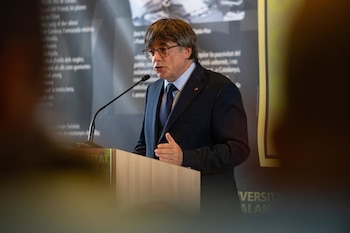
The leader of Junts and former President of the Generaliat , Carles Puigdemont, recently expressed surprise at the political alignment of the left-wing party Podemos with the far-right party Vox regarding immigration matters. Specifically, he criticized their opposition to transferring competencies in immigration to Catalonia during his keynote address entitled ‘Lliçó Fabra: The Catalan and European Filling.’ The event took place at the Catalan University d’Estiu (UCE) in Prada de Conflent , France, emphasizing his views on Catalonia’s immigration policies .
Puigdemont argued that the hub of any immigration policy should be the Catalan Parliament , where discussions could take place regarding the normative capacity and effective management of immigration issues. He described immigration as an enormously complex subject that cannot be resolved swiftly, although he emphasized the importance of tackling it. “It cannot be expected that people fleeing wars, poverty, or persecution can integrate into a society without any help,” Puigdemont lamented, advocating for greater competence and responsibility in addressing these challenges.
Why Competencies in Immigration Matter
The transfer of immigration competencies is not merely a bureaucratic maneuver but rather a fundamental shift in how Catalonia could approach the integration of new populations. Puigdemont contended that the ongoing opposition from parties like PP , Vox , and even Podemos hinders Catalonia’s ability to craft policies beneficial to its society. He highlighted that denying such competencies effectively restricts local government’s capacity to develop a thoughtful and human-centered immigration strategy .
The ramifications of immigration extend beyond just numbers and statistics; they involve the social fabric and integration of diverse communities. Puigdemont’s assertion that Catalonia has lost its “capacity for generational relief” due to declining language speakers underscores the pressing need for a carefully structured immigration model. Without a constructively managed influx of migrants, the survival of the Catalan language and culture is threatened.
Language and Identity: The Cultural Challenge
Puigdemont’s warnings about the loss of Catalan speakers highlight a crucial aspect of any immigration policy: the potential for enriching the cultural landscape. He noted that “without immigration, Catalonia risks an unstoppable loss of Catalan speakers.” The relationship between immigration and language is a vital consideration, as every new individual brings a wealth of culture , ideas , and experiences that enrich the host society.
Moreover, the role of language in successful integration cannot be understated. Puigdemont believes that facilitating language learning and cultural assimilation is essential not only for the immigrants themselves but also for the local populace, fostering a cohesive community. His stance presents an opportunity for a more inclusive Catalonia , one that embraces diversity rather than shunning it.
Political Repercussions and Future Directions
The political landscape in Catalonia is heavily influenced by the ongoing debates surrounding immigration. Puigdemont’s comments illustrate a growing divide among parties that typically consider themselves part of the left-wing spectrum . The surprising alignment of Podemos with Vox raises questions about the future of Catalan politics and the potential for collaboration among traditional rivals. This shift indicates a fundamental challenge for those aiming to reshape immigration policies, as navigating such a politically charged atmosphere requires strategic diplomacy.
As the dialogue around immigration intensifies, Puigdemont’s advocacy for a Catalan-centric immigration framework may resonate with constituents longing for a more proactive approach. Only time will tell how effectively these conversations translate into action. The former president’s dedication to forming alliances based on a shared immigrant narrative might catalyze a broader cultural shift in how Catalonia manages its future demographics.
In conclusion, Carles Puigdemont’s recent remarks on Catalonia’s immigration competencies have ignited meaningful discussions around the complex interplay of politics, culture, and human rights. The direction Catalonia chooses to take will significantly impact both the immigrants seeking refuge and the local populace striving to preserve its unique identity. As the conversation evolves, it will be essential to balance compassion with pragmatic policies that foster inclusivity and cultural richness in Catalonia.