

The Devastating Retreat of Napoleon’s Grande Armée in 1812
In the year 1812 , a pivotal event unfolded that would forever alter the course of military history. The invasion of Russia by Napoleon Bonaparte culminated in one of the most significant military tragedies: the retreat of the renowned Grande Armée . Comprised of over 600,000 soldiers , this formidable force faced a catastrophic retreat marked by hunger , cold , and disease , collectively claiming the lives of hundreds of thousands of soldiers.
Or so we thought.
Health Catastrophe. In the summer of 1812, Napoleon amassed his greatest army to launch a campaign against Russia . His audacious strategy faced a formidable opponent in Tsar Alexander I , who implemented a scorched-earth policy that involved the evacuation of Moscow and the depriving of French troops of vital supplies. This strategy effectively forced Napoleon’s army to fall back to Poland during a fiercely harsh winter.
From October to December of that year, more than 300,000 men perished , primarily due to starvation, the extreme cold, and a wave of diseases that ravaged an already weakened force. For years, accounts from survivors and early scientific evaluations indicated that typhus and trench fever were to blame, perpetuating the narrative that poor sanitation sealed the fate of the Grande Armée.
The New Findings. Research conducted at the Pasteur Institute in Paris has provided a more nuanced understanding of this catastrophic event, utilizing metagenomic techniques that identify genetic material from pathogens in human remains. A team led by Nicolás Rascovan analyzed thirteen soldiers buried in Vilna (present-day Lithuania), which was the epicenter of deaths during the withdrawal.
The findings revealed no traces of typhus or trench fever but instead identified the presence of Salmonella Enterica , the causative agent of paratyphoid fever , and Borrelia recurrentis , a bacterium transmitted by lice responsible for recurring fever . While these diseases are not always deadly, they substantially weakened soldiers already beleaguered by extreme physical exertion, severe food shortages, and freezing temperatures. In such harsh conditions, even minor ailments could become lethal.
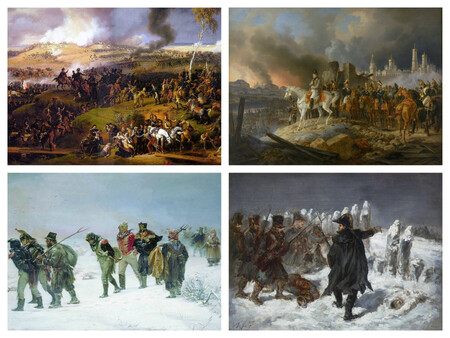
Napoleonic Invasion of Russia
Lethal Combination. This new paradigm suggests that the defeat of the Grande Armée cannot be attributed solely to a single infectious agent. Instead, it was a devastating combination of physical exhaustion , starvation , extreme cold , and a host of diseases that collectively undermined the health of tens of thousands of men. Paratyphoid fever would have inflicted diarrhea and dehydration , while recurring fever caused cyclical episodes of high temperature that further weakened the soldiers.
Compounding these challenges were poor sanitation , rampant lice infestations , and inadequate medical care amidst the chaos of retreat. This created a perfect storm for disease to spread, resulting in a health catastrophe that overshadowed combat-related deaths and precipitated the campaign’s collapse.
Historical and Scientific Implications. Experts caution that the recovered DNA amounts are limited, and thus the findings are not entirely definitive. However, this study marks a significant advancement in utilizing modern scientific tools to reinterpret historical events.
It highlights the potential of metagenomics to trace ancient diseases and offers insightful perspectives on how biological factors, rather than just military strategies, can elucidate the fall of entire armies and populations. Researchers indicate that they could extend these methodologies to study communities in America and Australia following European contact, where historical biases obscure the true impact of epidemics .

The Defeat That Sealed the Empire. The Tragedy of 1812 remains one of the most scrutinized turning points in military history. The disintegration of the Grande Armée halted Napoleonic expansion and initiated a counter-offensive by his enemies, heralding the decline of his empire. Traditionally recounted through the lens of battles and strategic choices, new evidence illustrates that biology and disease played a fundamental role in this debacle.
The retreat from Russia, thus, represents both a military disaster and a health crisis, with the DNA of a few soldiers’ remains recovered from Vilna shedding light on the invisible and powerful forces that devastated Napoleon’s army during one of history’s harshest winters—starting with an unexpected “army” of lice .
Image | Jean-Louis-Ernest Meissonier, Blaue Max
In Xataka | “Even if I told you, you would not believe me”: the mystery of what Napoleon saw when he slept in the great pyramid of Egypt.
In Xataka | ‘Napoleon’ is Ridley Scott’s most controversial film in years. Not among critics: among historians.