
Understanding the Notification Overload: A Growing Concern
For more than a decade and a half, mobile applications have become sophisticated tools that capture our attention and time. Techniques such as the infinite scroll keep users engaged longer than intended. This phenomenon has resulted in a generation that seems disconnected, even when inundated by notifications—or perhaps because of them. The sheer volume of notifications we receive can be overwhelming, with many being completely irrelevant.
What’s Happening? The Rise of Irrelevant Notifications
In our modern lives, it is becoming increasingly common to encounter unwanted notifications. Unlike email, where spam filters can reduce unwanted messages, mobile applications often lack such functionalities. Users find themselves bombarded by notifications from a variety of apps—ranging from banking to e-commerce to ridesharing—without any regard for their preferences.
As an example, the engineer and hacker Jaime Gómez-Obregón recently shared on social media how popular applications continued to send him promotional notifications, despite his attempts to opt-out. He highlighted instances from services like Blablacar, Cabify, and Uber, illustrating a widespread issue. Many users share similar frustrations when dealing with applications from banks and other services, receiving more promotional notifications than necessary updates about their accounts.
The Dilemma: Deactivating Notifications
A drastic solution to combat unwanted notifications would be simply to disable notifications altogether. However, this poses its own risks. While iOS and Android allow users to deactivate notifications for specific apps, doing so can result in missing out on crucial information. For instance, if you’re waiting for your Uber driver’s arrival, turning off notifications may lead to missing an important update that could affect your commutation.
The same applies to various scenarios—whether it’s a response from a prospective buyer on Wallapop or a confirmation about a bank transfer. The interconnectedness of our lives makes it increasingly difficult to ignore notifications altogether. Opting out of notifications could be similar to muting a WhatsApp group that often discusses vital matters. Your contacts may also rely on this group chat to convey essential updates, making it an especially tricky decision.
The Need for Solutions: What Can Be Done?
In a world saturated with promotional alerts, the challenge becomes finding effective ways to manage them. Developers hold the key to solving this problem. Ideally, applications should allow users to separate different types of notifications. For example, you could disable promotional messages while keeping notifications for direct messages or important updates.
A notable exception to the general trend is Wallapop, which offers users the option to individually deactivate promotional notifications without losing messages from other users. However, the overall reality remains a frustrating one for many app users.
Big Tech’s Responsibility
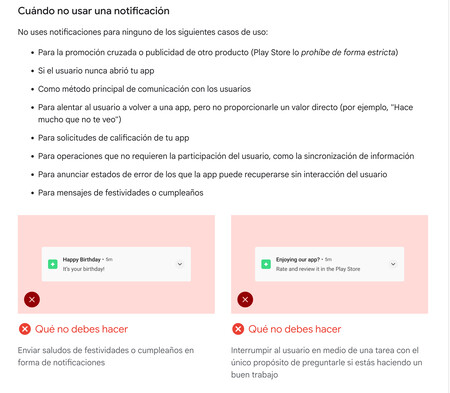
Google and Apple have differing policies when it comes to notifications. Google has made explicit statements in its developer documentation about inappropriate use of notifications. Conversely, Apple relaxed its rules in 2020, allowing applications to send promotional notifications under certain conditions. While it still advises against using push notifications for direct marketing without explicit user consent, exceptions have arisen.
Many app developers, like those at Wallapop, don’t explicitly inform users about the potential for receiving promotional messages. This lack of clarity leads to confusion and frustration among users.
The Future of Notification Management
Given the advancements in artificial intelligence, both Google and Apple have the capability to implement sophisticated filters to manage unwanted notifications. These technologies could selectively filter out irrelevant notifications based on user preferences, thus enhancing user experience.
One application that already addresses this issue is Buzzkill Notification Manager on Android, helping users manage unwanted promotional alerts effectively. Android provides control over notifications by category, but this functionality must be activated by developers for users to benefit from it.
Conclusion
The modern digital landscape often feels like an endless cycle of notifications, many of which offer little value. As technology continues to evolve, it’s essential for both developers and users to advocate for smarter notification systems that enhance our connectivity without overwhelming us. Ultimately, the goal should be to create a balanced relationship with our devices—one that allows for important communications while eliminating unnecessary distractions.
The notifications we receive should aid rather than hinder our daily lives. As more people advocate for better digital practices, there may be hope for a future where notification management is designed with user experience in mind.