
Preserving Our Digital Legacy: Challenges for the Future
Imagine this: you want to send a file to the future, a century from now. The challenge is ensuring that the information is still readable . Current technology and formats are often not designed to endure beyond a mere few years . Most systems prioritize immediate usability, neglecting the fact that physical media can degrade and digital formats evolve. Therefore, the quest to create a reliable storage method for a century or longer becomes multifaceted, extending beyond simply selecting a storage medium.
Hard drives and SSD disks are ill-suited for long-term storage. According to Backblaze, the annualized failure rate (AFR) for 2024 was 1.57%, with some models experiencing rates as high as 4.5% under normal operational conditions. These statistics don’t lend comfort for a hundred-year timeline, as they reflect short-term functionality rather than longevity.
In the case of SSDs, the data retention depends significantly on environmental conditions. The JEDEC standard JESD218A outlines that SSDs must maintain data integrity for at least one year at 30°C . For business-oriented devices, this extends to three months at 40°C, especially as they approach the end of their useful life. It’s clear that SSDs function well for operational purposes but fall short as long-term passive storage devices.

Interestingly, magnetic tape remains a formidable option for long-term data storage. LTO tape technology boasts an estimated lifespan spanning multiple decades, offering a cost-effective solution for “cold” storage. Institutions like CERN have implemented tape libraries with *planned migrations* to ensure ongoing access. As reported in 2024, the growth in LTO tape shipments reached 176.5 exabytes , a 15.4% increase compared to the previous year, demonstrating that the market is still supportive of this technology according to the consortium. However, the requirement for compatible hardware and regular maintenance is a limitation.
Among optical storage solutions, WORM discs, particularly the M-Disc, have shown promise in accelerated aging tests. Yet, projections extending to centuries or millennia are largely due to laboratory extrapolations without independent verification. In practical terms, these discs are more suitable for ordinary storage due to moderate capabilities and slow write speeds.
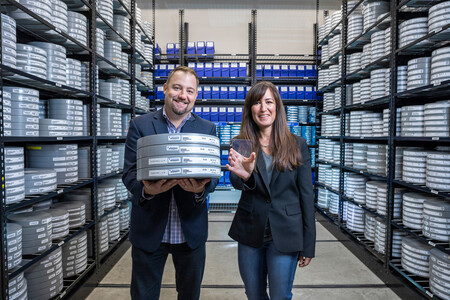
Interestingly, some of the most reliable methods for data preservation are not digital at all. Permanent paper regulated by ISO 9706 and microfilm , compliant with ISO 18901’s Le-500 standard, continue to serve as effective mediums for preserving critical documents. These formats present a clear advantage: they can be read using light without the dependency on software or electrical power. Regulatory frameworks and strict storage requirements ensure that these mediums remain part of the preservation solutions, even if they cannot support Petabyte-scale data.
One significant challenge facing data storage today is obsolescence . Many organizations are already employing proactive strategies such as format migrations to avoid obsolescence. This can involve techniques like emulation to recreate outdated systems—paralleling the preservation efforts seen in the video game industry, where access to certain platforms dwindles over time.
Looking to the future, innovative technologies are emerging that offer promising solutions for long-term data storage. One notable project is Project Silica from Microsoft, which utilizes laser-etched quartz to store data. The company claims these mediums have potential lifespans that extend to hundreds of thousands of years . Similarly, DNA storage is being researched, offering possibilities that are still in the experimental phase but hold immense promise.

Ultimately, extending the lifespan of digital data storage entails more than just selecting the correct media; it requires thoughtful budgeting, defined objectives, and systematic evaluations. Governments and organizations are already drafting comprehensive plans for long-term information preservation, which includes well-defined strategies and periodic reviews . The crucial challenge remains: how to safeguard information in ways that are sustainable and accessible in a century.
Images | Xataka with Gemini 2.5 Pro | Microsoft
In Xataka | Online games have made their preservation complicated. The solution can be what this video game has done.
In Xataka | SSD, NAS, cold storage units: all physical and digital options to store terabytes and terabytes.