
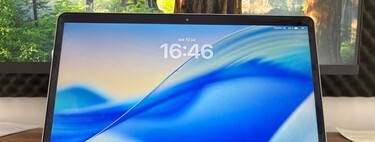
Apple’s Quest for a Cheaper MacBook: What We Know So Far
Apple has successfully navigated the transition to Apple Silicon with its powerful and efficient products, as supported by the latest IDC figures. The company is now aiming to expand its market share, with whispers of an upcoming release of a cheaper MacBook making waves in the tech community. This interesting development is detailed by sources, including a recent article on Applesfera.
Key Predictions by Analysts
Filtration. Renowned analyst Ming-Chi Kuo is known for his accurate predictions regarding Apple’s future products. He recently predicted that Apple is preparing a cheaper MacBook featuring an approximately 13-inch display. In an exciting twist, Apple may integrate an iPhone processor into this Mac, specifically the A18 Pro chip found in the iPhone 16 Pro and 16 Pro Max.
The Price Point
The price. Moving ahead, Digitimes has reported a tentative price of $599 for the new MacBook, matching the price that Apple set for the cheapest Mac in history after inflation adjustments. This replicates the pricing strategy for the Mac Mini M4 and aligns closely with the anticipated cost of the iPhone 16E—both priced at 709 euros in Spain without discounts. Should Apple launch this low-cost MacBook, it would significantly disrupt the global PC market, similar to their impact on the smartphone sector.
Understanding the Price Context
To appreciate the pricing structure, it’s essential to consider historical context. The cheap MacBook , introduced in 2006, originally launched at $1,099 —equating to approximately $1,700 today when adjusted for inflation. The last economical laptop offered by Apple was marketed at 879 euros in 2009, translating to roughly 1,215 euros adjusted for today’s prices. Exploring these figures emphasizes the groundbreaking nature of the pricing for the new MacBook.
Market Impact
Why it is important. With the MacBook Air already dominating its segment, especially with a standard 16 GB of RAM , Apple has established a competitive edge in the PC market without producing traditionally “cheap” devices. According to Kuo, releasing an economical MacBook at Mini prices could see sales of 5 to 7 million units by 2026.
Comparative Pricing Analysis
The MacBook Air M4 starts at $999 , matching previous models with Intel processors. However, adjusting for inflation makes its actual cost lower than earlier models. The MAC Mini M4, priced at $599 , is also significantly below the inflation-adjusted pricing of its predecessors. For the educational market, this new economical model would represent a substantial asset.
A Nightmare for Microsoft?
“A nightmare for Microsoft.” According to Windows Central, the $599 price point could pose significant challenges for Microsoft, especially as it faces the impending end of support for Windows 10 in October. With millions of users still reliant on Windows 10, even a modest shift towards this new MacBook could lead to considerable disruption in the market.
Unique Selling Points of Apple’s Cheap MacBook
Current PC offerings struggle to compete with Apple’s planned lightweight, powerful MacBook, especially at a price point below that of most counterparts. Steve Jobs previously indicated that Apple would not release low-end laptops due to performance issues; however, advancements in technology may have altered this landscape significantly.
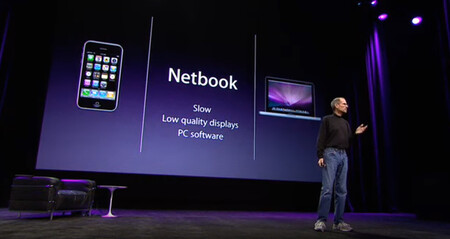
In launching the iPad, Jobs explained why they did not pursue the netbook market due to issues of speed and quality.
The Power Behind It: iPhone Chip Advantage
Iphone brain, more than capable for a Mac. Concerns regarding the use of an iPhone chip revolve around computational capability, especially when running macOS. However, past performance metrics indicate that Apple’s M1 chip has already proven sufficient for demanding tasks. The A18 Pro, set to power the new MacBook, exceeds the M1 in several key performance areas.
Technical Specifications: A Performance Comparison
A18 PRO | M1 | Difference in favor of the A18 Pro | |
|---|---|---|---|
Geekbench 6 (single core) | 3429 | 2345 | +46.23% |
Geekbench 6 (Multi Core) | 8790 | 8348 | +5.29 % |
Geekbench 6 metal (GPU) | 32686 | 33073 | −1.17% |
3DMark Steel Nomad Light Unlimited (GPU) | 1541 | 1892 | −18.55% |
While GPU performance appears slightly lower with the A18 Pro, metrics for single-core processing indicate that it holds substantial advantages in daily tasks, reflecting a larger need for efficiency in multitasking.
Capacities for Future Demands
Prepared for AI. The A18 Pro features significant advancements in machinery and architecture, showing performance yields that can be 50% higher than previous models. This isn’t limited to gaming but offers a wider range of supportive features suited to future computing needs.
Potential for Battery Life
Huge autonomy potential. The M1 chip is well-regarded for its battery efficiency, and if Apple retains similar standards with the A18 Pro, we could witness an even more impressive battery life with the new MacBook. The A18 Pro’s production by TSMC under a second-generation 3nm node may enable substantial efficiencies.
Addressing Concerns
Yes, but. While the idea of a MacBook driven by an A18 Pro is exciting, it’s crucial to consider Apple’s approach to cost-cutting, which may involve reductions in RAM . Options with only 8 GB of memory could limit the device’s performance, potentially hindering its viability in multitasking and AI applications. Additionally, connectivity might be restricted compared to the Thunderbolt 3 and USB 4 offered in other models.
Conclusion
The game of discounts against competition. Although Apple’s pricing strategy can be competitive, it’s essential to remember that discount opportunities will fluctuate significantly based on current market dynamics. Historical patterns indicate that Apple devices, especially newer models, may see promotions that can provide savings for potential buyers. With a projected launch price of $599 , this new MacBook could redefine how Apple is viewed in the budget-friendly laptop market.
Overall, the potential release of a cheaper MacBook could not only revive Apple’s presence in educational institutions but may also shift consumer preferences significantly, marking a new chapter in the company’s trajectory within the PC market.