
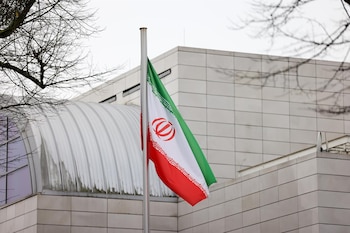
The United Kingdom , France , and Germany have escalated tensions with Iran by threatening to reactivate sanctions if negotiations regarding Iran’s nuclear program do not resume by the end of August. This bold stance comes following a meeting between European and Iranian delegations held in Turkey last July.
Foreign Ministers from these three nations — Jean-Noel Barrot (France), David Lammy (United Kingdom), and Johann Wadephul (Germany) — have officially reached out to United Nations Secretary-General António Guterres . In their letter, they express readiness to activate a legal mechanism for reinstating the previous sanctions on Iran.
The primary concern raised by these nations revolves around Iran’s enriched uranium reserves . Tehran is reported to have accumulated a staggering 8,400 kilograms of enriched uranium, which is over 40 times the limit stipulated by the 2015 deal. Among this stockpile, more than 400 kilograms of uranium are enriched to 60 percent , according to the latest data released by the International Atomic Energy Agency (IAEA) .
Additionally, the letter highlights that facilities like Fordo are actively engaged in enriching uranium. Iran announced the opening of another plant in June and has significantly reduced the verification and supervision processes established by the UN nuclear agency .
The trio of nations indicated they had previously proposed a temporary suspension of sanction reactivation to encourage Tehran to reengage in discussions about its nuclear program, although they assert that this offer has so far gone unanswered .
“This evolving situation provides the E3 with a clear legal basis to inform the Security Council about Iran’s significant breaches of its commitments under the nuclear agreement and to activate the rapid restitution mechanism in accordance with UN Security Council Resolution 2231 of 2015,” the letter stated.
Negotiations have remained stagnant for several years, increasingly complicated by escalating conflicts, particularly after June 13 , when tensions intensified between Iran and Israel . During this period, Israel launched a military offensive against Iran, which led to Iran responding with hundreds of missiles and drones directed at Israeli targets.
In response to Israel’s actions, the United States became involved, conducting airstrikes against three of Iran’s notable nuclear facilities — Fordo, Natanz , and Isfahan . A precarious ceasefire has been in place between the involved nations since June 24 .
Israel’s military objectives have been framed around countering Iran’s alleged nuclear weapons program, emphasizing a significant concern for the region’s stability. Just days before the anticipated sixth round of negotiations between Iran and the United States, these military actions could undermine the potential for reaching a new agreement on the Iranian nuclear program.
This renewed wave of sanctions and military engagements finds its roots in a complex history of diplomacy and conflict surrounding Iran’s nuclear ambitions. During his 2018 term, then-President of the United States Donald Trump unilaterally withdrew from the historic 2015 deal, significantly impacting future negotiations and Iran’s nuclear trajectory.
The convergence of these geopolitical factors suggests that resolving the Iranian nuclear issue will be increasingly challenging. As the dynamic continues to evolve, it will be essential for the international community to monitor developments carefully and assess the implications of Iran’s nuclear aspirations for global security.