
Your first camera may be a Small yellow or black box, plastic, with a metallic click and a reel that you carried to reveal to discover photos of bright colors. Before there were mobile phones and Instagram filters, Kodak was the entrance door to photography for millions of people. Yesterday, that same company warned in its quarterly report (Form 10-Q that presents before the SEC) that its continuity is in doubt. The market responded to the announcement with a fall close to 26% of the shares in the subsequent moments.
According to the aforementioned document, Kodak closed the last quarter with a net loss of 26 million dollars, compared to a 25 million dollar benefit a year earlier. Moreover, its losses reached 155 million as of June 30. The problem is that in less than a year obligations have accumulated to around 500 million, and today it has no compromised financing to cover them, which activated the notice of ‘Going concerns‘. To gain margin, the company has launched extraordinary measures but has indicated that “these conditions raise serious doubts about the company’s ability to continue operating.”
From Innovator to Existential Doubt
Far from its dominance in cameras and reels, Kodak operates today in commercial printing, chemicals, advanced materials, and film for cinema. Its brand is licensed for consumer products while reinforcing businesses where it retains industrial technology and capillarity. Besides, it already has a regulated installation in Rochester, registered by the FDA, which will start producing PHOSPHATE BUFFERED SALINE (a buffered saline solution with phosphates that is often used in laboratories and biomedical processes) and aspires to produce intravenous sera later. Today, its footprint in consumer photography is more symbolic than real.
As previously mentioned, the pressure of short-term debt is compounded by dwindling income and limited liquidity, according to the 10-Q report and the results note. To create some breathing room, Kodak has decided to close its Company Pension Plan in the United States, a corporate system that guarantees retirement payments to former employees. The company plans to clarify on August 15 how it will serve all participants and expects to complete the plan’s reversal by December 2025 with the intention of amortizing part of the term loan and renegotiating or refinancing the rest.
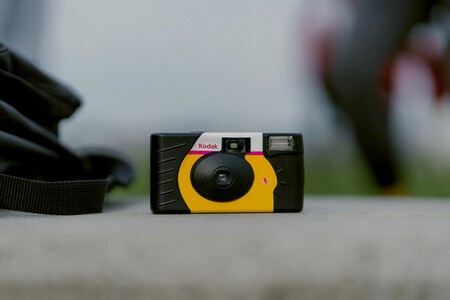
Kodak camera
In 1975, Steven Sasson, a Kodak engineer, presented a digital camera prototype that captured images with a CCD sensor and saved them onto tape. Though rudimentary, it marked the start of a technological revolution. The company chose not to market it out of fear of cannibalizing their film business and due to the product’s immaturity. This caution, however, delayed Kodak’s entry into the digital market, allowing competitors to strengthen their positions and weakening the model that had made Kodak unbeatable for decades.
In 2020, Kodak attempted to pivot toward pharmaceutical ingredients with a letter of interest from the United States Development Bank for a loan of 765 million dollars. Market reaction was initially positive, but the process stagnated amid scrutiny, and the loan was never formalized. That ambition still exists today on a smaller scale; Rochester’s cGMP installation, already registered by the FDA, will begin with PBS as its first product and will serve as a foundation for exploring materials with greater regulatory value.
The upcoming months will be critical for Kodak. The company asserts that it may pay a significant portion of its debt and expand or refinance the remaining amount while executing the closure of the pension plan and lighting up its new pharmaceutical line. As of now, the market remains skeptical. For a brand that defined photography for over a century, the primary challenge now is not innovation, but survival.
Images | KODAK | Bady Abbas
In Xataka | The agreement with the US seemed to pave the way for Nvidia in China. Now is the Asian giant who begins to close the door.