
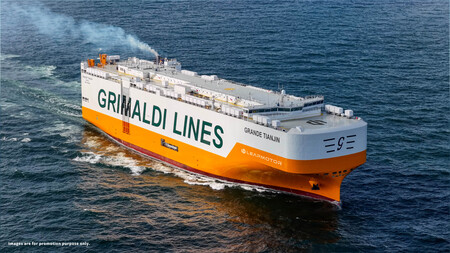
The Great Tianjin is set to embark on its journey from Shanghai on August 19, heading towards Europe, laden with an impressive cargo of 2,500 electric vehicles from Leapmotor. At first glance, this may seem like a routine shipment, but it embodies a significant transition: Leapmotor represents the new wave of Chinese manufacturers that are no longer reliant solely on traditional international logistics.
This shipment aligns with the Leapmotor International agreement established with Grimaldi shipping company, which, since 2022, guarantees fixed monthly transport capacity for thousands of vehicles from Asia to Europe. This arrangement alleviates the need to compete for space on foreign ships, providing Leapmotor with a well-planned and secured logistics chain months in advance.
The Rising Star of Electric Vehicles. Leapmotor, a Chinese automotive manufacturer founded in 2015 in Hangzhou, has largely kept a low profile outside its domestic market until recently. In the first seven months of 2025, Leapmotor sold over 270,000 units, marking a 149% increase from the previous year, and solidifying its status as China’s leading new energy vehicle (NEV) start-up brand. A significant partner in this endeavor is Stellantis, the largest automotive group worldwide.
In 2023, both companies formed Leapmotor International, a joint venture based in Amsterdam, giving Stellantis a 51% controlling interest. Their goal: to distribute Leapmotor’s models outside China, starting with European markets.
The Logistics Behind The Great Tianjin. The Great Tianjin, the first in a series of vessels, is commissioned by Grimaldi and designed specifically for transporting vehicles. These Pure Car and Truck Carriers (PCTC) are equipped with ramps that allow for easy loading and unloading, and they can transport up to 9,000 cars per trip. Built by Shanghai Waigaoqiao Shipbuilding (SWS), it also features Ammonia-Ready notation, aligning with sustainable maritime practices.
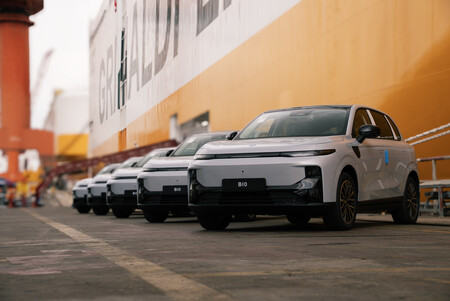
The leading model in this shipment is the Leapmotor B10, a compact electric SUV built on the new Leap3.5 platform. It is available in two battery versions: one offering up to 361 km of range and another extending to 434 km. The car comes equipped with quick-charging capabilities and 17 advanced driving assistance systems.
Following in BYD’s Footsteps. Leapmotor’s strategy mirrors that of established competitors like BYD, which debuted its first mega-ship, Explorer No. 1, in January 2024, with a capacity for 7,000 vehicles, by sending thousands of electric units to Europe.
Since then, BYD’s fleet has expanded to include large carriers such as Shenzhen Byd, the largest in its category with a capacity for 9,200 vehicles per trip. This strategic shift allows manufacturers to reduce costs, speed up deliveries, and maintain total control over their exports.
More Than Just BYD and Leapmotor. Other industry players like SAIC, owner of MG, are also making headway with their own vessels, such as the Anji Ansheng, capable of carrying 9,500 vehicles. They have aspirations to operate with 22 ocean ships by 2026 to bolster their logistics capabilities across Europe.
Geely, Chery, and Nio have also expressed interest in establishing their own vehicle carriers or securing exclusive shipping routes, indicating a growing trend among Chinese brands to take charge of their maritime logistics.

For Chinese electric vehicle manufacturers, securing their ships or dedicated routes has become a strategic necessity rather than a mere luxury. The primary objectives include:
- Reducing transport costs.
- Avoiding bottlenecks at busy ports and routes.
- Decreasing delivery times to dealerships and customers.
- Ensuring a stable export flow, especially during peak demand periods.
In a competitive market like Europe, logistics speed and predictability can be decisive factors that differentiate between success and remaining outside the marketplace.
Images | Stellantis