
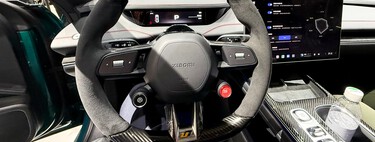
Xiaomi has taken the automotive world by storm, amassing 240,000 orders for its new Yu7 electric SUV within an astonishing 18 hours . As anticipation builds, potential buyers now face a waiting period stretching up to 14 months for the base model. In a move that has caught many off guard, Lei Jun, the founder and CEO of Xiaomi, has advised customers eager for quick delivery to consider rival brands. This unexpected recommendation has sparked discussions about consumer behavior and corporate practices in the rapidly evolving electric vehicle (EV) industry. Lei’s statement was first reported by Bloomberg.
The current market dynamics lend an absurd twist to the situation; buyers are finding second-hand Yu7s priced higher than new ones, echoing scenarios witnessed in tech product launches, such as the PlayStation 5 . High demand coupled with low availability is creating a paradox for consumers.
Why This Matters
Lei Jun’s unusual advice represents a radical shift in marketing strategy. Traditionally, brand loyalty is sacrosanct in China, making his suggestion to pursue competition products—a direct competitor such as Tesla —particularly bold. “If you need to buy a car soon, other electrical models produced in China are quite good,” said Lei in a post on Weibo. He specifically recommended three viable alternatives:
- Xpeng G7.
- Li Auto i8.
- Tesla Model Y.
The Current Context
Xiaomi recently completed the second phase of its Beijing factory , yet productivity remains constrained. New production lines are slow to ramp up, needing two months to reach a capacity of 10,000 units per month and five months to hit 20,000 . Currently, Xiaomi manages to deliver only 1,590 YU7 units weekly.
With a base price set at 253,500 yuan (approximately 30,300 euros ), the YU7 boasts impressive features, including a range of 835 kilometers and the ability to achieve 80% charge in just 13 minutes . The result is an insatiable demand that the company is struggling to meet.
Implications of Lei Jun’s Recommendation
Lei Jun’s transparent approach and acknowledgment of production limitations could signal a new era of honesty in automotive marketing . By openly suggesting alternatives, he cultivates a sense of trustworthiness and authenticity , qualities that may resonate with consumers who are increasingly skeptical of corporate promises.
In Chinese business culture, where Mianzi (reputation and social prestige) is paramount, admitting shortcomings is a courageous—and potentially strategic—move. Lei Jun seems to believe that this radical honesty may resonate more with consumers than the typical promises of quick delivery often found in the industry.
- As of July, 95 complaints regarding the YU7 have been filed on 12365auto.com , particularly focused on delivery times.
- The 240,000 YU7 pre-orders are approaching the 265,400 units that Tesla sold in China during the first half of 2023.
Broader Industry Trends
The phenomenon of extended waiting times is not unique to Xiaomi; for instance, Tesla’s Model 3 experienced waits of up to three years during its 2016 launch, while Toyota’s Land Cruiser faced delays extending to four years in 2022. However, what sets Xiaomi apart is that no CEO from these established brands has suggested exploring competitor options.
The resurgence of Chinese brands in the automotive sector signifies a shift. The success of Xiaomi —a company that Apple struggled to penetrate—highlights the fierce competition within the EV market, particularly in China . These technological brands are not just pushing the envelope on price; they are also delivering real advancements in range , charging speed , and user experience that traditional brands take years to implement.
Ultimately, Lei Jun’s frank recommendation reflects Xiaomi’s confidence in its product. In a landscape filled with unfulfilled promises, this approach may ultimately solidify the company’s reputation and success. Liu’s tactic transcends typical marketing strategies, revealing a possibly calculated risk that may redefine consumer expectations in the near future.
Outstanding image | Xataka
In Xataka | Byd did not go to the Shanghai Auto Salon to show cars. Went to exhibit power.