
The Rise of Coffee Consumption in China: A New Era for Brazilian Producers
If we do not count water, coffee would be the most consumed drink in the world. Renowned for its myriad benefits, coffee is cherished for its caffeine , as well as its psychological effects. Recently, China has emerged as a significant player in the global coffee market, which has implications for producers, particularly those in Brazil .
Current Coffee Market Trends. Recently, the coffee segment has experienced a “perfect storm,” which has caused a notable increase in prices for both Arabic and robust varieties. Key factors contributing to this surge include storms and droughts that have impacted harvests, transportation challenges, and an escalating demand that could not be satisfied. Additionally, the political stage has seen influential figures, such as Donald Trump , implementing tariffs that have compounded the situation.
The specter of tariffs on main coffee producers became a tangible concern when, as reported by Reuters, a 50% tariff on certain Brazilian products was enacted on August 6. Currently, Brazil exports approximately eight million sacks of coffee annually to the United States, meeting one-third of America’s annual demand, valued at around $4.4 billion . The increase in tariffs could significantly affect prices, leading to uncertainty in consumer behavior.
<img alt="To the "chocoopocalypse" He only lacked one more enemy to shoot the price of cocoa: illegal gold mining" width="375" height="142" src="https://i.blogs.es/574cc3/cacao/375_142.jpeg"/>China: A Closer Economic Ally. While Brazil primarily exports coffee to the U.S., it also has significant economic ties with China. The latter is now its main commercial partner, importing vast quantities of soybeans (70% of Brazilian exports), iron minerals, oil, meat, cellulose, sugar, wood, and cotton. Notably, in June of this year, while Brazil exported 440,034 coffee bags to the U.S., it shipped just 56,000 bags to China. However, this dynamic is changing; as confirmed by Reuters, China has recently approved 183 Brazilian coffee companies for export, poised to reshape the market landscape.
The Coffee Craze in China. Coffee consumption in China has skyrocketed, doubling since 2019. Current estimates suggest that approximately 5.8 million bags were consumed in 2023, with projections reaching 6.3 million by 2025. Although China’s per capita consumption lags behind other nations, approximately 400 million individuals within the country drink coffee regularly, and this number is on an upward trajectory.
The Coffee Shop Boom. A significant portion of new coffee drinkers are young adults aged 25-44. Living predominantly in urban areas, this demographic exhibits high levels of education and income. The surge in coffee’s popularity correlates strongly with the opening of thousands of new coffee shops across the country. Recent data indicates that coffee shops in China have grown over 50% in the past two years, with Shanghai emerging as the world capital of coffee shops, boasting around 9,500 locations. The coffee market’s value is projected to grow from $38 billion in 2023 to $43 billion in 2024.
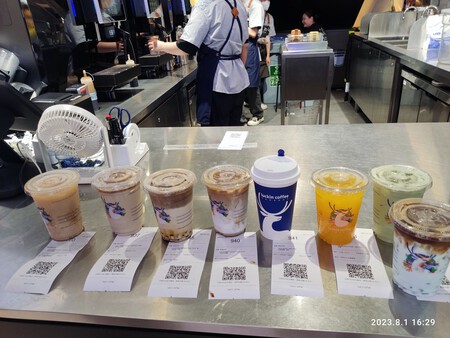
<span>It could be a Starbucks bar, but it's from Luckin Coffee</span>Changing Taste Buds. Consumer preferences are shifting in China, partly due to factors like urbanization, a rising middle class, and Western influence. Brands like Starbucks and local competitors like Luckin Coffee are making coffee fashionable among younger generations. Although instant coffee remains prevalent, the rise of specialty coffee — including freshly ground beverages — now constitutes more than 40% of the Chinese coffee market as of 2023.
In summary, the escalating demand for coffee in China presents not only a consumption shift for its population but also an economic lifeline for Brazilian producers navigating a volatile international landscape. As price fluctuations affect U.S. consumers, it remains to be seen whether they will embrace higher costs for their favorite brew or if the soaring prices will dampen their enthusiasm for coffee.
Images | Shwangtianyuan, Takeoway, Poon Shuishou Simmonz