

The Future Awaits: Welcome to Toyota Woven City at the Foot of Mount Fuji
One of Japan’s most iconic tourist destinations is none other than Mount Fuji . This majestic mountain draws millions each year, inspiring awe and admiration. To protect this natural wonder, Japan has harnessed a rather unique approach: they’ve implemented climbing fees aimed at controlling the influx of tourists, all while erecting a massive fence that has altered the landscape of the beloved photo spot. However, adjacent to this mountain, where tradition meets innovation, lies Toyota Woven City — a cutting-edge urban laboratory designed to test the future of mobility.
After years of developmental work, the Phase 1 launch of this ambitious project is set to commence in September.
Phase 1 of an Urban Revolution
The seeds for Woven City were planted during the 2018 Consumer Electronics Show (CES) , with further insights revealed in the following years. As of late last year, construction for Phase 1 reached completion, and Toyota is now fine-tuning the final details before the official rollout. Nestled near Toyota’s Higashi-Fuji plant in Shizuoka Prefecture, the city is envisioned as “a platform to expand the concept of mobility beyond transport,” as articulated in their official communications.
A Collaborative Environment
While Toyota may be leading the charge, Woven City will host multiple companies working towards the shared goal of revolutionizing mobility in our daily lives. Notably, organizations from various sectors will play a role, even those seemingly unrelated to transportation. Recent announcements have confirmed that companies like Daikin , a leader in air conditioning, along with interstellar technologies and veterinary medication producers like Kyoritsu Seiyaku , will also have a stake in this urban experiment.
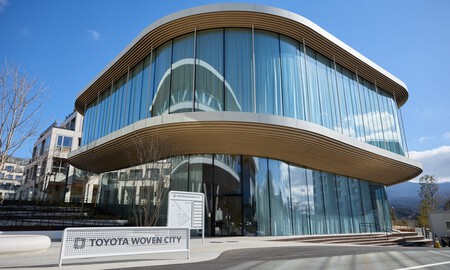
A Living Laboratory for Innovation
Currently, Woven City encompasses 19 companies, including several subsidiaries of Toyota itself, each contributing innovative solutions. The city is envisioned as a “ living laboratory ,” designed for testing groundbreaking technologies in mobility , robotics , artificial intelligence , connectivity , and sustainability within an urban context. Rather than merely utilizing existing urban infrastructure for testing, Toyota has crafted an entirely new city powered by solar energy and hydrogen fuel cells .
The envisioned city will span an impressive 294,000 square meters , with buildings equipped with energy-efficient features, solar panels, and innovative technologies, including hydroponic crops . These crops will utilize nutrient solutions rather than traditional soil, adding an eco-friendly dimension to urban agriculture.
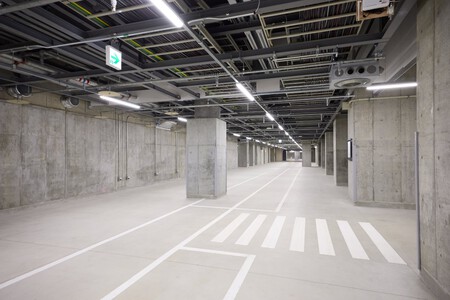
Urban Mobility Redefined
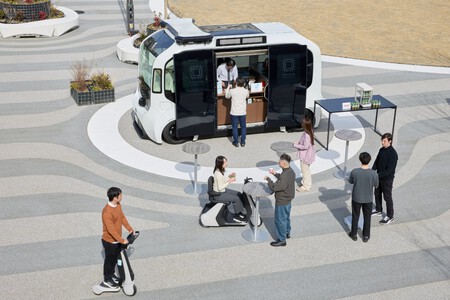
The city’s design prioritizes various modes of transport, featuring three distinct street types categorized by vehicle speed and the nature of mobility. Streets for fast vehicles, personal mobility options, and pedestrian-only areas will intertwine in an organic and efficient layout. Autonomous vehicles will take center stage in this futuristic landscape, with an emphasis on zero emissions .
While many technology companies consider building massive campuses to accommodate their workforce, Toyota is quite literally constructing a city. Beyond the laboratories dedicated to innovative mobility solutions, Woven City will house real people. An estimated 360 residents will include Toyota employees and their families, who will live in ‘Japandi’ style homes. These residences will feature advanced domestic robotics designed to enhance daily life.
Looking Ahead: Future Developments
As Phase 2 unfolds, Toyota aims to create a realistic testing ground for advanced technologies like mobility , sustainability , and urban planning . With insights gained from Phase 1, the city will eventually expand its resident population and enhance the overall environment. By 2026 , Woven City will open its doors to visitors, inviting external feedback on its innovative model.
This initiative embodies ambition and a forward-thinking vision rather than immediate profit. Toyota Woven City represents a technological incubator for future urban planning rather than a traditional venture focused solely on returns. The project aims to pioneer the way for cities of tomorrow, reminding us that innovation is not just about technology, but also about improving the quality of human life in a seamless and sustainable manner.