
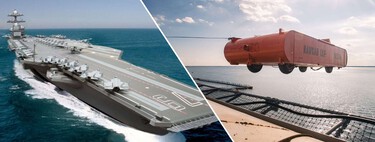
It has been a busy summer for the Chinese Navy , marked by significant advancements in its aerial capabilities. Though official announcements have been limited, recent activities strongly suggest that China is finalizing the preparations of its newest aircraft carrier, the Fujian , which is poised to become a critical asset in its military strategy. The carrier has been spotted conducting maneuvers at sea, and reports indicate that it has begun testing its Electromagnetic Catapult Systems (EMALS) with real aircraft.
As China gears up for displays of military strength, one significant date looms on the horizon: the 80th anniversary of Japan’s defeat in World War II. This anniversary could serve as a perfect backdrop for showcasing the Fujian’s advanced capabilities.
The Fujian is particularly noteworthy in the context of global naval power. China now boasts the largest naval fleet in the world, yet it has lagged behind the United States concerning aircraft carriers—currently operating 11 nuclear-powered carriers compared to China’s two (the latter lacking nuclear capabilities). The Fujian marks the third aircraft carrier built entirely with Chinese technology and represents a significant leap in naval warfare capabilities.
Even before its official commissioning, the Fujian has been observed performing high-seas maneuvers, occasionally featuring aircraft on its deck. The most striking characteristic of this ship is its deployment of electromagnetic catapults , one of only two aircraft carriers globally to utilize this advanced launching technology.
Electromagnetic catapults revolutionize how aircraft are launched from carriers. Traditional hydraulic catapults require a lengthy track and extensive maintenance. In contrast, the EMALS system, a linear induction motor , uses electromagnetic force to propel aircraft off the deck. This method not only enables heavier, fuel-laden aircraft to launch but also minimizes mechanical stress on the aircraft, thereby extending their operational lifespan. Furthermore, this reduced maintenance requirement provides additional efficiency, marking a significant innovation in naval operations.
The benefits of the EMALS are clear. It can launch an aircraft roughly every 45 seconds, significantly quicker than conventional systems, thereby facilitating tactics such as “swarm attacks.” This military strategy involves launching multiple aircraft in quick succession to overwhelm enemy defenses, thus achieving air superiority effectively.
Recent reports indicate that China has begun testing this electromagnetic launching system with real aircraft. Although officials have not confirmed these launches, images circulating online show aircraft positioned on the Fujian’s deck, indicating that the carrier is nearing readiness for operational deployment.

In addition to the Fujian, China has introduced another advanced naval vessel known as the Type 076 , an amphibious ship featuring a unique electromagnetic catapult system. This innovative design allows for the launch of not just traditional aircraft, but also unmanned aerial vehicles (UAVs) —a crucial component of modern military strategies. The Type 076 was launched with much fanfare on August 1, 2025, further expanding China’s naval capabilities.

Type 076 ‘Sichuan’ images
The South China Sea remains a critical focal point in China’s maritime strategy. This region is strategically vital, contested by nations such as Taiwan and India, both of which are bolstering their military presence. The U.S. is closely monitoring these developments, and Japan is also ramping up its military capabilities, marking its greatest rearmament since World War II.
As the Fujian and other vessels like the Type 076 come online, they promise to enhance China’s capabilities for large-scale air operations and deepen the operational reach of its naval forces. As ground forces evolve, the role of electromagnetic catapults will become increasingly significant in maritime strategy.
Looking ahead, significant events are scheduled for September 3, when China will observe the 80th anniversary of Japan’s WW2 defeat . This date is critical for reinforcing the narrative of China’s role in World War II and could potentially feature public demonstrations of the Fujian’s capabilities, particularly its electromagnetic catapult.
Such military showcases not only serve to bolster national pride but also underscore China’s growing naval prowess on the global stage. The Fujian and its advanced technologies symbolize not merely military might but also represent a shift in the balance of power in naval warfare.