
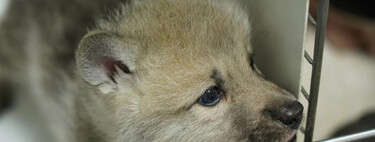
A few days ago, a fascinating incident went viral on social media involving a family that saved a trapped fox on their property. This fox soon began to visit regularly, and the family took upon themselves to feed and protect it. This unique story propels us into the complex relationship between wild animals and humans, particularly in urban settings, creating a platform for discussions about domestication.
Foxes are indeed wild animals , yet they often coexist with humans in various environments, including densely populated areas . This raises an intriguing question about the potential for domestication. Could we be witnessing the beginnings of a form of domestication in such cohabitation? The brief answer to these questions may be an enthusiastic “yes,” but the details matter greatly.
To delve deeper into this issue, we must travel back to 1959 and the Soviet Union, where a groundbreaking domestication experiment on foxes began under the guidance of Dmitri Belyaev and Lyudmila Trut , both renowned geneticists. Their research aimed to explore whether selectively breeding the friendliest foxes would lead to the emergence of specific traits associated with domestication.
Foxes (*Vulpes*) belong to the canid family, sharing a close relationship with dogs and wolves. Among the various species, the common red fox (*Vulpes vulpes*) is perhaps the most familiar, thriving in diverse ecosystems across Eurasia and North America.
Returning to the capabilities of Soviet scientists in the late 1950s, Belyaev and Trut initiated an extensive experiment to assess whether specific traits, such as floppy ears and affectionate behaviors, could result from this selective breeding. Over the course of more than six decades , they observed generations of foxes, meticulously selecting the gentlest individuals for reproduction. By the 1970s, initial success was evident, as they bred foxes like Pushinka, who displayed the capacity to live around humans comfortably.
Sadly, Belyaev passed away in the mid-1980s, and Trut left us less than a year ago, extending their work through generations. However, the legacy of their domesticated foxes continues, with these animals often referred to as Russian domesticated foxes, Siberian foxes, or even domesticated silver foxes, scientifically known as *Vulpes vulpes f. amicus*.
Are We Doing It Again?
It’s plausible that Trut’s efforts are not isolated. In various locales, urban fox populations are thriving. As they adapt to city life, some scientists suggest they may be self-domesticating .
The phenomenon captivated Kevin Parsons, a Canadian intrigued by the urban foxes roaming Glaswegian streets. He explored Scotland’s national museums, where a collection of around 1,500 fox skulls from a past culling campaign were stored. Parsons analyzed over a hundred of these skulls, seeking evidence of domestication traits. His research revealed that these urban foxes exhibited shorter snouts and smaller brain volumes compared to their rural counterparts.
His findings were published in 2020 in the journal *Proceedings of the Royal Society B: Biological Sciences*. The implications of such observations can be complex, encompassing ecological, ethical, and practical aspects.
The idea of domesticating a wild animal raises numerous questions. Complications arise, especially since the urban environment encompasses challenges that affect both wildlife and human inhabitants. The coexistence of foxes and humans is often fraught with difficulties—not limited to isolated incidents, like the one involving the family and the rescued fox, but extending to the complexities of urban living.
As we acknowledge this phenomenon, it becomes vital to confer *awareness * about urban wildlife. Understanding the dynamics of urban foxes may mitigate potential negative consequences, as we gear toward responsible coexistence with these fascinating creatures.
Overall, the burgeoning relationship between foxes and humans bears witness to the evolutionary dance of domestication unfolding right before our eyes. It challenges us to rethink our place in the ecosystem and the interactions with wildlife that inhabit our urban landscapes.