
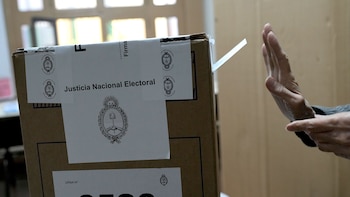
As the political landscape in Argentina heats up, consultant Federico Aurelio has suggested a “Palo A Palo” contest between La Libertad Avanza (Freedom Advances) and Patria (Homeland) in the upcoming Buenos Aires elections on September 7. In stark contrast, the national elections, set for October 26, appear to favor the current government.
“Currently, in the province of Buenos Aires, there exists parity between La Libertad Avanza and the Patria. At a general level, they are closely matched,” noted Aurelio. He further elaborated that while Peronism exhibits a significant lead in certain sections, the overall electoral landscape remains balanced, particularly within the first section, where both factions are almost equal.

In an interview with Infobae, Aurelio emphasized a crucial point about voter turnout : “In general, those who align with Milei show a higher propensity to vote, which may benefit him and pose challenges for the opposition.” However, he noted that in the province of Buenos Aires, voter sentiment appears evenly distributed, which means turnout may not significantly sway the outcome.
The director of Aresco , Aurelio is the son of prominent political consultant Julio Aurelio. He highlighted that the September election will be less polarized compared to the national election in October, as local candidates and territorial leaders heavily influence voter preferences across electoral sections.

The presence of other political parties, such as We Are in Junín and Chivilcoy, could further complicate the electoral map. These new contenders may siphon votes away from La Libertad Avanza, especially in local contexts where they possess greater influence.
Reflecting on the impact of the upcoming elections, Aurelio opined that the Buenos Aires elections will have implications for the national elections but won’t extend to 2025. He cautioned against assuming that if Milei wins in Buenos Aires, it will dictate the political future of his administration.
Despite the potential for a significant win for Javier Milei’s ballot, the national landscape suggests that the government’s standing may remain fragile. “Even winning with a margin of ten points does not guarantee re-election,” Aurelio warned, recalling similar situations under the previous government of Mauricio Macri.
Aurelio’s data reveals a notable portion of Milei’s supporters are driven by convenience rather than conviction, highlighting a widespread sense of dissatisfaction among voters who have experienced disillusionment with various administrations.
“People are skeptical; while many believe in Milei’s ability to manage economic challenges like inflation, they’re still yearning for tangible improvements in their daily lives,” Aurelio stated.

Emerging from recent political dynamics is the United Provinces Front , comprising various governors like Martín Llaryora (Córdoba), Maximiliano Pullaro (Santa Fe), and Ignacio “Nacho” Torres (Chubut). This diverse coalition aims to carve out a unique electoral identity distinct from traditional left-right political rivalries.
Aurelio suggests that this new alignment could counterbalance the advantages of La Libertad Avanza, particularly in regional contexts , but he maintains that the government is still poised to achieve an electoral win. In contrast to Buenos Aires, he notes that regional candidates may dilute support for Milei without bolstering Peronism.

Facing these pivotal elections, Aurelio perceives that the government possesses a strong footing. “Contrary to predictions of a drastic decline in public approval, the situation is more stable than anticipated,” he remarked. This sentiment aligns with public perceptions of both the current administration and its economic performance.
Despite the considerable challenges ahead, many citizens remain cautiously optimistic about Javier Milei’s leadership, primarily due to expectations for improved economic conditions. However, Aurelio warns that this optimism hinges on how the government manages its economic policies and public expectations beyond the elections.