
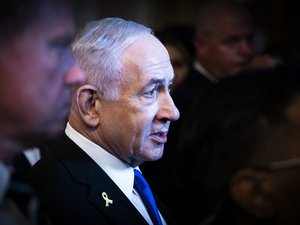
This Thursday, July 31, Hamas and its ally, Islamic Jihad , released a video featuring Israeli hostages retained by the terrorist groups. The video depicted the captives in poor condition, presumably to emphasize the ongoing humanitarian crisis in Gaza . In response, Israeli Prime Minister Benjamin Netanyahu expressed his dismay at the images, voicing his commitment to continue efforts to secure the hostages’ release.
What to Remember:
Netanyahu expressed profound dismay about the recent videos released by Hamas, assuring families of the hostages that efforts to rescue them are ongoing.
Tens of thousands of Israelis demonstrated on Saturday evening in Tel Aviv , advocating for the hostages’ release and reigniting discussions about a potential resolution.
The EU and France condemned the released videos as “ignoble,” stressing that 49 hostages remain captive out of the 251 kidnapped on October 7. Meanwhile, Israeli airstrikes have reportedly resulted in over 60,000 deaths in Gaza, according to Hamas.
Israeli Prime Minister Benjamin Netanyahu confirmed his deep concern over the videos disseminated by Hamas , which showcase hostages in a distressing state . Official statements report that Netanyahu has communicated with the families of the hostages, reaffirming that efforts to bring all detainees home are persistent and relentless. In these challenging times, Netanyahu’s focus remains on the welfare of the hostages and their families.
Common Gatherings in Tel Aviv
The recent release of videos showing the two Israeli hostages in a frail state ignited a wave of emotions across Israel, emphasizing the urgency for an agreement that could lead to their release. Tens of thousands gathered in Tel Aviv on Saturday evening, rallying in support of the hostages’ families and voicing demands for their safe return.
The images released by Hamas and Islamic Jihad depicted the two captives as emaciated and weak , contrasting starkly with the humanitarian crisis reported in Gaza, which has been described by the UN as facing generalized famine . Netanyahu’s response highlighted the severity of the situation faced by the hostages. He characterized the actions of Hamas as unimaginably cruel, showing clear disgust toward the deceptive way the videos were crafted.
In Netanyahu’s statements, he emphasized that Israel continues to allow humanitarian aid to enter Gaza. However, he accused Hamas of manipulating this aid for propaganda while conversely using the residents of Gaza to further their agenda. He called upon world leaders to unite in condemning what he termed as the Nazi nature of Hamas’s actions.
“Ignoble Images”
Mainstream media commentary in Israel has extensively covered the issue. Headline articles have described the captives as “ hungry, emaciated, and desperate ,” with some headlines echoing sentiments of cruelty in Gaza. The European Union’s chief diplomat and French Foreign Minister , Jean-Noël Barrot, condemned the released images as “ ignoble ,” calling for the immediate release of the hostages. Barrot stressed the emotional and physical toll that the situation has imposed on the families involved.
“Unbearable images, Israeli hostages held for 666 days in Gaza by Hamas. Their ordeal must stop. They must be released, unconditionally. Hamas must be disarmed and excluded from the governance of Gaza. Humanitarian aid must enter massively.” -Jean-Noël Barrot (@jnbarrot) August 2, 2025
Reflecting on the broader consequences of the October 7 assault , it is reported that from the 251 individuals abducted, only 49 remain in captivity. The Israeli military has confirmed that 27 have already been declared dead. The violence has led to extensive casualties, with over 1,219 dead , primarily civilians, according to official counts.
On the other side, the retaliatory strikes by Israel have resulted in more than 60,430 casualties in Gaza, predominantly among civilians. The Hamas Ministry of Health has been cited as a reliable source by the UN for information regarding these figures. The continuous military engagement has exacerbated the situation, leading to a complicated humanitarian crisis in a territory already suffering under an extensive blockade for more than 15 years .
As tensions remain high and public sentiment grows, the path to peace seems increasingly intricate. The desperate situation in Gaza continues to underline the pressing need for negotiation and humanitarian intervention as families cling to hope for the safe return of their loved ones. In these unsettling times, messages of compassion and support resonate deeply within the communities affected, reflecting a shared desire for peace amidst the turmoil.