
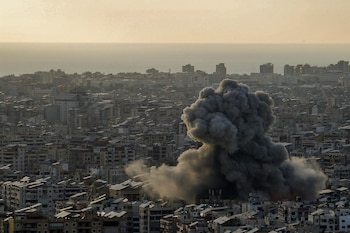
Israel’s Military Actions in Lebanon: A Complex Landscape
The recent military actions by the Israel Defense Forces (IDF) in Lebanon have raised questions about the sustainability of the current ceasefire agreement established in late 2024. Reports confirm that the Israeli Army has conducted multiple airstrikes targeting various locations in Lebanese territory, particularly aimed at what they describe as “infrastructure for the production and storage of strategic weapons.” This has led to renewed tensions between both countries.
In a statement shared on their social media platform, the IDF emphasized that their operations were focused on the Beqaa Valley in eastern Lebanon and regions in the country’s south. Specifically, the IDF’s targets included sites believed to be involved in the production of explosives utilized by Hezbollah , labeled as a terrorist organization by Israel. The IDF openly condemns such infrastructure as a legitimate target under their mandate to protect the state of Israel.
“Among the attacked infrastructure were facilities used for the production of explosives and an underground location for missile production, along with storage facilities for strategic weapon stockpiles,” the IDF stated. This assertion underscores Israel’s perception of an ongoing threat from Hezbollah, positioning their military actions as a necessary response to a deteriorating security landscape.
In addition, the Israeli military accused Hezbollah of violating the ceasefire agreement by allegedly rebuilding infrastructure that had been previously dismantled. According to the IDF, these actions constitute blatant agreements’ violations enacted between Israel and Lebanon over recent months. As tensions escalate, Israeli authorities argue that their continued military operations are a defensive measure aimed at protecting their citizens.
Despite Israel’s rationale, Lebanese and Hezbollah authorities have been vocal in their condemnation of these recent attacks, asserting that such military provocations undermine the essence of the ceasefire agreement. The United Nations has also criticized these actions, stressing the adverse effects they could have on Lebanon’s stability and potentially leading to a resurgence of hostilities within the region.
The ceasefire agreement, which emerged following an intense cycle of conflict initiated by the attacks on October 7, 2023, involved both Israel and Hezbollah committing to withdraw their military forces from the southern Lebanese territory. The intention behind this agreement was to foster a more peaceful coexistence, yet it appears increasingly strained under the actions of the Israeli military.
One key sticking point has been Israel’s maintenance of five military positions within Lebanon since the agreement was signed. The Lebanese government , along with Hezbollah leaders, has demanded the immediate withdrawal of Israeli forces from their territory, challenging the legitimacy of Israel’s continued military presence. This ongoing friction not only complicates the immediate situation but poses a long-term threat to peace in the region as both sides continue to assert their respective rights.
The current military engagements illustrate a broader dynamic at play in the region. Hezbollah , bolstered by its relationship with Iran and its stated mission of resisting Israeli influence, remains a formidable force, while Israel’s consistent reprisals reflect its broader strategic goal to curtail any threats to its sovereignty. This cycle of retaliatory actions suggests that the pathway to lasting peace will require extensive dialogue and concessions from both sides.
In conclusion, the situation in Israel and Lebanon remains a complex and volatile one. The escalation of military actions by Israel raises significant concerns about the future of the ceasefire agreement and the overall stability of Lebanon. As both nations grapple with deeply entrenched grievances, the international community watches closely, aware that any misstep could ignite a broader conflict in an already fragile region. To resolve this longstanding conflict, a concerted effort, grounded in diplomacy and mutual recognition, will be essential, lest history repeat itself.