

Tragic End of a Criminal Mastermind: The Murder of Norbey Olivares Rojas
On July 29, 2025, a significant chapter in the criminal saga of Norbey Olivares Rojas, infamously known as El Diablo, came to a brutal end. At approximately 3:49 PM, the notorious criminal exited a Mercedes Benz truck on Avenida del Llano in Villavicencio. Just steps away from his vehicle, he was ambushed by an armed group, clad in police uniforms, who unleashed a hail of gunfire. Despite immediate medical attention, doctors confirmed his death shortly after his arrival at the hospital.
The incident raised serious questions regarding public safety and institutional integrity. Villavicencio’s mayor, Alexander Baquero, made a public statement on social media: “In the midst of a shooting, Alias El Diablo died—a questioned character who allegedly held control over various regions of Villavo.” Baquero’s comments highlighted the challenges local authorities faced in tackling organized crime and the susceptibility of public institutions to criminal influences.
The Rise and Power of El Diablo
For years, Olivares Rojas had been synonymous with fear, marking a criminal career rife with drug trafficking, extortion, and selective violence throughout the region. According to reports from Semana, he controlled over 60% of criminal enterprises in Villavicencio, acting as both a middleman in the drug trade and orchestrating targeted killings.
A law enforcement source elucidated his methodology: “He was responsible for receiving requests—if someone needed eliminating, he coordinated every aspect.” The extent of his power became glaringly evident during a major operation in May 2024, wherein law enforcement officials orchestrated one of the city’s most extensive crackdowns. In a series of 17 raids, nine individuals were apprehended, including Olivares himself. Mayor Baquero emphasized the community’s role in these efforts, stating, “This is an achievement of the National Police and the Prosecutor’s Office, but also of all Villavicenses who demand security.”
Threats and Intimidation: A Culture of Fear
Governor Rafaela Cortés Zambrano highlighted the gravity of the threats posed by Olivares, noting that both his campaign for government and Mayor Baquero’s were subjected to direct intimidation. The infiltration of organized crime into local politics creates a culture of fear that hampers effective governance.
The Attorney General’s Office had charged Olivares with serious crimes, including homicides, drug trafficking, and extortion. They stated, “The evidence provided was crucial for a court to impose a prison sentence on El Diablo, who was allegedly at the helm of a criminal organization involved in various illegal activities.”
Olivares held connections with the FARC’s dissident groups, including the 39th Front, purchasing narcotics for distribution in the region.
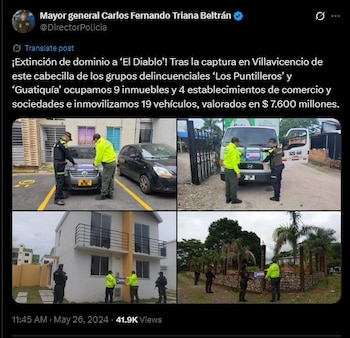
The Economic Fallout of a Criminal Empire
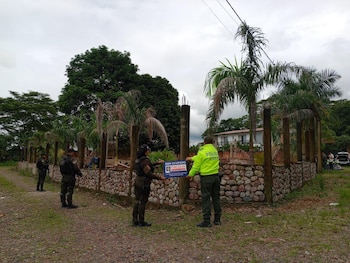
Illicit substances were reportedly stored on a farm owned by Olivares, situated on the city’s outskirts, before being distributed for retail sale. The economic implications of cracking down on his operations were significant. Following Olivares’s arrest, authorities confiscated nine properties, four businesses, and 19 vehicles, with a total value of 7.6 billion pesos.
Despite the largeness of this operation, the judicial process against Olivares was ultimately undermined. Reports from Semana suggested that the evidence presented by the Prosecutor’s Office was insufficient, allowing his defense team to successfully argue for his release due to the expiration of judicial time limits.
On June 16, 2025, after a prolonged period of detention that lasted 270 days, the Second Judge of Guarantees Control in Villavicencio ordered Olivares’s release. During the hearing, only his legal representative, his wife Angelica, and the presiding judge were present—neither the Prosecutor’s Office nor the Attorney General’s Office showed up. This series of events culminated in Olivares regaining his freedom, albeit briefly, as he was killed just 43 days later.
The saga of El Diablo serves as a stark reminder of the challenges facing law enforcement and the judicial system in combatting organized crime in Colombia. His case underscores the need for comprehensive strategies to address the nexus between crime, political corruption, and societal impact, striving towards a safer environment for all citizens.