

Tensions Escalate: U.S. Nuclear Weapons Return to the UK
Recent geopolitical developments have escalated tensions between the United States and Russia, marked by a significant shift in U.S. foreign policy. President Trump has aggressively hardened his stance against Moscow, issuing a short ultimatum for Russian President Vladimir Putin to agree to a ceasefire in Ukraine. If Russia fails to comply within 10 to 12 days, the U.S. will impose harsher sanctions. This timeline adjustment underscores the seriousness of the situation and reflects a broader military strategy involving nuclear assets.
Strategic Military Movements
The situation took a dramatic turn when the U.S. confirmed the presence of nuclear weapons in the United Kingdom for the first time since 2008. A flight monitored on July 16 indicated that a C-17 plane from the U.S. Air Force transported these weapons to RAF Lakenheath, a well-known base in eastern England. The move is being interpreted as a clear signal to Moscow that the U.S. remains committed to European security.
The Role of Modern Nuclear Armament
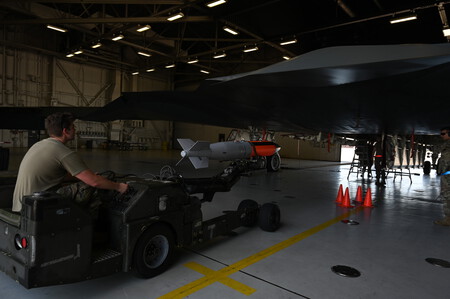
The nuclear weapons being positioned are the advanced B61-12 bombs, which offer enhanced flexibility and precision compared to earlier models. They can be deployed in tactical scenarios, making them more adaptable for various military operations. This adaptability allows them to target specific threats more effectively, thereby increasing their strategic value.
A New Chapter in NATO’s Nuclear Strategy
The return of U.S. nuclear weapons to the U.K. not only serves as a symbolic gesture but also has significant implications for NATO’s nuclear strategy. This move allows the Royal Air Force to reintroduce a nuclear mission that had lapsed following the Cold War, thereby enhancing its role within the broader framework of NATO deterrence.
The British Ministry of Defense is expected to acquire additional F-35A fighters specifically designed to carry these bombs, solidifying the UK’s position at the heart of NATO strategy. With Lakenheath now part of a network of bases housing American tactical nuclear weapons across six European countries, the U.S. aims to better counterbalance Russia’s considerable short-range nuclear arsenal.
Political Implications
The timing of this nuclear repositioning coincides with a notable shift in Trump’s diplomatic strategy toward Russia. Following a series of contentious interactions, the U.S. has taken a firmer stance by pressing for additional military support to Ukraine, including the deployment of Patriot missiles and other defensive systems. Simultaneously, this move showcases a commitment to deter any potential nuclear advantage that Russia may seek to exploit in the European theater.
Analysts Weigh In
Experts are observing these developments closely. Analysts such as Sidharth Kaoushal argue that this modernization of nuclear capabilities serves to mitigate the imbalance created by Russia’s extensive non-strategic nuclear armament. Others, like Hans Kristensen, confirm that the recent deployments signify a more extensive operational change within U.S. and NATO defense strategies, further complicating the dynamics of nuclear deterrence.
Conclusion
The reintroduction of American nuclear weapons in the UK signals a major shift in NATO’s strategy and serves as a powerful reminder of the nuclear dimension in global security. This development is not merely about military assets but encapsulates the broader tensions between the West and Russia. As the geopolitical landscape continues to evolve, the implications of these military maneuvers are likely to resonate well beyond the borders of Europe, affecting global security dynamics for years to come.
In an age where modern warfare adapts to technology-driven combat scenarios, the reemergence of nuclear capabilities underscores the enduring nature of nuclear deterrence as a fundamental pillar in international relations. The conflict in Ukraine thus represents not only a conventional military engagement but also a complex interplay of old and new weapons of war, where diplomacy and deterrence continue to shape the global order.