
The Impact of Tariffs on Spanish Farmers: Facing New Challenges
Spanish farmers find themselves influenced by factors beyond their control, constantly torn between natural conditions and political decisions . The recent agreement signed between the European Commission and the United States dramatically changes the landscape for agricultural exports. The pact, viewed critically, imposes a 15% tariff on various European products, notably affecting the wine, olive oil, and garlic sectors.
Disappointment and caution are palpable among these industries.
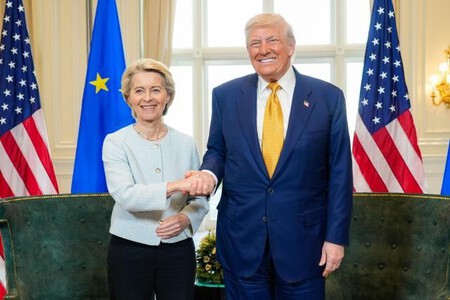
The recent deal signed by Donald Trump and Ursula von der Leyen has led to widespread concern. By opting for a lower 15% tariff instead of a looming 50% , European exporters avoid unimaginable consequences. However, many industries are worried that this tariff, while reduced, still significantly diminishes competitiveness in the U.S. market.
Yet, it’s crucial to examine what this agreement entails beyond the headline tariff. Early indications suggest that the 15% tax may not apply reciprocally for American goods. As per the pact, Europe is expected to purchase $750 billion worth of U.S. energy products over the coming years. Certain products may enjoy “zero by zero tariffs,” but specific details are yet to be defined.
</div>Beyond Wine and Olive Oil. The list of “zero tariffs” may also include crucial American staples such as chemicals, semiconductor equipment, and “certain agricultural products.” It remains unclear which products will qualify and how the tariff will apply to the remaining categories.
Producers in the wine and olive oil sectors have already raised alarms, fearing significant consequences. The Wine Employers Association (CEEV) warns that a 15% tariff could lead to a 10% decline in their sales in the U.S. market. Similarly, olive oil producers have expressed their concerns, calling the tax “totally negative” while urging caution.
The distress is not confined to just wine and olive oil producers. News outlet Efeagro reported additional sectors feeling the heat, including almonds, fish preserves, and notably, the garlic industry , a vital contributor to the Spanish agricultural landscape. While not as lauded as the wine sector, Spain is a world leader in garlic production , making the U.S. market particularly critical.
The Garlic Sector in Jeopardy. At the onset of the new fiscal cycle, the Federation of Fruit and Vegetable Producer Associations (FEPEX) noted that during the first ten months of 2024, Spain exported 14,604 tons of garlic to the U.S., marking it as the top fruit and vegetable export to that nation—outpacing onions and other goods. With projections indicating that more than 3,200 tons have already been shipped in the first five months of 2025, valued at €15 million , it is evident that the stakes are high.
</div>Impacted Producers. Without knowing specific terms of the agreement, garlic producers stand to suffer the most, as their product remains the best-selling in the U.S. fresh fruit and vegetable market. The FEPEX further reveals that the value of garlic exports accounted for 75% of total exports for the sector from January to May.
Producers of almonds are equally perturbed. The Spanish Association of Ecological and Conventional Almond Producers has noted that the agreement leaves them in a precarious situation, dubbing the situation as a “drop in girdle and pants” for farmers. They chastise the European Union’s decision to impose tariffs that exceed those on American imports.
A significant disparity lies in the U.S.’s dominance in almond production, contributing to around 85% of the global market, dwarfing the EU’s output. Despite Spain’s notable position within Europe, the imbalance poses a threat to local almond producers.
Anticipation and Uncertainty. The fishing sector is also awaiting clarity on how the 15% tax will be implemented. As noted by Roberto Alonso from Anfaco-Cytma , the industry needs further technical details regarding the agreement. They export various seafood products and also import crucial raw materials, making the tariff implications significant.
The imposition of tariffs affects trade dynamics and the behavior of market stakeholders. Anfaco previously highlighted that Spanish markets depend heavily on U.S. imports, with over 26,000 tons of seafood products exported in 2024 alone, valued at €290 million .
As Spanish farmers grapple with the realities of this influential and potentially damaging agreement, the future remains uncertain. Each sector, from wine to garlic and fishing, will require a comprehensive understanding of the new economic landscape created by these tariffs.
In summary, the recent agreement between the European Commission and the United States presents a complex web of challenges and opportunities for Spanish farmers. As they look to navigate this landscape, the implications of the imposed tariffs could either hinder or open new avenues for growth, depending on how these regulations are managed and adapted to in the coming years.