
Emerging Concerns Over Nuclear Waste in Galicia
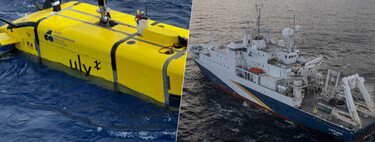
A few weeks ago, more than 1,800 nuclear waste drivers began to emerge from the seabed off the Galician coast. This stark image reopened a long-standing debate: what do we do with the remains of an era that seems to be fading away, yet remains ever-present? While Galicia demands immediate answers and stronger surveillance measures, an equally pressing nuclear issue lurks beneath the surface: the fate of waste that will be generated by nuclear plants scheduled to close in 2027. As nuclear energy moves toward an exit strategy, the question of waste disposal looms large.
Provisional Solutions for Expanding Problems
The Nuclear Safety Council (CSN) has given conditional approval for the design of the Hi-Storm FW container version G. According to an official CSN press release, Enresa, the public company tasked with managing radioactive waste, has requested this container for the temporary storage of spent fuel from the Almaraz, Ascó, and Vandellós II nuclear plants.
This move does not offer a definitive solution but remains essential for the interim. Each Hi-Storm container can hold up to 37 fuel elements from pressurized water reactors (PWR) and 89 from boiling water reactors (BWR). These containers will play a crucial role during dismantling operations slated between 2027 and 2035. While nuclear energy is phasing out, its waste demands a secure storage solution until a more permanent answer can be found.
Digging Deeper into Waste Management
This movement is part of a much larger initiative. Enresa has officially reactivated the Deep Geological Repository Project (AGP), a plan that had been on hold for nearly three decades. The first phase has already been awarded to Amphos 21, a specialized consultancy.
The AGP aims to serve as an underground nuclear cemetery—a method to isolate nuclear waste in stable geological formations for thousands, if not hundreds of thousands, of years. This complex project combines natural barriers with artificial confinement technologies. According to Enresa, the entire timeline extends until 2100, involving eight stages that encompass everything from initial scientific studies to construction and eventual sealing of the facility.
Project Timeline and Inspirations
Currently, the AGP is in its initial phase, focusing on technology collection, technical documentation review, and legislative framework preparation, which is expected to be defined between 2026 and 2028. Starting in 2029, potential locations will be identified and evaluated thoroughly by 2039. The construction of the underground laboratory, along with the technical and environmental licensing processes, will extend until 2059. The AGP is expected to become operational by 2073 and will function until 2100, when it is anticipated to be finally sealed.
This project draws inspiration from Onkalo, the first operational AGP in Europe located in Finland. Onkalo is excavated more than 400 meters deep and is designed to secure waste for 100,000 years, with a commitment to sealing it after that period.
Pressure from Industry Stakeholders
However, not everyone is content with this timeline. Major energy companies, including Endesa, Iberdrola, Naturgy, and EDP, have expressed concerns regarding the deadlines. They have urged the government to advance AGP implementation to 2050. The primary motivation behind this push is to free up land currently occupied by aging nuclear plants for new industrial uses. Additionally, these companies have taken their grievances to the Supreme Court, challenging the rise of the “Enresa rate,” which finances nuclear dismantling efforts.
This business pressure raises an essential debate: who should shoulder the real costs associated with nuclear energy once it ceases to produce electricity?
Current Storage Strategies
In the aftermath of the failed centralized storage project in Villar de Cañas (Cuenca), Spain has shifted to a decentralized network of silos, with one designated for each nuclear plant. However, these facilities were not designed to accommodate storage beyond 50 years. The Hi-Storm FW container initiative serves as a critical interim solution, strengthening the safety of temporary storage and affording more time for the AGP to come to fruition.
Future Alternatives
Ultimately, the best nuclear waste is the waste that isn’t produced. Technologies like nuclear fusion, although still in experimental stages, do not create hazardous waste. Though there are improvements within nuclear fission, such as molten salt and thorium reactors, which could allow for more efficient fuel use and shorter-lived radioactive waste, these options have yet to become economically viable. Until then, the AGPs remain the only feasible route for managing nuclear waste.
A Long-Term Challenge for Spain
As Spain prepares to close its nuclear energy chapter, the reality is that waste does not exit alongside the reactors. The nation faces significant technical, environmental, and moral responsibilities that will extend for generations. The approval of the Hi-Storm FW container and the renewed focus on AGPs are just the beginning of a long-term challenge that poses questions about how we plan for the future.
In an ever-evolving world, few decisions require foresight into timelines stretching 100,000 years, compelling us to consider the legacy of nuclear energy as we navigate this complex terrain.