
The Lethal Side Effects of Climate Change: Locking Us Inside
The increasingly frequent heat waves are not harmless for the population, as they cause thousands of deaths each year, particularly affecting vulnerable groups. Beyond these tragic outcomes, rising temperatures are causing many people to reduce their physical activity. When the streets become unbearably hot, sedentary lifestyles spike dramatically.
Research Insights on Heat and Activity Levels
Recent studies have shed light on this concerning trend. A major publication from March this year analyzed data from 156 countries collected between 2000 and 2022, identifying the “thermal frontier” where people transition from active to sedentary lifestyles. Specifically, researchers placed the critical average temperature at 27.8ºC. For each additional month a region exceeds this threshold, global physical inactivity increases by 1.5 percentage points. The impacts aren’t trivial; reduced physical activity has direct physiological consequences.
Future Implications of Sedentary Lifestyles
If current trends continue, the statistics are chilling. Physical inactivity, solely attributable to excessive heat, could lead to between 470,000 and 700,000 additional premature deaths annually worldwide. This does not account for economic impacts, with estimates indicating annual losses between 2.4 and 3.68 billion dollars due to reduced productivity and increased healthcare costs.
Geographical Disparities: The Case of Spain
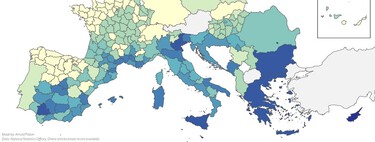
Spain is particularly vulnerable due to its geographic location and susceptibility to desertification, distinguishing it as one of the European countries most affected by this phenomenon. Other critical regions include Central America, the Caribbean, sub-Saharan Africa, and Southeast Asia. To fully understand the severity, it’s essential to examine studies that analyzed 74 years of hourly data to create the concept of “limiting heat.” This refers to environmental conditions under which the human body cannot engage in physical activity outdoors without reaching dangerous core temperatures.
The Escalating Crisis of Climate Confinement
The alarming takeaway is the rapid increase in “working hours” lost to extreme heat conditions—this has doubled since the 1950s. Even younger adults, who historically faced about 25 hours of extreme heat annually, are now contending with 50 hours, and this trend is expected to persist. For seniors over 65, the situation is graver, with their exposure increasing from 600 hours to over 900 hours per year, suggesting they spend more than 10% of the year in restrictive environmental conditions.
Rethinking Urban Planning
The World Health Organization (WHO) has warned that climate change acts as a “threat multiplier.” Not only does heat directly impact health, but it also exacerbates modern pandemics such as obesity, cardiovascular diseases, and diabetes by fostering sedentary lifestyles.
To combat this issue, solutions cannot simply revolve around suggesting people exercise earlier or join air-conditioned gyms. We must rethink urban landscapes. If streets lack shade and parks are devoid of climatic shelters, walking will shift from a recommended activity to a dangerous endeavor for several months each year.