

Unmasking Seth Meyers: Reflections on Life, Comedy, and Family
“At first, it was hard for me to enjoy being the protagonist.” This honest reflection from Seth Meyers emerged during a candid conversation with Dax Shepard on the podcast Armchair Expert. The discussion offered a profound glimpse into the American presenter’s life—both personal and professional—unveiling layers of complexity behind his public persona.
Known for his brilliant commentary and wit, Meyers has solidified his place in the realm of late-night comedy, yet his journey was fraught with challenges. He shared anecdotes from his early days at Northwestern University, where a series of rejections from the university’s improvisation group left him disheartened. “I auditioned for three years for the improvisation group, and I didn’t stay. That drove me to look for other opportunities in Chicago,” he explained. This determination paved the way for his illustrious career.
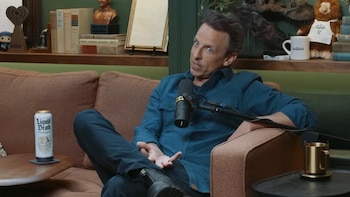
His journey eventually led to Saturday Night Live (SNL), where the environment was not kind to those lacking confidence. Meyers candidly stated, “In SNL, the level of demand is very high. At first, I felt that I had to prove that I deserved to be there.” This fierce competition gave way to invaluable lessons about collaboration and support among colleagues. “When you think about it, everyone was pushing me to do well. It was the wind in favor, not against,” he reflected.
Finding His Voice on Late Night
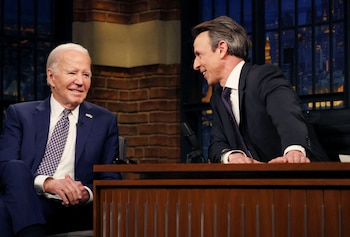
As he transitioned to Late Night, Meyers faced the distinct challenge of being in the direct spotlight. Learning to embrace this new prominence was integral to defining his unique style as a host. Despite his success, he admitted to grappling with imposter syndrome, a common struggle for many in creative professions. “I make these specials of stand-up to try something that nobody asked me to try: I can also do stand-up because I feel that people don’t see me like that,” he confessed.
Meyers shared a humorous anecdote about the late Shimon Peres, former Israeli Prime Minister and Nobel Peace Prize winner. Upon studying Peres before their meeting, he was amused to find that Peres had also checked his Wikipedia page. This interaction helped him contextualize celebrity and fame, emphasizing their human dimensions. In his special, Dad, Man, Walking, he humorously navigates the ups and downs of “imperfect parenthood,” emphasizing the relatable struggles of raising children in the public eye.
The Power of Collaboration
In a notable shift from the competitive nature of late-night television, Meyers highlighted the growing cooperation and camaraderie among hosts. During a writers’ strike, he, along with other prominent figures like Jimmy Kimmel, Jimmy Fallon, Stephen Colbert, and John Oliver, created the podcast Strike Force Five, which underscored a newfound brotherhood among presenters. “Before, the wars of Late Night were news. Now, there is more respect and camaraderie,” he noted, emphasizing the necessity of solidarity in facing the industry’s challenges.
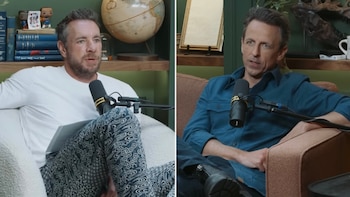
Meyers also opened up about the profound influence of his family, notably the impact his father had on his life. “The relationship with my father was key. He was always very affectionate, but also demanding,” he shared. This dynamic not only instilled a work ethic in him but also contributed to personal growth, albeit with occasional tensions. His experiences at home inspire much of his comedic material, showcasing the realities of parenting under public scrutiny.
Navigating Parenting in the Public Eye
Parenting comes with unique challenges, especially for someone constantly in the media spotlight. Meyers emphasized the impact of his public persona on how he shares personal family stories in his comedy. He mentioned, “When I do stand-up, I give myself the freedom to talk about everything, but when it comes to recording a special, I think a lot about the impact that can have on my children.” Balancing vulnerability with discretion is an ongoing learning process for him.

The comedian humorously tackled the intricacies of parenting, noting, “I try not to shout at home, but when my father is around, the children experience another form of authority.” This blend of parenting styles creates a rich tapestry of experiences for his children, showcasing generational differences and the value of varied upbringing.
Lastly, addressing the current landscape of political commentary in late-night television, Meyers expressed a shared fatigue within the audience and creators, particularly after the 2016 election. “After the election, I felt a real exhaustion. We could not do the same type of program, so we decided to seek joy at work and project it,” he admitted. His outlook reflects a broader trend in the industry, focusing less on political drama and more on bringing joy to the audience.
As Meyers looks to the future, he acknowledges the challenges of sustaining the late-night format in a changing media landscape. “I am no longer afraid of not being good enough; now I am worried that the ecosystem may cease to support this format. But at least I know that I built a trajectory that I feel proud of,” he concluded, encapsulating the journey of a man constantly evolving while staying true to himself.