
The Shifting Dynamics of US-Russia Relations as Seen by China
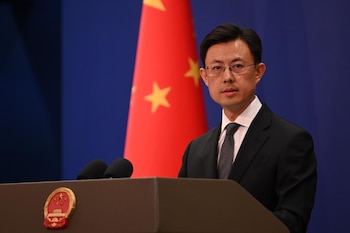
The Chinese government has applauded on Tuesday the “advances” registered towards the normalization of bilateral relations between the United States and Russia. This development is critical as it provides ” stability and peace ” worldwide, as communicated by Guo Jiakun, the spokesman for the Foreign Ministry . This affirmation emphasizes China’s growing interest in the dynamics between these two global powers.
China’s enthusiasm for improved US-Russia relations comes amidst a backdrop of complex geopolitical maneuvers. Guo asserted that China “sees with joy” this improvement and underscored the importance of a potential meeting between US President Donald Trump and Chinese President Xi Jinping. Recently, Trump confirmed receiving an official invitation from Beijing, signaling a thaw in tensions that have long characterized US-China relations.
Despite this optimistic outlook, Guo was quick to clarify that he had no information regarding a proposed meeting between Trump and Russian President Vladimir Putin . This speculation arose after high-ranking Kremlin officials indicated that Putin would be traveling to Beijing from August 31 to September 3 for the Shanghai Cooperation Organization (SCO) summit. Additionally, this visit commemorates the 80th anniversary of China’s victory over Japan and the conclusion of World War II.
Recent Developments in US-Russia Relations
The recent trajectory of US-Russia relations has shown signs of a notable turnaround since February, when Trump and Putin engaged in a telephone conversation —their first since Trump took office for a second term. This interaction appears to have rekindled some level of dialogue between the two states, which had been strained due to previous conflicts, particularly the ongoing crisis in Ukraine.
One pivotal issue in their discussions remains the ongoing Russian invasion of Ukraine . Trump has publicly demanded that Putin should bring the conflict to an end swiftly, expressing disappointment over his stance. The urgency of the situation was reflected in Trump’s recent remarks, wherein he shortened the timeframe for a potential truce from 50 days to a mere 10 days. This development underscores the pressure on Russia to reconsider its aggressive tactics in the region.
The Broader Implications for Global Politics
China’s supportive stance on improved US-Russia relations highlights its strategic interests in establishing a multi-polar world . By encouraging dialogue between these two superpowers, China positions itself as a stabilizing force on the world stage. This reflects a broader strategy to capitalize on the relative decline of US influence and the rise of other powers, including itself and Russia.
Furthermore, the potential thaw in US-Russia relations could have far-reaching implications for other global conflicts and international cooperation. Should dialogue continue to progress, it may pave the way for coordinated efforts on critical issues such as nuclear disarmament , climate change , and combating global terrorism.
However, skeptics warn that historical tensions and deeply ingrained mistrust between Washington and Moscow could complicate any efforts towards genuine cooperation. The complexities of both countries’ domestic politics, as well as third-party influences, may obstruct the path towards meaningful engagement.
As the global landscape evolves, nations like China stand ready to navigate this intricate web of relationships. With its eyes on diplomatic gains , China continues to promote discussions not only with the US and Russia but also among other strategic partners, further embedding itself in international affairs.
Ultimately, the state of affairs between the US and Russia remains fluid and intricately intertwined with the actions of other global players. Whether the positive momentum can be sustained will depend on the willingness of all parties involved to seek collaboration over confrontation.
In summary, the shifting dynamics in US-Russia relations are not just a bilateral matter but are reflective of larger trends in global politics, influenced significantly by China’s role as a mediator and a rising power.