
Scott S. Sheppard: The Unsung Hero of Astronomy
When you think of renowned astronomers, names like Copernicus , Galileo Galilei , or even Carl Sagan may spring to mind. Add the condition “alive” to the mix, and you might mention Neil deGrasse Tyson or, for music lovers, Brian May of Queen. However, one name that remains a hidden gem in the astronomical community is Scott S. Sheppard —an astronomer whose contributions are as prolific as they are underappreciated.
The Record Keeper of Moons
If Cristiano Ronaldo is the highest scorer in professional football history, Scott S. Sheppard holds a similar title in the realm of planetary exploration. In his career thus far, he has documented over 200 planetary moons : 78 of Jupiter , 119 of Saturn , plus three from Uranus and three from Neptune .
This impressive number represents nearly half of all known planetary moons , a record likely to remain unbeaten for the foreseeable future. Sheppard continues to expand this impressive tally with new discoveries rolling in regularly.
The True Monarch of Jupiter
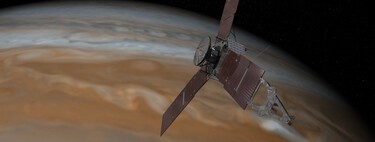
And yes, he has discovered these moons. With this addition, he now boasts nearly 80 moons of Jupiter under his belt. This achievement is particularly remarkable when you consider that Galileo Galilei discovered Jupiter’s first and largest moons over 400 years ago in 1610. Since 2000 , Sheppard has dominated the search for Jovian satellites, consistently outperforming his contemporaries.
The Quest for Planet 9
Sheppard’s impressive track record reads more like an astronomical resource than a personal accomplishment. In addition to his discoveries of moons orbiting Jupiter , Saturn , Uranus , and Neptune , he has also identified 23 minor planets , proposed six potential dwarf planets , and even has three comets named after him: Sheppard-Trujillo , Sheppard-Tholen , and Trujillo-Sheppard . Moreover, he discovered the most distant object in our solar system, 2018 AG37 —nicknamed “Farfarout” —which lies approximately 130 times the distance between Earth and the Sun.
What deeply fascinates observers of Sheppard’s work is that many of his discoveries concern trans-Neptunian objects , such as 541132 Leleākūhonua , also known as “The Goblin.” These findings are not mere happenstance; he, alongside his colleague Chadwick Trujillo , made these discoveries while searching for something even more significant: the elusive Planet 9 . They proposed the existence of this distant, super-Earth-type planet back in 2014 to explain the unusual grouped orbits of objects like the minor planet Sedna .
The significance of Sheppard’s research cannot be understated. As scientists continue to unravel the mysteries of our solar system, it’s clear that his work will have lasting implications for our understanding of planetary formation , orbital dynamics , and even the potential for discovering new celestial bodies.
In conclusion, Scott S. Sheppard may not be a household name like some of his fellow astronomers, but his contributions to the field make him a titan in the realm of planetary science. Through dedication and perseverance, Sheppard has carved a niche for himself, proving that the frontiers of discovery are limitless. His impressive resume, filled with numerous celestial discoveries, serves as a testament to the importance of ongoing research and exploration in astronomy, underscoring that every day holds the potential for new revelations about our universe.