
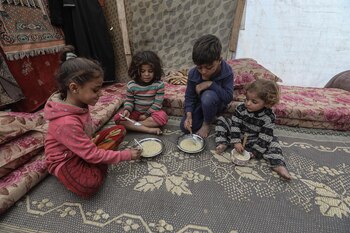
The alarming state of global hunger has come under renewed scrutiny, with the release of the latest report from the UN Food and Agriculture Organization (FAO). Manuel Sánchez-Montero, the general director of Action Against Hunger, emphasized that although there may be signs of “stabilization,” this should not mask the fact that the world is “failing those who need it most.” He pointed out that while some nations are making progress, others like Sudan and Gaza are seeing their hunger crises deepen.
Sánchez-Montero stressed that “hunger is not inevitable; it is the direct result of political decisions.” This assertion follows the release of FAO’s report titled ‘ The State of Food Security and Nutrition in the World ,’ which draws attention to the pressing issue of food insecurity and the rising prices that accompany it.
According to the FAO, the statistics are staggering: 2.3 billion people —approximately one in three globally—experience moderate to severe food insecurity . This is not merely about calorie consumption; true food security requires ensuring a dignified life free from uncertainty. The figures reflect a grim reality that demands immediate action.
Africa stands at the heart of this crisis, with nearly half of the world’s hungry population residing there. Regions in Sudan like Central Darfur and South Kordofan, devastated by over two years of armed conflict, have seen Action Against Hunger extend its aid to 816,943 individuals through various nutrition and health programs from April 2023 to December 2024.
In Gaza , the situation is even more dire; reports indicate that 100% of the population is facing acute food insecurity due to a blockade on humanitarian assistance. Here, around 100 professionals are on the ground, engaging in nutrition and food security initiatives, distributing essential nutritional packages, and managing feeding spaces for infants and young children.
The NGO has set an urgent goal of significantly reducing the alarming rates of acute child malnutrition , which currently affects 45 million children under the age of five worldwide—equating to 6.8% of this vulnerable demographic. This statistic underscores the necessity of immediate and sustainable interventions to combat child malnutrition.
Beyond the immediate nutritional needs, Action Against Hunger is also committed to tackling the relationship between acute violence and hunger. The organization aims to bolster and expand social protection systems , particularly in medium and low-income countries that have fragile infrastructures. By ensuring vulnerable groups have access to essential services—such as health, water, and food security—these efforts seek to mitigate the repercussions of economic, social, or climatic crises .
To address the vast challenges inherent in food insecurity, a multifaceted approach is essential. Political commitment, community involvement, and robust international cooperation are critical to combating the underlying causes of hunger. Solutions must focus not just on immediate relief but also on sustainable practices that ensure long-term food stability. This includes investment in local agriculture, improvements in supply chain management, and advocacy for policy changes that prioritize food access.
To drive meaningful change, it is crucial that global leaders, organizations, and community stakeholders unite in their efforts to eradicate hunger. Only by working together can we hope to transform the current landscape of food insecurity into one where every individual has access to nutritious food and a dignified life.
There is no denying that the fight against global hunger is daunting, but it is a challenge we cannot afford to ignore. Sustainable progress hinges on political will, adequate funding, and community engagement, paving the way for a hunger-free future . Together, we can make a change and fulfill the promise of a world where no one goes hungry.
General News – 2
General News – 2