
The Motorcycle Transition: Hanoi’s Bold Move to Electric Vehicles
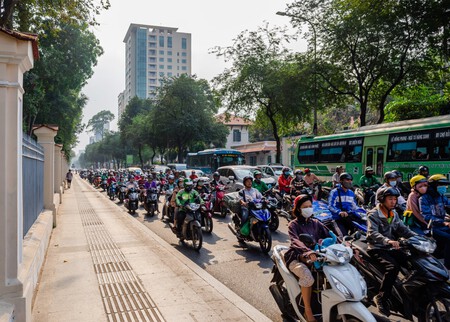
Hanoi, the vibrant capital of Vietnam, is home to a staggering eight million people, most of whom rely on motorcycles for daily transportation. Current estimates suggest there are between 6 and 7 million motorcycles within the city limits. Not surprisingly, this reliance on two-wheelers contributes to the country’s notable pollution problem. The Vietnamese government is now taking decisive action by banning all combustion motorcycles from the city center by July 1, 2026 , with further plans to eliminate them entirely by 2045 . This initiative aims to address not only air quality but also noise pollution in a city accustomed to the roar of engines.
As countries worldwide strive for decarbonization , Vietnam’s bold step is a reflection of a growing recognition of the environmental crisis . Major cities across Asia are grappling with pollution issues, and Hanoi is no exception. In light of this, there has been a rising demand for electric motorcycles , leading to potential opportunities for manufacturers focusing on sustainable solutions.
Hanoi’s Pollution Crisis and Government Initiatives
Named one of the world’s most polluted cities, Hanoi’s air quality often exceeds 17 times the maximum recommended levels set by the World Health Organization . This dire situation prompted the government to propose a ban on combustion engines back in 2017 , culminating in the definitive date for prohibition in 2026 . The initiative is part of a larger national strategy geared towards enhancing air quality and public health.
A Shift in the Market
<img alt="Vietnam Motorcycle Market" width="375" height="142" src="https://i.blogs.es/0b696a/vietnam-hombre-mas-rico/375_142.jpeg"/>This transition poses a challenge for a market where motorcycle ownership has historically been high, reaching an estimated 770 motorcycles per 1,000 people . As of September 2022, Vietnam had 77 million motorcycles registered, suggesting an entrenched culture around two-wheel mobility. This upcoming ban will impact not just Hanoi but also cities like Saigon and Da Nang , which are considering similar measures.
Electric Alternatives on the Rise
With the impending ban on combustion motorcycles, the market for electric alternatives is booming . The Vietnamese motorcycle market is currently experiencing sales of over three million units annually, with leading manufacturers like Honda and Yamaha dominating sales. However, a new contender is making waves in the sector: VINFAST , a local company specializing in electric motorcycles, is quickly gaining market share.
In the past few years, VINFAST has taken the lead in the electric motorcycle sector , capturing 43% of the market share. As consumer sentiment shifts toward more sustainable options, the demand for electric motorcycles has surged—rising from an estimated 5.4% market share in 2019 to 12% in 2022. Given the imminent transition, it’s expected that these numbers will skyrocket.
Challenges Faced by Local Residents
While the switch to electric motorcycles appears promising, it poses challenges for low-income families who rely on affordable motorbikes for their livelihood. With approximately 100 motorcycle models available, many models sell for less than $800 , making motorcycles accessible for the majority. However, the financial implications of this transition to electric alternatives may place significant strain on already vulnerable populations.
Support Programs for Transition
The Vietnamese government is contemplating financial subsidies aimed at assisting residents in transitioning from combustion to electric motorcycles. This support could potentially cover nearly half a million motorcycle exchanges, helping families adapt more smoothly to the changes.
In parallel, there are plans to bolster infrastructure, including electric charging stations, to support new electric motorcycle users. Public transportation options, such as electric microbuses, are also expected to expand in Hanoi and other cities. Saigon has already initiated this expansion by electrifying 400,000 rental motorcycles , signaling a strong public commitment to sustainable transit.
Looking Ahead
This ambitious transition cannot be accomplished without the involvement of major manufacturers. Companies like Honda and Yamaha will need to adapt their operations not only to supply domestic demand but also to maintain their export markets in Southeast Asia. The forthcoming changes will be monumental, affecting an entire industry that plays a crucial role in Vietnam’s economic landscape.
The path toward a more sustainable future is fraught with challenges, but the Vietnamese government’s initiative could serve as a model for other countries looking to tackle similar issues. As the world turns its gaze toward urban mobility solutions, Hanoi’s shift from combustion to electric motorcycles offers insight into the potential for sustainable urban transit.