
Suspicion and Disaffection: The Dismissal of 24 Buenos Aires Police Officers
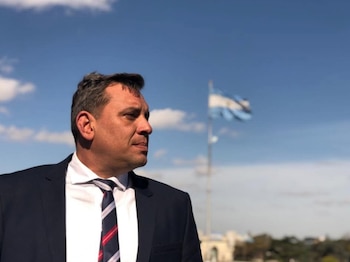
The recent decision by Buenos Aires Security Minister Javier Alonso to disaffiliate 24 members of the Buenos Aires police has sparked a wave of controversy, shedding light on concerns regarding the politicization of police operations in the province. In a comprehensive interview with the media outlet Infobae, Alonso provided insights into the allegations leading to the removal of these officers.
Alonso emphasized that the disaffection stems from serious misconduct, rather than political motivations. He disclosed, “They begin to provide security advice. In addition, they furnish information to legislators regarding police operations. Such actions are punishable.” His firm stance was clear: “We are not pursuing individuals based on their beliefs, but rather on actions that are incompatible with their duties as officers.”
During the discussion on Infobae’s live program a.m., hosted by Gonzalo Sánchez, Carolina Amoroso, Ramón Indart, and Cecilia Boufflet, Alonso outlined the internal police structure that had reportedly morphed into a political consulting entity with affiliations to a specific party. The troubling revelation indicates a blend between police duty and political agendas, an issue that raises concerns about the integrity of law enforcement.
Alonso attributed the disaffection of the officers to an anonymous complaint received by Internal Affairs. He clarified: “Nobody was expelled; they are reassigned to availability as a part of the investigation process. This is not about political sympathies. Officers cannot engage in partisan activities, as it is forbidden.”
The complaint alleging misconduct implicates police leaders in collusion with Maximiliano Bondarenko, a retired officer and candidate for La Libertad advances in Buenos Aires’ electoral third section. Notably, Alonso remarked, “We have a police group with a chief who is connected to Bondarenko – they share ties as mutual witnesses in a land trial.” Such revelations paint a disconcerting picture of personal relationships influencing police operations.
The complaint, examined by Internal Affairs, delineates how a separate structure within the police force employed official resources for events associated with La Libertad advances, thus supporting Bondarenko’s political ambitions. Alonso asserted, “These decentralized offices formed a structure that commenced functioning as political consultants.” Moreover, he affirmed the validity of the anonymous complaint due to the detailed testimonials and information contained within.
Among the most severe allegations is the claim that these officers provided inside information to national lawmakers regarding police operations, blurring the lines between law enforcement and political activity. Alonso stressed the importance of maintaining political neutrality, stating, “The use of police apparatus for political purposes is strictly prohibited.”
During the Infobae live interview, the minister elaborated, indicating that the initial complaint arose from someone within the same group, pointing to severe breaches of protocol among officers. He clarified, “A retired officer cannot command or convene active police officers.” He emphasized the responsibility lying with police leadership that allowed this misconduct to occur.
The disaffection procedure marks the beginning of an administrative investigation rather than a dismissal. Alonso reiterated, “They have the right to defend themselves, but due to the seriousness of these actions, they cannot continue in their roles.” This move aims to safeguard evidence and prevent interference with the investigation.
The situation escalated when Patricia Bullrich, the National Minister of Security, vehemently criticized the provincial governor, alleging he had an adversarial stance towards police forces and was lenient towards criminals. Reacting to the backlash, Alonso maintained focus on the need for the police force to uphold institutionality and protect against external influences.
The ongoing investigation, prompted by the anonymous complaint, is supported by various forms of evidence, including testimonials and electronic communications. Both Internal Affairs and specialists in cyber crimes are participating, and Alonso affirmed, “The investigation will determine any potential administrative or judicial actions that are warranted.”
As the situation unfolds, it serves as a crucial reminder of the delicate balance that must be maintained between law enforcement and political influences. The actions taken by Minister Alonso reflect a commitment to ensuring that the Buenos Aires police remain focused on their core duty: serving and protecting the community devoid of partisan entanglements.