
The Current State of the US Dollar in Foreign Exchange Markets
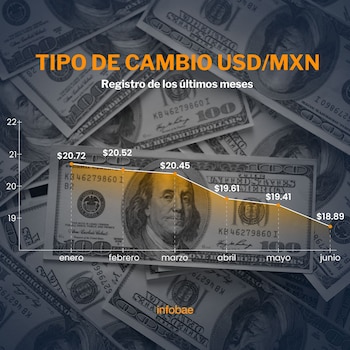
The US dollar continues to play a pivotal role in the global financial landscape. As of late, it has been traded at an average of 18.53 Mexican pesos, reflecting a slight decrease of 0.05% compared to the previous day’s closing. This movement indicates a moderate appreciation of the dollar amidst ongoing tariff pressures from the United States and various internal policy signs that impact exchange rates.
The uncertainty surrounding the possible implementation of a 30% tariff on goods has prompted many Mexican exporters to explore additional currency hedging options. If such measures are enacted, there are concerns that foreign direct investment in Mexico could see a notable decline. In response to these threats from the administration of Donald Trump, Mexican authorities have ramped up diplomatic discussions with the USA to mitigate the impact of potential tariffs.
Financial market analysts, including Felipe Mendoza of ATFX Latam, have observed that the stability of the peso amidst these tensions suggests a cautious optimism regarding a diplomatic resolution to the trade conflict. He noted, “While Mexico is currently seen as having underway institutional reforms, the risk remains heightened if tariffs come to fruition in August, potentially altering capital flows and worsening trade balances.”
Over the past seven days, the US dollar has decreased by approximately 1.32%. However, when looking at the performance over the last year, the dollar has experienced a 2.55% decline relative to the Mexican peso. Notably, this depreciation reflects a period of relative stability compared to the higher volatility of 12.15% experienced last year.
Examining Past Trends
In the early months of 2024, the peso started strong, reaching an exchange rate of 16 pesos per dollar—a level not seen for almost a decade. That period was appropriately nicknamed “superpeso.” However, as the year unfolded, the peso began to weaken due to various political and economic factors, including the contentious reform of the Judiciary and the elimination of several independent bodies.
The strength of the peso further deteriorated following Donald Trump’s electoral victory in the United States, marked by his threats to impose tariffs on all Mexican exports if border security issues were not addressed. Consequently, the dollar rose back to 20 pesos, veering away from the optimistic outlook presented by Banxico (the Bank of Mexico).
Looking towards 2025, Banxico has set a forecast for the dollar’s exchange rate to range from 20.24 to 20.69 pesos, a conservative estimation considering the potential ramifications of Trump’s policies in the White House.
Inflation metrics for 2024 have remained relatively stable, fluctuating around 4%, although it spiked to nearly 6% in June, according to the National Institute of Statistics and Geography (INEGI). For the current year, Banxico expects inflation to dip below four points, settling at around 3.8%. Meanwhile, the GDP forecast remains tepid at a mere 1.2% growth rate.
The Mexican peso commands respect as the country’s legal tender and holds the unique distinction of being the first currency globally to incorporate the $ sign, a symbol later adopted by the US for the dollar. Currently, the peso stands as the fifteenth most-traded currency worldwide, making it the most active in Latin America.
The currency, represented by the MXN abbreviation, has seen changes over the years; prior to 1993, it was referred to as MXP. The coins in circulation typically feature a semi-circular design with the national shield on the reverse side, and there are denominations of 1, 5, 10, and 20 pesos. Banknotes are available in 20, 50, 100, 200, 500, and 1,000 pesos.
The intricate relationship between the US dollar and the Mexican peso serves as a fundamental component of economic interactions between Mexico and the United States. Understanding these dynamics is crucial, especially in a time of heightened political tension and economic uncertainty. As both nations navigate this complex territory, the role of the dollar will undoubtedly remain central to trade and investment strategies.