
Political Reforms in Spain: A Look at Congressional Changes
The recent developments in Spain’s Congress have sparked significant attention, particularly surrounding the proposed reform of Article 98 of the Congressional regulations. The reform is intended to impose sanctions on accredited journalists who are deemed to hinder parliamentary work, a move criticized by some as a potential threat to press freedom.
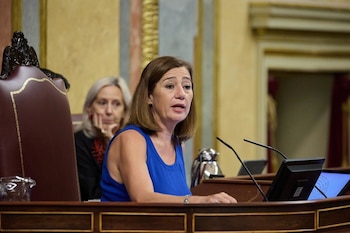
At the core of this debate, the president of Congress, Francina Armengol, has articulated her stance, asserting that these reforms are not intended to restrict the freedom of the press. Instead, she maintains that they aim to enhance the journalistic work essential in a democracy.
Armengol’s Defense of the Reform
In her statement, Armengol emphasized that journalism must take place in environments that embody respect and coexistence, referring to the parliament as a space where dignity and the rights of citizens are upheld. “This reform does not come to restrict freedom of the press or to restrict any right, at all. Rather, what we approve is an agreement so that, above all, journalists can do their job,” she stated.
This point seems to suggest that there has been a growing concern regarding the behavior of some members of the press during parliamentary sessions, prompting the need for these reforms. It raises the question of how the Congress can ensure that parliamentary discourse remains respectful while still safeguarding the essential role of the media.
The Balance Between Freedom and Respect
Armengol’s assertion that there cannot be an “attempt against the dignity” of individuals during press conferences highlights an important balancing act. The challenge lies in maintaining the freedom of speech and the press while ensuring that the discourse does not devolve into hostility. She has pointed out that there have been instances where journalists have disrupted discussions or engaged in behavior that does not align with the dignity expected in such high-level exchanges.
“Parliaments have to be, textually, places of word, respect and coexistence because the dignity of the people is at stake,” she added. This sentiment underscores the necessity of creating an environment where discussion can flourish without the risk of descent into chaos.
Potential Impacts on Journalism
However, critics argue that imposing sanctions on journalists could set a precedent that might lead to self-censorship or deter journalists from pursuing hard-hitting investigative reporting. Rather than fostering an environment conducive to public inquiry, this reform could be seen as a mechanism for silencing dissenting voices.
The implications extend beyond the Congress itself; they bring into question the relationship between politics and the press in Spain. Could this reform indicate a shift toward a more controlled narrative, limiting the voices that can challenge authority? As media professionals debate the fine line between professional conduct and press freedom, this development will certainly be scrutinized both domestically and internationally.
Armengol’s Perspective
Armengol has expressed her desire that such reforms would not have been necessary, stating, “As president of Congress, I would like not to have needed to reform the regulations to allow journalists to do their job.” This sentiment suggests a complex relationship between politicians and the media, where the need for reform highlights deeper issues within the system.
The introduction of such reforms challenges both journalists and lawmakers to engage in a dialogue about mutual respect while ensuring that the fundamental role of journalism is not compromised. The Congress finds itself in a pivotal moment where the tension between authority and accountability is brought to the forefront.
In conclusion, the recent discussions around the reform of Article 98 in Spain’s Congress present a nuanced challenge for both politics and journalism. As the debate unfolds, it will be crucial for all stakeholders—politicians, journalists, and citizens—to navigate these changes with a keen awareness of the dynamics at play, striving to maintain the balance between the respect afforded to parliamentary procedures and the critical role of a free press in a democratic society.