
US Military Withdrawal from Los Angeles Amid Protests
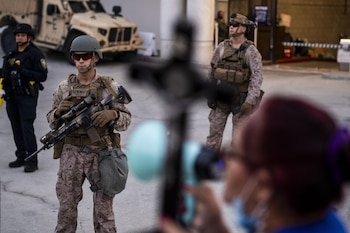
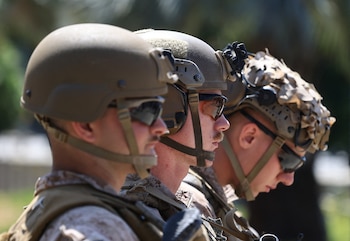
The United States Department of Defense announced on Monday the withdrawal of the 700 Marines deployed in Los Angeles. These troops were sent in early June by order of President Donald Trump to manage protests arising from migratory raids carried out by the Immigration and Customs Enforcement (ICE). This decision follows weeks of political clashes between the federal government and local authorities and comes days after California also announced the withdrawal of 2,000 members of its National Guard.
Restoring Order in Los Angeles
“With the return of stability to Los Angeles, Secretary of Defense Pete Hegseth has ordered the redeployment of the 700 Marines whose presence sent a clear message: anarchy will not be tolerated,” stated Pentagon spokesman Sean Parnell in a press release. He thanked the troops for their strength and professionalism, emphasizing their critical role in restoring order and defending the rule of law.
Contentious Presence of Federal Troops
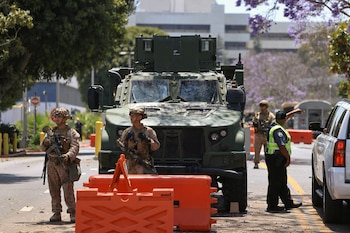
The deployment of the Marines was orchestrated by the White House, notably without the consent of California’s Governor Gavin Newsom or Los Angeles Mayor Karen Bass, both from the Democratic Party. The troops had a mission to protect federal buildings and support local law enforcement in response to demonstrations against the ICE raids that sparked turmoil across various cities in California.
Though the protests were largely peaceful, they did see episodes of violence, leading President Trump to authorize the deployment of more than 4,000 National Guard members and 700 Marines. Local leaders criticized this move, describing it as a “military occupation.”
“The people of Los Angeles spoke. This deployment was unnecessary,” declared Mayor Karen Bass in a video shared on social media. “I am glad that these soldiers can return to their families and leave our city,” she added.
The Political Fallout of the Military Deployment
Governor Gavin Newsom also voiced his concerns. In several statements and social media posts, he accused President Trump of weaponizing military forces for political purposes. He argued that the presence of federal troops represented a strategy of confrontation rather than a genuine need for public safety.
The tensions escalated as state officials publicly opposed the federal measures, resulting in intervention from a Federal Court of Appeals in California, which ultimately sided with the White House. This court ruling allowed President Trump to maintain operational control over the troops for several additional weeks.
The withdrawal of the Marines adds to the recent announcement concerning the withdrawal of 2,000 National Guard members from California, who were similarly deployed under presidential orders to assist during the protests. In that instance, Pentagon spokesman Sean Parnell indicated that the federal protection mission had concluded. Newsom labeled the operation as “political theater,” asserting that the administration was using soldiers as “pawns” to bolster its immigration stance.
Public Response and Future Steps
The presence of federal forces became one of the most contentious topics during the weeks of protests triggered by the government’s immigration policies. The ICE raids in early June instigated mass demonstrations throughout the state and reignited debates surrounding the use of military power in domestic issues.
The Defense Department confirmed that the withdrawal of the Marines could be completed “as soon as this Tuesday.” As this situation evolves, implications for both local governance and federal policy may continue to unfold, reflecting an ongoing tug-of-war over immigration and law enforcement measures.
(With information from EFE and Europa Press)