
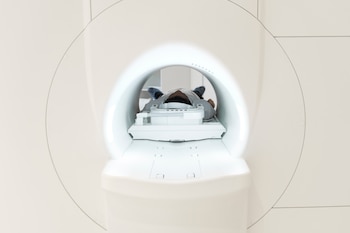
In Spain, nuclear power plays a critical role in energy generation, with five municipalities housing nuclear power plants, including locations like Almaraz, Ascó, Vandellós, Valencia, and Trillo. These facilities harness nuclear reactions to produce electricity without generating greenhouse gases and maintaining high efficiency .
However, the significance of nuclear energy extends beyond electricity generation. An underappreciated application of this technology is its role in nuclear medicine , a subspecialty of radiology used to diagnose and treat various forms of cancer , including prostate and thyroid cancers .
“Nuclear medicine utilizes marked molecules with radioactive isotopes that are introduced into the patient for diagnostic imaging, treatment, and research,” explains Dr. José Luis Carreras , an academic in Nuclear Medicine at the Royal National Academy of Medicine of Spain (RANME) and a Professor Emeritus of Radiology at Complutense University in Madrid.
These marked molecules are engineered to carry the radioisotope directly to the targeted organ or tissue, obtaining essential diagnostic information through imaging techniques such as PET (Positron Emission Tomography) and SPECT (Single Photon Emission Computed Tomography). Moreover, they also provide therapeutic doses of radiation to specific tissue, mainly targeting tumor cells through molecular radiotherapy .
Among modern diagnostic techniques, Theragnosis stands out as a promising method within nuclear medicine. This approach operates in two phases: initially conducting an imaging study, typically through PET, to check if the molecule binds to the tumor. Upon confirmation, the same molecule is utilized in a therapeutic phase , now combined with a therapeutic radioisotope to selectively destroy tumors through targeted irradiation.
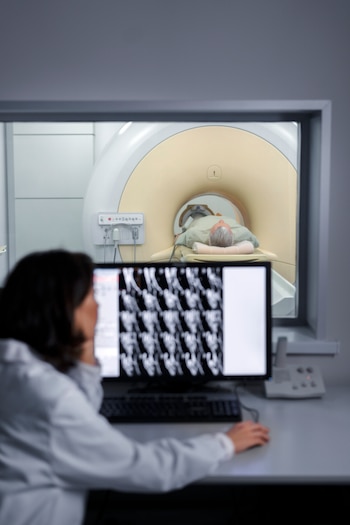
It is essential to highlight that nuclear medicine “has nothing to do with nuclear power plants ,” Dr. Carreras asserts. The radioisotopes used for medical therapies and diagnostics are produced in specialized reactors and medical-use cyclotrons , equipped for precise marking and quality control. Moreover, the radiation exposure for patients undergoing these diagnostic procedures is comparable to or even less than that of a typical CT scan or regular radiography.
In terms of therapeutic applications, the doses administered are generally higher, but they’re concentrated specifically on tumor tissues, aiming to destroy them while sparing adjacent healthy tissues. This targets treatment allows for a form of therapy comparable to radiotherapy , but with fewer side effects on surrounding healthy areas.
The misleading nomenclature associated with nuclear medicine often fuels negative perceptions , commonly derived from environmental catastrophes linked to nuclear energy, such as the Chernobyl disaster. Dr. Carreras emphasizes that “nuclear medicine operates safely, administering controlled dose levels that are significantly lower than those of nuclear plant operations.”
This precise targeting capability renders nuclear medicine a revolutionary practice, with experts forecasting that it could potentially replace many conventional applications of external radiotherapy . Unlike the latter, which can damage nearby healthy tissues, nuclear medicine is designed to focus on tumors with minimal side effects.
In Spain and across Europe, the FDA (Food and Drug Administration) and the EMA (European Medicines Agency) have approved various applications of nuclear medicine, particularly for advanced cases of prostate cancer that resist hormonal treatments. Currently, in Spain, this therapy is authorized specifically for inoperable neuroendocrine tumors , which are rare and can develop in areas like the lungs and pancreas. Its full approval relies on price negotiations with the Spanish Agency for Medicines and Health Products (AEMPS).
In other European nations, this innovative therapy is sometimes utilized under compassionate use systems, which allow terminally ill patients access to unapproved clinical treatments. Dr. Carreras notes that countries with less regulatory oversight, such as Australia and China, frequently employ these therapies.
Presently, nuclear medicine thrives within oncological therapies, particularly in advanced stages of the disease. As clinical trials progress, applications are likely to extend into earlier phases of cancer treatment, marking an exciting frontier in medical science.