
In a significant move reflecting the ongoing European rearmament , Belgium has decided to expand its order of F-35 jet fighters by adding eleven new units to its existing fleet. This step emphasizes the commitment of Belgium, along with other NATO allies, such as the United Kingdom, towards maintaining aerial superiority in the current volatile geopolitical landscape. The F-35 has been the subject of controversy, yet its strategic importance cannot be overlooked as nations gear up to fortify their defensive capabilities.
Belgium had already commissioned 34 F-35s in 2018 with the aim of replacing its aging F-16 fleet, which has been operational for decades. At that time, the Belgian Government chose the American model over alternatives like the Eurofighter, primarily due to interoperability, long-term costs, and its compatibility with NATO nuclear capabilities.
Why Belgium Continues to Rely on the F-35
To date, eight F-35 units have been delivered, and are currently stationed in the United States where they serve as a training platform for the first group of Belgian pilots. With the new order, Belgium’s total F-35 count will reach 45 . This decision aligns with the current government’s commitment to increase military spending to 2% of GDP by 2025 and aims for 2.5% in the subsequent decade. The budget allocation for this extension is approximately 1.6 billion euros , as highlighted in a strategic vision document.
Although the F-16 jets have undergone numerous upgrades and remain operational in various countries, they are classified as a fourth-generation platform lacking stealth capabilities and integrated sensors. While the F-16s are reliable and economically viable, they belong to another era in aerial combat technology. In many scenarios, the capability gap between the F-35 and the F-16 is stark. The Lockheed Martin F-35 fighter jet boasts unparalleled real-time sensor fusion , advanced electronic warfare capabilities, and is certified to carry American nuclear armament, which is a significant upgrade.
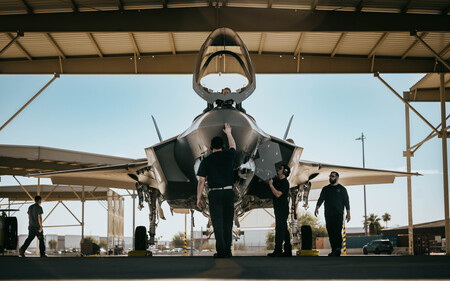
</div>Furthermore, the acquisition of the F-35s has profound strategic implications . Belgium actively participates in NATO’s nuclear deterrence strategy , a role that necessitates possessing aircraft compatible with nuclear warheads believed to be stored at the base in Kleine Brogel. The current F-16s are certified for such missions; however, the F-35 not only retains that capability but also enhances it through stealth and precision technology.

</div>The timeline for deliveries presents its own challenges. As reported by VRT, Lockheed Martin’s production facilities are nearing maximum capacity, and the first of these additional fighters are unlikely to arrive before 2033 . This decision signifies a long-term commitment, suggesting that future administrations may reassess the needs and potentially seek further acquisitions should budget conditions permit.
<img alt="Future Combat Air System" width="375" height="142" src="https://i.blogs.es/516753/comac-c919-motor-occidental-portada/375_142.jpeg"/>In addition to the F-35 acquisition, Belgium is keen to enhance its role in European air defense. Concurrently, it has allocated 300 million euros to participate in the second phase of the Future Combat Air System (FCAS), representing the New Generation European Fighter Program . The aim is to position itself strategically in shaping future technological standards while still maintaining the operational integrity of the U.S. fleet. A future coexistence between the F-35 and the FCAS aircraft post-2040 seems conceivable if staffing and budget constraints allow it.
Images | US Air Force (1, 2, 3)
As Belgium bolsters its air power through the acquisition of F-35 jets, it sends a clear message regarding its long-term defense strategy and commitment to NATO. The decision not only augments its military capabilities but also reaffirms its role in European and global security. With the evolving landscape of international relations, such strategic decisions will play a crucial role in shaping the future of defense in Europe.