
When purchasing a flight ticket, our focus is often directed toward the destination, budget, and departure time. However, in the near future, travelers may pause to consider the aircraft model accompanying their flight number—specifically, the innovative Boeing 777X series, particularly the variants 777-8 and 777-9. This aircraft is engineered to redefine the future of long-haul travel: offering enhanced efficiency for airlines and unprecedented comfort for passengers.
The 777X doesn’t enter the market randomly; Boeing has strategically developed it to reinforce its standing in a key segment that has long been dominated by the company. This model signifies not a departure from the past but a calculated evolution of one of Boeing’s crowning achievements. With this new generation of the 777 series, the company aims to meet rising demands for efficiency, range, and capacity without sacrificing proven capabilities.
BOEING 777X Technical Card
Boeing 777-8 | Boeing 777-9 | |
|---|---|---|
Launch of the program | November 2013 | November 2013 |
Seats (typical two-class configuration) | 395 | 426 |
Range | 16,190 km | 13,500 km |
Length | 70.86 m | 76.72 m |
Wingspan | Extended: 71.75 m | Extended: 71.75 m |
Cabin | Wider; new customizable architecture; incorporates comfort innovations of 787 Dreamliner | Wider; new customizable architecture; incorporates comfort innovations of 787 Dreamliner |
Configuration | Double aisle (widebody) | Double aisle (widebody) |
Engine | GE9X | GE9X |
Approximate price | From $410 million (Eplaneai) | From $442 million (Eplaneai) |
The 777X Design: Efficiency and Scale
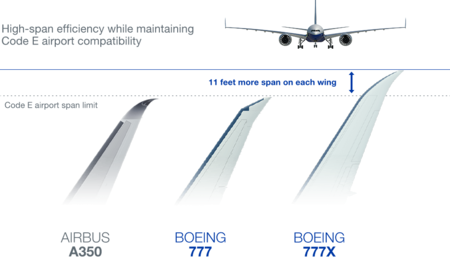
At first glance, the 777X seems familiar, resembling previous wide-body aircraft. However, a closer look reveals notable differences. The wings—for instance—are longer than typical and elegantly curve to terminate in distinctive folding tips, a feature that captures attention even before takeoff. The enormous engines dominate the profile of the aircraft.
The wings of the 777X are not only the longest installed on a commercial aircraft, but they also represent unprecedented innovation. Crafted from advanced composite materials like those used in the 787 Dreamliner, these wings extend beyond 71 meters. To mitigate potential airport-related issues, the wingtips fold when the aircraft is on the ground. This sophisticated design choice cleverly addresses the challenge of maximizing efficiency without restricting access to cargo doors.
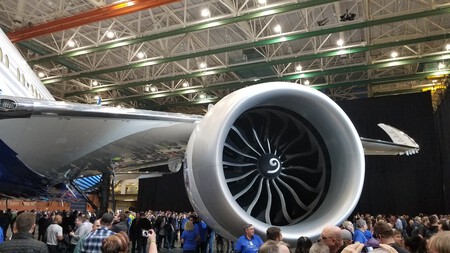
It’s impossible to overlook the aircraft’s engines. The GE9X engines are not merely the largest ever installed on a commercial aircraft; they are also among the most efficient. With a fan diameter of 3.4 meters and constructed with carbon fiber blades, each engine encapsulates a decade’s worth of technological advancements. Consequently, these engines consume 10% less fuel than the GE90-115B and adhere to stringent noise and emissions regulations.
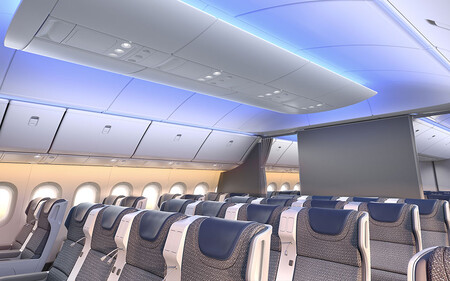
Internal improvements are a major asset of the 777X. While maintaining the same exterior width as its predecessors, Boeing has redesigned the interior structure to optimize usable space. Enhanced features include a higher ceiling, smoother lighting, and notably reduced background noise. Improved humidity levels and lower cabin altitudes are significant yet often overlooked enhancements that can greatly benefit long-haul travelers.
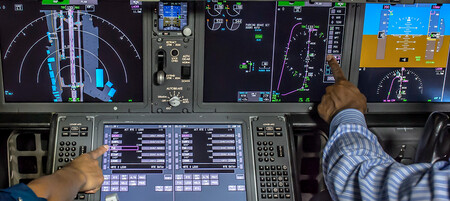
Not only are passenger experiences enhanced; the cockpit also receives updates. The 777X introduces, for the first time in commercial aviation, integrated touch screens, which replace a portion of traditional physical controls with a cleaner, more adaptable interface. The cockpit retains a familiar atmosphere for crews, similar to the 787 while also maintaining commonalities with the existing 777 design.
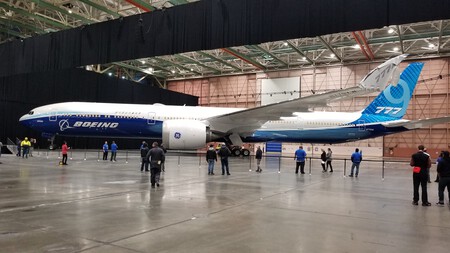
Boeing’s journey toward implementing the 777X has been a gradual process. When the company unveiled the 777X in 2013, the initial rollout was anticipated for 2020. However, due to various challenges, the timeline has since diverged significantly. Ongoing flight tests and stringent certification processes mean that the first deliveries are now expected in 2026, with tight schedules ahead. For Boeing, the 777X represents not just a product but a vital opportunity that the company cannot afford to overlook.
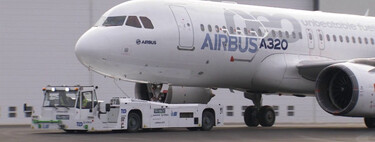
As Boeing races to finalize the 777X, Airbus continues to gain market momentum globally. In particular, a massive order from China could total up to 500 aircraft as reported by the SCMP, which would significantly bolster Airbus’s stature in the largest aviation market worldwide. In this competitive landscape, it’s clear that the 777X is not just a new aircraft; it represents a strategic investment in Boeing’s future.
Images | Boeing (1, 2, 3, 4, 5) | Palacio do Planalto/Alan Santos (CC by 2.0) | Lamblukas (1, 2, 3, 4)