
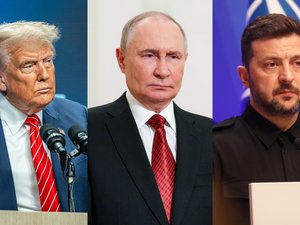
After more than three years of war , the hostilities between Russia and Ukraine continue unabated. However, the conflict appears to be entering a new phase. Former President Donald Trump is shifting his tone regarding the Kremlin, while France accelerates its rearmament efforts. The tensions between NATO and Russia are palpable, prompting geopolitical analysts like Ulrich Bounat to evaluate the evolving dynamics of the conflict.
Shifting Allies: Trump’s New Approach
Trump’s recent announcements indicate a change of tone . Gone are the days of hoping to negotiate with the Kremlin. Trump now recognizes that his previous strategy of appeasement hasn’t yielded results. He has pivoted to a more aggressive approach, promising to deliver new armaments to Ukraine while simultaneously threatening punitive customs duties on Russia and its allies.
Despite these changes, questions linger over whether Trump’s strategy will have any substantial impact on Vladimir Putin’s stance. Currently, the Kremlin appears to be biding its time, assessing the landscape. “The Russians will continue to try to charm Trump, offering myriad incentives,” says Bounat. Yet, it remains uncertain if this will reinvigorate a fading sense of diplomacy. Russia’s objectives in Ukraine remain steadfast: control over the nation’s fate, whether through military dominance or negotiations that may eventually see Ukraine capitulate.
The Reality of Trump’s Position
After failing to resolve the conflict in mere days, Trump must now grapple with the realities of the situation. However, the United States still possesses leverage to coax Russia back to the negotiating table. The dual tools of diplomacy—a figurative carrot and stick—are available to Trump. By ramping up military support for Ukraine, the U.S. can empower Kyiv to regain the initiative on the battlefield. Conversely, offering Russia a return to the global community or lifting some sanctions could encourage Putin to consider negotiations.
Ultimately, the question remains: can Trump wield these options effectively? While military support may bolster Ukraine’s defenses, the potential for diplomatic resolution seems equally critical. As Bounat notes, the duality of soft and hard power remains a vital strategy for U.S. engagement in this conflict.
NATO’s Position: An Escalation of Tension?
” German soldiers will be ready to kill Russian soldiers if Moscow attacks a NATO country, ” says Boris Pistorius . His declaration raises alarms about potential escalation. While current hostilities pertain to Ukraine, there’s a growing anxiety among NATO members regarding the possibility of a Russian attack on alliance territory. This suggestion marks a profound shift in Germany’s military posture. Once reticent to engage abroad, Germany is now demonstrating a willingness to project its forces, with deep implications for regional security.
The weight of Germany’s commitment sends a clear message to Moscow: a direct attack on NATO nations will not be tolerated. With a unified NATO front growing stronger, the stakes of the conflict could increase significantly. This shift signifies not only a change in Germany’s military stance but also a broader NATO commitment to collective defense.
The Role of France: An Emerging Diplomatic Force
Beyond its rearmament plans set to unfold by 2027, France aims to assert itself in mediating discussions between Kyiv and Moscow. Bounat emphasizes France’s strategic maneuvering within the European Union framework. President Emmanuel Macron has been busily engaging with both Trump and Ukrainian President Volodymyr Zelensky , showcasing France’s potential role as an intermediary. This could position France not just as a military ally but as a diplomatic linchpin in the European response to the conflict.
France’s involvement in this multi-nation coalition, deploying resources such as “sky police” or troops, indicates a commitment to regional stability that goes beyond mere rhetoric. Macron’s efforts to unify European responses highlight a significant pivot; it fosters a platform from which European nations can collectively respond to challenges posed by Russia.
In conclusion, the evolving geopolitical landscape surrounding the Ukraine conflict exhibits intricate nuances. The roles of Trump, NATO, and France underscore shifting allegiances and strategies in response to an increasingly complex confrontation. As each player navigates their own interests, the potential for both escalation and resolution exists in equal measure, promising an uncertain future for European security and international diplomacy.