
Airbus is gearing up to enhance its footprint in one of the most pivotal markets globally: China . According to the South China Morning Post, the European manufacturer is on the verge of signing a substantial agreement with Chinese authorities that may involve between 100 and 200 new airplanes . The formal announcement could take place this month, but what captures attention is not only the size of the order but also the timing of this pivotal deal.
This operation aligns with a high-stakes summit scheduled between the European and Chinese Unions on July 24 and 25, as reported by Politico. This high-level diplomatic meeting focuses on alleviating commercial tensions, redefining relationships between Brussels and Beijing , and managing an increasingly fraught atmosphere with Washington . The fact that Airbus may secure such a substantial contract during this crucial period speaks volumes.
A New Order in Chinese Skies?
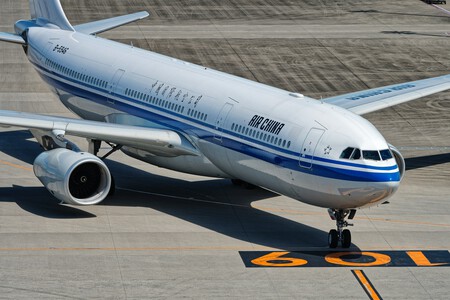
China has not entered into significant dealings with Boeing for several years. The last major order came in 2017 , and since then, the American manufacturer has undeniably lost ground in one of the most dynamic markets in commercial aviation. Multiple factors contribute to this shift: the deterioration of relations between Washington and Beijing, the ongoing tariff war, and existing regulatory challenges. As highlighted by the Hong Kong media, Airbus has stepped in to fill the void, emerging as a dominant supplier in the Chinese market.
Timing is also beneficial for Airbus. Many Chinese airlines are currently operating aging fleets, primarily composed of Boeing aircraft purchased over a decade ago. For airlines like Shandong Airlines and China United Airlines , the majority of their fleet exceeds ten years of service. As aircraft accrue flight hours, the costs associated with maintenance typically increase, efficiency levels decline, and periods of inactivity lengthen.
At a glance, it may seem that airlines could mitigate the aging fleet issue by diversifying their aircraft manufacturers. However, operating a mixed fleet results in logistical complexities and heightened costs. According to an analysis by Airinsight, the expenses associated with managing two different fleet types—such as training, documentation, and crew ratios—are amortized within just 12-15 months , ultimately leading to significant savings across the fleet’s lifespan.
Operating a mixed fleet implies logistics complexity and high costs
Standardization through a sole supplier like Airbus or Boeing can lower operational costs, streamline personnel training, and expedite spare parts management. In contrast, switching manufacturers necessitates a complete reorganization of supply chains, as well as training pilots and technicians on new models and adapting maintenance infrastructures. This reorganization could require updating hangars, acquiring specialized tools, and even fulfilling the physical requirements of new airplanes. For many airlines, these barriers explain why they continue to depend on Boeing fleets even as Airbus gains prominence.
China is also actively investing in the development of its own alternatives. The three major state airlines— Air China , China Eastern , and China Southern —have committed to purchasing over 100 units of the Comac C919 , the passenger airplane developed by China’s aerospace industry. While political backing is evident, so are its limitations: production remains limited , international certifications are still in early stages, and the technical support network lags far behind the capabilities of Airbus or Boeing. Currently, the C919 represents a medium-term aspiration rather than an immediate solution to satisfy the growing domestic market demand.
</div>Nevertheless, Boeing is not entirely out of the competition. In April 2025, several 737 Max jets earmarked for Chinese airlines found their way back to the United States after Beijing suspended deliveries in response to new tariffs on U.S. products. While this strategy aims to protect its national industry within a complex geopolitical landscape, Boeing could regain ground if the commercial atmosphere improves and access to the Chinese market is reinstated. However, for the moment, Airbus appears to be in the driver’s seat.
<img alt="The "war" for rare earths has primarily involved countries. Apple is starting to change that." width="375" height="142" src="https://i.blogs.es/d4ae24/apple-ap/375_142.jpeg"/>Airbus is acutely aware of the immense potential within the Chinese market. According to their forecasts, China will require over 9,500 new commercial airplanes over the next 20 years. Boeing estimates a similar figure, ranging from 8,830 to 9,740 units , depending on evolving economic and regulatory scenarios. In any event, we are confronted with an enormous demand. Presently, with Boeing orders on hold and Comac still in its formative stages, Airbus holds a distinct advantage. If the new agreement is finalized, it will not be an isolated event; rather, it will reflect a growing trend that could redefine the balance of power in commercial aviation for decades to come.
Images | FASYAH HALIM | Takashi Miyazaki
In Xataka | The C919 Comac
In Xataka | The United Kingdom was anticipating an invincible fighter. Today, the F-35 flies rarely and often cannot arm itself.