

For Spain, losing the integrated circuit packaging plant that Broadcom was going to build on Spanish soil is a real blow . And it is for several important reasons. The most obvious is that the presence of a factory from this American company would place the country on the European map of advanced substrate production. Moreover, it would generate highly qualified jobs , develop the technological ecosystem of the area, and attract further investments.
As reported yesterday, this project will not come to fruition. Leaks indicate that negotiations between the Spanish government and Broadcom management, which began in July 2023, reached a deadlock several months ago. While this was a significant plan for Spain, fortunately, it is not the only project aimed at developing the local semiconductor industry and increasing the relevance of Spanish companies in the global integrated circuit market.
These Projects Provide Spain with Opportunities in the Chip Industry
The facility we see in the cover photography of this article features prominently in one of the most critical projects Spain is developing in the semiconductor sector: Innofab . This industrial site, known as the ALBA synchrotron , is located in Cerdanyola del Vallès, just 6 km from Barcelona. The synchrotron plays a crucial role in the Innofab project, as it utilizes circular electron beams to analyze atomic-level properties of matter, including various materials and proteins.
The Barcelona Microelectronics Institute , part of the CSIC (IMB-CNM-CSIC), is involved in this initiative. This institute boasts extensive experience in both microelectronics and advanced integrated circuit manufacturing techniques. Innofab will be a state-of-the-art semiconductor factory , costing approximately €392 million, financed using funds from the EU’s Next Generation Plan as well as contributions from the Spanish and Catalonian governments.
Construction works will commence soon, with plans for the plant to start chip production in 2028.
Construction of the facility will begin shortly, with the aim of starting chip production by 2028. The project is led by the Catalan Institute of Nanoscience and Nanotechnology , located near the Autonomous University of Barcelona . Its goal is to develop next-generation integrated circuits that utilize advanced materials like graphene , moving away from the conventional silicon semiconductors predominantly controlled by Asia and the United States.
Once the INNOFAB factory is operational, the ALBA particle accelerator will facilitate the analysis of candidate materials for atomic-level semiconductor production, advancing the properties of integrated circuits as well. Importantly, Innofab will not focus on large-scale chip production; instead, its role will be to develop advanced technologies that can later be commercially exploited in other factories. This approach somewhat justifies its cost of less than €400 million.
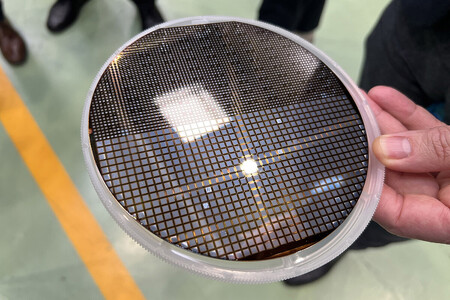
However, Innofab isn’t the only semiconductor-focused project developing in Spain. The Godic Plan aims to create the technologies necessary for the large-scale manufacture of polycrystalline silicon carbide . With a budget of €3.3 million, this initiative is supported by the State, which contributes 68% of the costs. This plan holds significant importance for both Europe and Spain.
The Godic Plan seeks to develop technologies for large-scale polycrystalline silicon carbide manufacturing.
The current geopolitical tensions between the U.S. and Europe on one side and China on the other are spurring the old continent to fortify its supply chain linked to the integrated circuit industry. The goal is to end the deep dependence on Asian suppliers, particularly China, making the establishment of a domestic silicon carbide manufacturing plant essential for both Spain and Europe, which currently lacks this crucial resource.
The Diosic project commenced in late 2023 and is set to last 26 months. Spanish companies involved in this project are expected to develop essential innovations by early 2026, if not earlier. It’s crucial to understand that beyond strengthening Spain’s and Europe’s independence , the initiative aims to reduce the cost of integrated circuit production by 30% while simultaneously increasing yield by 35%.
Before concluding, it should be noted that there is another vital initiative – the establishment of a new European pilot line . This facility aims to lead the integration and encapsulation of electronic components and systems . The CSIC Barcelona Microelectronics Institute (IMB-CNM-CSIC) is also participating in this project, bringing with it extensive experience in microelectronics and advanced manufacturing techniques for integrated circuits.
Any initiative enhancing Europe’s competitiveness in the strategic semiconductor industry deserves support.
Clearly, any initiative that bolsters Europe’s competitiveness in such a strategic industry as semiconductors is commendable. It is encouraging that Spain is actively involved in these efforts. One of Europe’s advantages is its scientific capacity, and it makes sense to leverage this strength. While achieving parity with Asia or the U.S. may seem extremely challenging, Europe must work to enhance its relevance in the semiconductor field in the coming years.
Image | ABMARTINEZBONILLO
In Xataka | Spain’s milestone in nuclear fusion: the first plasma produced by the Smart reactor invites optimism
In Xataka | Bad news for Intel and Europe: the construction of the German chips factory will be delayed up to 2029 or 2030