
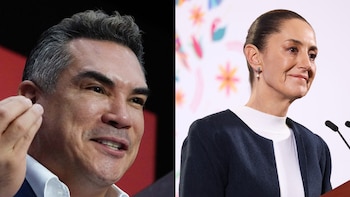
In a striking turn of events, Alejandro Moreno , the leader of the Institutional Revolutionary Party (PRI) , has publicly responded to a letter from U.S. President Donald Trump , warning the Mexican government about a looming 30% tariff on Mexican exports . In a scathing critique of the Morena government , led by Claudia Sheinbaum , Moreno asserted that this punitive measure stems from the government’s failure to address the pressing issue of narcopolitics in Mexico.
Moreno’s social media commentary emphasized the deep-rooted connections between organized crime and political figures within the Morena party. He stated, “Morena has been unable to stop the cartels because many of its members are linked to organized crime.” This statement highlights an ongoing controversy in Mexican politics, where alliances between political factions and criminal organizations are often alleged.
He further accused the Sheinbaum administration of complicity in these crimes, stating that their inaction has led to significant losses, including numerous lives and vast territories lost to criminal organizations. Moreno claimed that the inability to confront crime is a major factor leading to the U.S. tariffs, underlining that “the United States has announced 30% tariffs on Mexican products. Not by whim, but for their frustration over a government that does not act.”
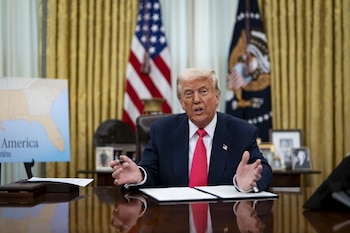
The PRI leader also lamented that the new tariffs would have detrimental effects on the Mexican economy , asserting that companies, workers , and families would bear the brunt of this decision. He stressed the importance of maintaining a firm, respectful, and strategic relationship with the United States, arguing that the problem lies not with Mexico , but rather with the failed policies of the current government.
Moreno emphasized that while the Morena party remains in power, the country will continue to suffer from the consequences of a government he characterized as cowardly, permissive, and colluded with criminal activities. He expressed discomfort over the administration’s focus on creating distractions rather than tackling the underlying problems plaguing the nation.
This discourse from the PRI leader has sparked various reactions from the public. Critics of Moreno took to social media to remind him of the numerous failures and scandals faced by the PRI in the past, evoking memories of the party’s own dark associations with crime. One user remarked, “You were not able to contain the cartels, and it is not to defend Morena — both parties have been colluded with crime.”
In his closing statements, Moreno highlighted what he claimed were the positive achievements made during PRI administrations, asserting that “never in the history of Mexico has the country experienced such a crisis of global reputation.” He reiterated the importance of restoring Mexico’s standing on the world stage, implying that the PRI had historically succeeded in enhancing the country’s international reputation and would do so again.
While Alejandro Moreno’s statements are polarizing, they shed light on the ongoing complexities within Mexican politics. The juxtaposition of drug cartel violence and governmental inaction poses a formidable challenge for any administration. The looming threat of U.S. tariffs only adds to the urgency for effective governance in Mexico, forcing all parties to confront uncomfortable truths about their role in the country’s ongoing struggles. As the political landscape continues to evolve, the discourse surrounding these issues will likely intensify, demanding accountability from all leaders involved.