
The journey towards peace and stability in the Central African Republic (CAR) has taken a significant stride forward with the dissolution of two prominent rebel groups, the Union for Peace in Central Africa (UPC) and Return, Reclamation, Rehabilitation (3R) . This pivotal step, a result of a peace agreement inked in April, was formally executed on July 11 during a symbolic demobilization ceremony held in the capital, Bangui .
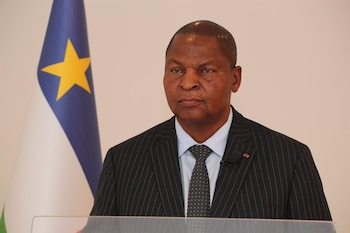
During this momentous occasion, over 5,000 members of the UPC and 3R turned in their weapons as part of the government’s initiative to stabilize the region. The demobilization ceremony was attended by key figures from the government, including President Faustin-Archange Touadéra , who emphasized the significance of dialogue in enforcing a lasting peace.
According to Central African news outlet NDJoni Sango , the ceremony saw participation from 2,950 UPC members , 2,050 3R members , and approximately 250 MPC fighters . President Touadéra articulated that this move represents an advancement towards peace and reiterated the importance of dialogue in achieving reconciliation.
The Importance of Dialogue in CAR’s Peace Process
Touadéra further revealed that discussions are ongoing with the Anti-Balaka militia , primarily composed of Christians, as well as with other rebel factions in a bid to broaden the peace agreements. The current administration characterizes the accord with the UPC and 3R as a historical progression towards peace , providing reassurance to citizens and the international community alike. This message was widely disseminated through social media channels.
In her address at the ceremony, Valentine Rugwabiza , head of the United Nations Integrated Multidimensional Stabilization Mission in the Central African Republic (MINUSCA) , reaffirmed her commitment to the peace agreement and urged all partners to support the renewed efforts towards peace and reconciliation. Her remarks underscored the international community’s role in facilitating stability in the CAR.
Reactions from Rebel Leaders and Government Officials
The leaders of the UPC and 3R expressed their commitment to the peace process. Sembé Bobo , leader of 3R, articulated that every conflict has its season and emphasized the necessity for respect during this transition towards peace. His sentiments were echoed by Ali Darassa , leader of the UPC, who declared their unwavering commitment to peace and called for both national and international recognition of their efforts.
Additionally, Issakha Malaua Djamous , the Minister for Armies and a former Chadian fighter, characterized the ceremony as a memorable day . He reiterated Chad’s readiness to aid in the ongoing peace process, highlighting the strong regional connections and the importance of cooperative efforts in conflict resolution.
Challenges Ahead in the Peace Process
Despite these advancements, the CAR government faces the daunting task of persuading other active rebel groups to join the existing peace and reconciliation agreements. Since the 2019 accord that attracted fourteen different factions , notable groups like the Anti-Balaka and MPC have remained outside the fold. Ongoing efforts to integrate these factions into the peace framework have yet to yield concrete results.
The CAR continues to grapple with a history of armed conflict , with various factions struggling for power and control. While the demobilization of UPC and 3R represents a positive step, the sustainability of peace relies on comprehensive strategies that encompass not only the major players but also the disenfranchised groups that still hold sway in certain areas of the country.
As these developments unfold in the CAR, the international community watches closely, hopeful that this peace initiative marks a turning point in a nation yearning for stability and security. The commitment shown by both the government and former rebels could lay foundational stones for reconciliation and a brighter future if sustained efforts are maintained.