
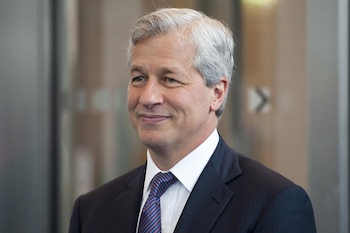
The President and CEO of JPMorgan Chase , Jamie Dimon , has recently issued a stark warning regarding the competitive position of the European Union in the global market, particularly in relation to the United States and China . During a gathering organized by the Irish Foreign Ministry in Dublin, Dimon highlighted a significant trend: Europe is falling behind in a race for economic competitiveness that is crucial in today’s rapidly evolving global economy.
Europe’s Declining Market Share
Dimon pointed out a startling statistic—Europe has dropped from accounting for 90% of the American GDP to only 65% in the past 10 to 15 years . “That is not good,” he remarked, emphasizing that “you are losing”. This change reflects not only the economic growth of the United States but also the increased competition from China , which is rapidly establishing itself as an economic powerhouse on the global stage. Dimon’s remarks indicate a growing concern that Europe’s slower growth rates could undermine its influence and strength in international markets.
Strengths of the North American Market
During his statements, Dimon underscored the robustness of the North American market, describing it as “big and strong”. He noted that American companies enjoy ” economies of scale ” and have established a significant presence globally. This competitive edge allows North American firms to thrive not just in America but in various markets worldwide, which is crucial for maintaining influence in a market dominated by complex global supply chains.
In contrast, Dimon expressed concerns that Europe’s global influence is declining, stating, “Yes, Europe has economies of scale too, but it’s less and less.” This draws attention to the need for European economies to innovate, adapt, and find sustainable methods to enhance their competitive standing in a world where market shares are continually shifting and evolving.
Complacency Among European Markets
Another critical point raised by Jamie Dimon concerns the apparent “complacency” of European markets. He warned that the markets are becoming indifferent, particularly in light of some recent aggressive trade policies implemented by the U.S. administration. For instance, previous measures taken by former President Donald Trump included imposing a staggering 50% tariff on copper and increasing tariffs on pharmaceutical products from 200% . Furthermore, the administration also penalized imports from traditional commercial partners such as Japan and South Korea , pushing the boundaries of international trade norms and practices.
Such an environment creates unpredictability in international trade, further complicating Europe’s economic landscape. Dimon expressed that this situation requires an urgent rethinking of strategic approaches to trade and economic collaboration to maintain competitiveness. He suggested that Europe may not be adequately addressing these challenges and encouraged innovative policies to recalibrate the economic balance.
The Path Forward for Europe
In light of these challenges, Europe must respond strategically to regain its competitive edge. This requires focusing on innovation, embracing new technologies, and fostering a collaborative environment where businesses can thrive. Moreover, policymakers need to be proactive in addressing concerns related to tariffs and international trade dynamics to secure favorable conditions for European businesses worldwide.
Additionally, investing in workforce skills and enhancing the educational paradigm to meet the demands of a modern, competitive economy can provide a strong foundation for future growth. By prioritizing these initiatives, European economies can potentially reverse the concerning trend highlighted by Dimon and rekindle their influence on the global stage.
Overall, Jamie Dimon’s candid remarks serve as a wake-up call for Europe to reevaluate its role in the global marketplace. As competition escalates, it is essential for European economies to emerge from their current complacency and take proactive measures that drive growth, innovation, and competitiveness in a world increasingly driven by the ambitions of the U.S. and China.