

Government, Ouigo, and Adif Locked in a High-Speed Train Blame Game
They were “trapped in the middle of a plain.” Since that day, the Government, Ouigo, and Adif have found themselves entangled in a convoluted dispute. This particular feud revolves around identifying who is responsible for the significant collapse of high-speed rail in Andalusia last week, leading to disrupted travel for thousands.
Travelers were stranded, left with numerous questions as to who is liable, and one certainty remains: nobody wants to take the blame.
The Incident That Sparked Outrage
“A Sinking.” Ouigo characterized the situation in a statement collected by Europa Press by saying that attributing responsibility for the breakdown is akin to “assigning blame for cars getting stuck in a flooded road—a frequent and habitual occurrence.” The chaos unfolded on June 30 when hundreds of travelers on the high-speed train faced inconvenience, culminating in one train’s passengers spending an entire night trapped, lacking water and the prospect of rescue—an indefensible situation.
Adif’s Blame Game
The report prepared by Adif pinpointed an Ouigo train as the catalyst of the system failure. According to Adif, the French train “lost connection with the signal systems while stationary,” which triggered a domino effect, leading to the halting of four additional trains.
Adif emphasizes that the accumulation of five stationary trains over seven kilometers created elevated risks. The infrastructure manager further expounded that the catenary tension designed to power a moving train cannot sustain multiple stationary trains at the same spot without risking overload. Such overload leads to a disconnection from the catenary, resulting in a tension drop across the line, similar to pulling the plug at home to prevent equipment from being damaged.
The Pantograph Dilemma
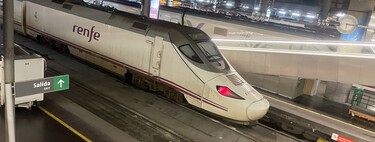
The entire electrical system hinges on the pantograph, which manages the electrical connection between the train and the catenary. According to Adif, the failure of this system on the Renfe Avant train added fuel to the fire of chaos. This link places the blame squarely on Ouigo as the initial spark that ignited the system collapse.
Ouigo’s Defense
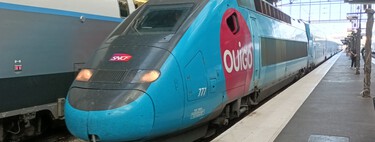
Ouigo has countered Adif’s claims. In its official statement, it insisted, “This cannot serve as a suitable cause for the tension drop in the catenary. The infrastructure should generally account for these types of situations.” They continue to bolster their defense, emphasizing the reliability of their trains, which they assert are among the “most secure models in Europe.” Furthermore, Ouigo has stated its willingness to collaborate with Adif to clarify the circumstances surrounding the incident.
Government Interference and Concerns
The government is also monitoring Ouigo closely. Vice President María Jesús Montero’s comments were caught on an open microphone last Wednesday, revealing doubts about the maintenance of Ouigo trains. “We from Renfe remove them, which do not remove the trains from the tracks,” Montero allegedly stated, raising eyebrows and concern regarding train safety.
Call for Greater Investment
As a means of self-defense, Ouigo has urged greater investment in infrastructure maintenance from Adif. They argue that the events experienced last week are “unprecedented and unacceptable,” as expressed by CEO Helene Valenzuela during the IV Mobility Forum organized by The Economist. They assert that a comprehensive plan from Adif is insufficient, contending that not all weak spots on the network can be identified without increased financial backing .
Thus far, Ouigo has cited the high fees imposed by Adif for using the infrastructure as a leading reason for its ongoing struggle to operate profitably in Spain. The government has warned that it may escalate the issue to the European authorities for unfair competition if these situations persist.
An extraordinary showdown is unfolding between these entities, with repercussions felt across the rail network. The travel interruptions are indicative of deeper issues that need to be addressed to ensure the safety and reliability of services in the long run.