
It is one of those questions that seem taken from an impromptu talk between friends: “And why don’t they put a giant parachute in airplanes in case something happens?” This idea has intrigued many, leading to innovative solutions for aviation safety.
The company that achieved it is called Cirrus Aircraft. For decades, it has designed light airplanes for general aviation. Their proposal was as simple as it was revolutionary : incorporating a ballistic parachute directly into the fuselage as part of the plane design. This isn’t an accessory or optional equipment; it’s a standard feature. The system is called CAPS, standing for Cirrus Airframe Parachute System. It is present both in the SR series and the Vision Jet, an airplane equipped with a turbofan engine designed for five passengers plus the pilot.
A Parachute That Is Not an Accessory—It’s Part of the Plane
The CAPS operation is as straightforward as its goal: saving lives when everything else fails. At the upper part of the fuselage, just behind the cabin, a sealed capsule containing a large parachute is hidden. If a serious emergency occurs, the pilot only has to pull a T-shaped lever located on the roof of the cabin. Within seconds, a small rocket deploys the parachute, effectively breaking the fall of the plane until it touches down safely.
Of course, there are conditions. The system should not be activated below 600 feet of altitude (about 180 meters above the ground), and its effectiveness is notably enhanced when deployed between 600 and 2,000 feet. Above that altitude, the pilot has more room to assess and make decisions, but it remains a valid option if the situation demands it.
The history of CAPS was not built overnight. In the mid-1990s, the Cirrus engineering team, led by Paul Johnston, began working on an idea that seemed daring at the time: adapting a system of ballistic parachutes to a light plane. They drew inspiration from a previous prototype developed by BRS (Ballistic Recovery Systems), which had already attempted similar solutions for aircraft like the Cessna 150.
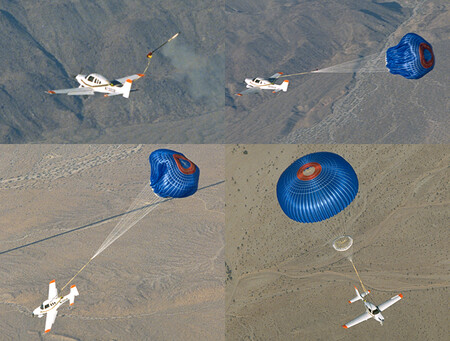
<span>A Cirrus SR20 displays a parachute in a test</span>In 1998, Cirrus conducted its first real test in the southern desert of California. A military pilot was responsible for activating the system. That test proved critical, validating the concept. Cirrus subsequently integrated it into the design of its first major production model, the SR20, not as an addition but as a structural element.
Since its certification, the CAPS system has been activated more than a hundred times in emergency scenarios. According to CAPS data, as of June 2025, there have been 136 recorded deployments. Many of these instances involved pilots who survived engine failures, control losses, or severe weather conditions.
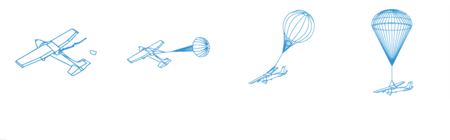
<span>Graphical representation of CAPS deployment</span>On its official website, Cirrus claims that its system has transported over 250 people back home alive. Some of these stories are especially astonishing. For example, Greg Huntley, a pilot and Cirrus aircraft owner, experienced an engine failure on October 22, 2014. He activated the CAPS and successfully landed with the aircraft suspended from the parachute, emerging unscathed.
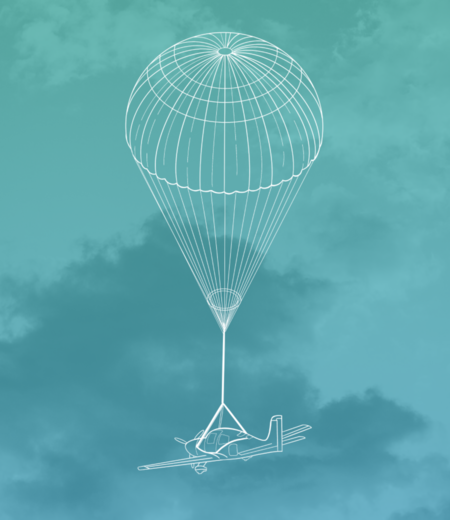
<span>Graphic Representation of CAPS in Action</span>Huntley, who frequently flew for work, had his base in Charlotte, North Carolina. Although he wasn’t initially passionate about aviation, he acknowledged how it saved him considerable time. On October 22, 2014, he took off as usual. A few minutes into the flight, at around 5,000 feet of altitude, the engine abruptly stopped. “Just before declaring an emergency, I thought: I have five minutes of life,” he recalled.
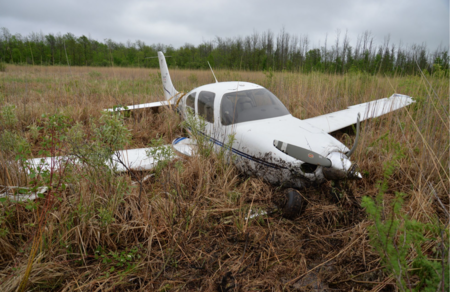
<span>One of the many airplanes that used the CAPS</span>He made a clear decision: if he still didn’t see the ground at 3,000 feet, he would activate the parachute. As it happened, the sky remained dark through the windshield, prompting him to notify air traffic control about his intent to deploy CAPS. “I’ve flown many children with their parents on their first flights. I always explain that if something happens to me, pull the lever… that morning, putting my hand on the lever, I thought: now it’s your turn to verify it.” The airplane descended and, within a minute, safely touched down in a grassy field.
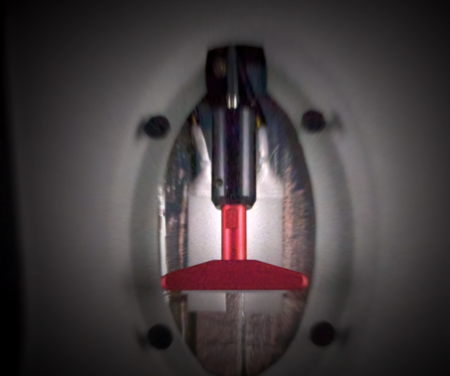
<span>The CAPS lever</span>The zenith of this philosophy culminated with the Cirrus Vision Jet, a small single-engine jet certified in 2016. This was the world’s first jet equipped as standard with a ballistic parachute for the entire aircraft. Cirrus took it a step further by integrating Safe Return into the CAPS system, a function that allows the airplane to land autonomously in case of an emergency.
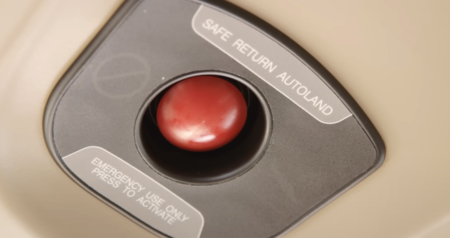
<span>Button for 'Safe Return'</span>The concept is straightforward. If the pilot suffers a sudden incapacity, any passenger can simply press a button. At that point, the Vision Jet takes over, calculating the route, communicating the situation to controllers, and autonomously descending to land on a safe runway. CAPS and Safe Return together form a robust safety package.
<img alt="Airbus's last military drone has been designed and manufactured in Spain. Its importance is not measured only in meters of altitude" width="375" height="142" src="https://i.blogs.es/9fe9f8/paris-air-show-2025-day-2---sirtap-_corp-pho-0011-02-26-paris-airshow-2025-sirtap-03/375_142.jpeg"/>Cirrus’s parachute system is not designed for all types of aircraft nor does it intend to be. Its effectiveness relates to the specific aircraft into which it is integrated, reflecting on its weight, structure, and the scenarios for which it was conceived. While it may not be perfect, it has successfully opened a crucial dialogue, demonstrating that there is a need for innovative security measures in aviation.
Images | Cirrus | NASA | CAPS Pilot
In Xataka | They are not fighters, they are planes of the Slovakia government: the day an Airbus A319 and a Fokker 100 stole the show.