
In 2024, more than 90,000 books were published in Spain alone. It is estimated that in the United States , this figure was even more staggering, reaching three million, including self-published options. These numbers unmistakably indicate one thing: the world has been filled with writers.
Writers express their creativity in various ways. The traditional typewriter has nearly vanished, making way for computers, which have made the writing experience more personal than ever.
The Blank Folio, but on the Screen
Some writers prefer desktop computers, while others adhere to laptops, but both experiences are enriched by personal choices, whether that’s the type of keyboard – such as the trendy mechanical keyboards – or the applications utilized for writing.
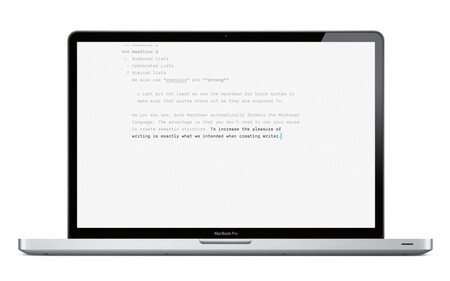
A striking example is George R.R. Martin , who famously uses the vintage word processor WordStar to craft his narratives. While options like Microsoft Word remain prevalent, new contenders such as Scrivener, Ulysses, IA Writer, Manuskript, and Ghostwriter have surged in popularity.
Many of these applications not only assist writers with novel structure but also provide distraction-free modes that replicate the digital blank folio: an entirely empty interface with merely a blinking cursor awaiting input.
Welcome to Keyboards Without Distractions
These software applications often come paired with hardware devices designed specifically for focused writing. These modern alternatives to traditional typewriters focus solely on the art of writing.
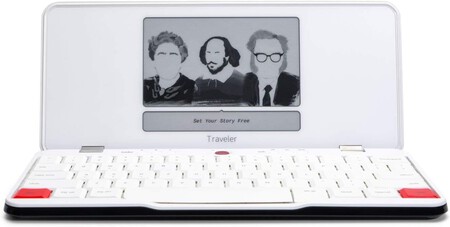
Freewrite Traveler.
These distraction-free keyboards typically integrate small screens that display the current text, limiting user interaction strictly to writing. Though they possess internet connectivity, it’s solely to sync texts with the cloud, leaving no room for web browsing or social media distractions. This approach aims to create a *concentration bubble*, allowing writers to focus entirely on their craft.
The leading brand in this niche is Freewrite from Astrohaus , known for producing several distraction-free keyboards. Their devices generally feature:
- Internet connectivity
- Compact storage for multiple manuscripts
- Internal battery
- Screen: Typically electronic ink or LCD
The electronic ink screens in various models facilitate prolonged writing sessions and contribute to battery longevity. A noteworthy alternative to Freewrite’s offerings is Pomera by King Jim , also funded through platforms like Indiegogo.
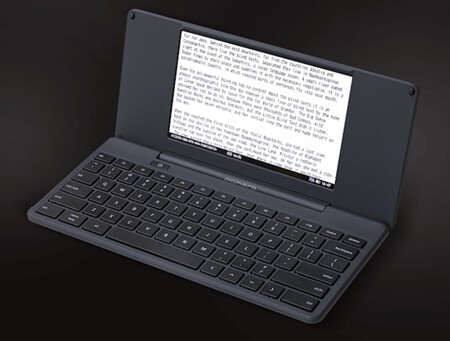
Pomera DM250US
While these devices hold a specialized allure, their pricing remains steep. For instance, the Freewrite Traveler retails for 603.95 euros on the official Freewrite site, whereas Pomera’s recent model—with an LCD screen—costs $449, which translates to nearly 400 euros.
To gain insight into user experiences, we reached out to three individuals who have tried these distraction-free keyboards—two English speakers and one young Spanish writer. Each of them has purchased and utilized at least one of these devices, providing us with valuable feedback.
Looking for a Digital Substitute for the Notebook and Pen
Ilia Epifanov, a writer and editor with over 30 published works spanning short stories, books, and comics, sought a compact machine to write without distractions. After researching freewrite devices, he eventually opted for the Nokia E7 , a smartphone with a folding physical keyboard, since its price felt more justifiable.

Although he appreciates the device’s nostalgic design and compactness, he warns that prolonged use can be challenging due to its built-in keyboard. The device’s limitations ultimately led him to focus on its simplicity—just open the keyboard and write.
Carl Dikington, who writes both professionally and for pleasure, began looking for an alternative for distraction-free writing. Initially opting for the simplest option—a notebook and pen—he quickly found it impractical. After researching various devices, he chose the Freewrite Traveler for its aesthetics and portability. He candidly noted that “these products do not work miracles” and emphasized the importance of self-discipline.
“You still need to force yourself to sit and write, and that will always be a complex task. Eliminating those distractions does not eliminate the desire to be distracted.”
Despite the challenges, Carl enjoys the tactile experience the Freewrite Traveler offers. However, he recounted a concerning issue: his device malfunctioned after less than a year of use, which seems to be a common problem among users.

This led Carl to conclude that he wouldn’t recommend this specific product to anyone unless they had realistic expectations, emphasizing that no device will magically solve your writing challenges. Yet, he acknowledges that using distraction-free devices may alleviate some of the burdens associated with using traditional computers.
There Is No Perfect Solution
Eduardo Robsy, an economist and writer, has persevered in searching for suitable alternatives for writing. His initial experiments involved using a smartphone with a Bluetooth keyboard; however, the temptation of mobile distractions proved too strong. Eventually, he sought specialized devices and acquired a second-hand Alphasmart Neo that ranked high in portability and efficiency.
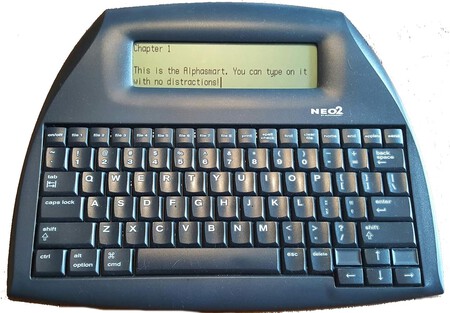
Alphasmart Neo2
The Alphasmart Neo offered the advantage of an extended battery life that could last up to 700 hours and featured a minimal memory storage capability of only 200 text pages. Despite its limitations, this device made his writing process slightly smoother.
Subsequently, Robsy transitioned to the King Jim Pomera DM-100 , which he appreciated for its compact and comfortable design, albeit with usability restrictions. Despite programming a small utility to better configure the keyboard for his language, he felt the limitations outweighed the benefits.
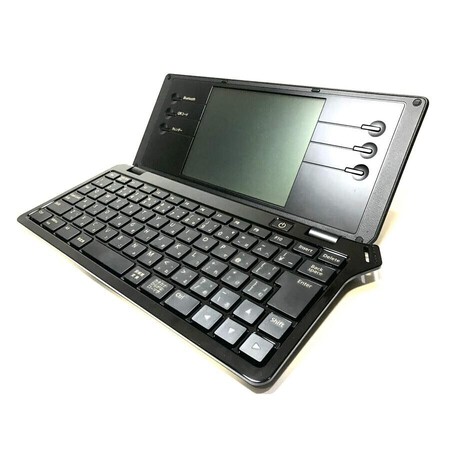
Pombera DM-100
Ultimately, he found his best fit with the Freewrite Alpha , a more reasonably priced option that still allows distraction-free writing. Despite lacking certain features like function keys, Robsy acknowledges that it’s effective for its intended purpose: writing without looking back to generate an initial draft quickly.
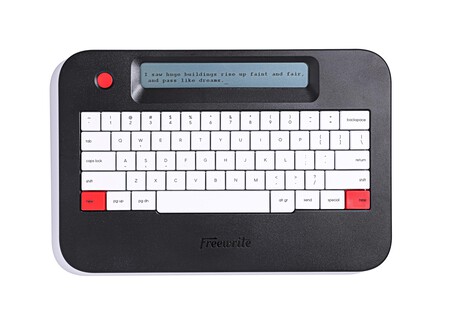
Freewrite Alpha
In reflection, Robsy’s experience speaks volumes about the challenges writers face and drives home an essential truth: there is no perfect tool for writing. While each device offers its own strengths, they also come with limitations. The essence, he concludes, lies in committing to write, regardless of distractions embedded within our environments.