
Understanding Solar Storms: The Threat to Our Technological Civilization
“Understanding the space climate is not optional.” This powerful statement encapsulates the European Space Agency’s commitment to predicting solar storms. Since the dawn of time, the sun has emitted solar storms, with some of the most powerful events having left traces in tree rings. Yet, in our age of unprecedented technological dependence, we stand as the most vulnerable civilization the Earth has ever known.
What Are Solar Storms?
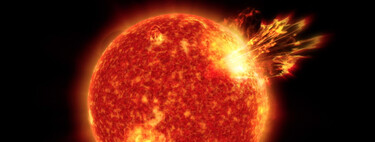
Located about 150 million kilometers away, the sun engages in magnetic activities that occasionally spiral out of control. A solar storm is essentially a sudden explosion of energy, plasma particles, and magnetic fields released towards the solar system. When these ejections occur in the direction of Earth, they can create stunning auroras. However, the phenomenon is not merely a visual spectacle; for a technology-dependent society, it poses significant risks.
Components of Solar Storms
To understand the complexity of solar storms, we need to differentiate between their two primary components:
1. Solar Flares
These are intense bursts of radiation emitted when the magnetic fields of the sun become unstable. Solar flares travel at the speed of light, reaching Earth in just eight minutes. They are categorized based on the X-ray flow, measured in watts per square meter. Classes A, B, and C represent the weaker flares, while M and X are the more powerful ones that can disrupt shortwave radio communications.
2. Coronal Mass Ejections (CMEs)
Think of these as the cannonballs of solar storms. CMEs are massive bubbles of charged particles and magnetic fields propelled into space at speeds reaching millions of kilometers per hour. When a CME heads toward Earth, it takes between 18 hours to a couple of days to arrive. Not every solar flare is accompanied by a CME, but when both occur simultaneously, the repercussions can be severe. Such events pose threats to astronauts, can damage satellites, and may even disrupt electrical installations on Earth, as demonstrated during the Carrington event of 1859.
Formation of Solar Storms
The origins of solar storms lie in the sun’s magnetic field. The sun isn’t a solid entity; it’s a sphere of spinning plasma. Its equator rotates faster than its poles, causing magnetic field lines to twist and accumulate vast amounts of energy. When this tension becomes unbearable, a magnetic reconnection event occurs, releasing energy in an explosive burst that sets off solar flares and CMEs.
The effects on Earth depend on multiple factors: speed, size, and the orientation of the magnetic field. If the CME’s magnetic field is oriented towards the south, it aligns oppositely to Earth’s magnetic shield, enabling efficient energy transfer.
Impact on Earth
While Earth’s magnetic field and atmosphere provide a shield against radiation, solar storms primarily jeopardize our technological infrastructure. On the surface, solar storms are not an immediate risk to health, but they pose significant dangers to astronauts and our technology. The 1972 solar storm, for instance, could have exposed moon-bound astronauts to lethal radiation.
In the current landscape, astronauts must time their spacewalks to avoid solar storms. The most severe consequences fall on our technological systems—geomagnetic storms can induce electric currents in power lines, potentially overloading transformers and causing blackouts. This risk escalates during periods of high electricity demand.
Satellites also suffer. Solar storms expand Earth’s upper atmosphere, increasing drag on satellites in low Earth orbit. These effects have already impacted Starlink satellites, hastening their descent from orbit.
Even moderate geomagnetic storms can affect precision in GPS systems and lead airlines to reroute flights to avoid system failures. However, there is a silver lining: the auroras caused by solar storms create breathtaking light displays at the poles and occasionally extend to more southern regions.
Predicting Solar Storms
The most intense geomagnetic storms occur during the solar maximum, a period of heightened activity in the sun’s 11-year solar cycle. Currently, we are in solar cycle 25, approaching its peak expected by late 2025 or early 2026. This signifies an increased likelihood of intense solar activity. Fortunately, advancements in space meteorology are making strides.
Scientists utilize a network of observatories, such as NASA’s Solar Dynamics Observatory and the Parker Solar Probe, to monitor solar activity. These satellites serve as sentinels, detecting eruptions. Predictive models powered by artificial intelligence analyze coronal mass ejections, enhancing our ability to forecast potential impacts on Earth.
Preparing for Maximum Solar Activity
While we cannot halt solar eruptions, we can mitigate their effects. Electrical companies, space agencies, and airlines implement risk management strategies based on alerts from organizations like the NOAA Space Weather Prediction Center.
On a personal level, preparing for solar activity is akin to preparing for any emergency. An emergency kit stocked with flashlights, batteries, and non-perishable food may be prudent if a geomagnetic storm leads to prolonged blackouts. Households might also consider surge protectors to shield electronic devices during intense solar activity.
Understanding the dynamics of solar storms and our planet’s vulnerability could help us navigate future challenges as we advance into an era where reliance on technology continues to grow. By enhancing our understanding and preparedness, we can meet solar challenges with resilience.