
The Bolivian Executive has confirmed that the contracts the country tried to process on Friday were initiated back in 2021 . This assertion comes amidst opposition claims suggesting that these are recent agreements. The situation escalated in Congress, whereby a session was suspended following heated confrontations among deputies while attempting to approve these contracts.
“Lithium is a project of major relevance to our country. It has been handled transparently since 2021 , not just within the past few weeks or months,” stated Vice Minister of Communication Gabriela Alcón Merubia , as reported through the official social media account of the Vice Ministry. This assertion aims to counter the claims of the opposition, underscoring the long-standing focus on lithium development in Bolivia.
During this contentious session, some deputies resorted to outrageous tactics, such as throwing water at the Minister of Hydrocarbons , Alejandro Gallardo , while he was delivering a report on the contracts. According to the Bolivian newspaper ‘El Mundo’ , government representatives attempted to shield Gallardo from the onslaught of accusations and protests.
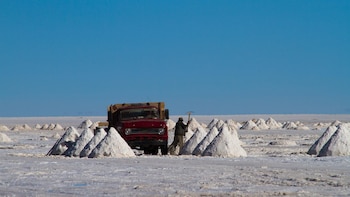
The specific contract at the center of the controversy is between the state-run company, Bolivian Lithium Deposits (YLB) , and the Hong Kong CBC . This contract is geared towards constructing two lithium plants in the Salar de Uyuni , located in the southern Potosí region, which is renowned for its vast lithium reserves.
However, the atmosphere turned turbulent as the debate stretched on, leading to an indefinite suspension. Opposition deputies, particularly those affiliated with former President Evo Morales , were vocal in their demands for halting the contract. They voiced concerns that the contract failed to respect prior consultation , lacked serious environmental studies , and would essentially hand over Bolivia’s lithium resources to a Chinese multinational for nearly 50 years , promising negligible benefits for the people of Potosí or Bolivia at large.
Furthermore, the Evista deputies have denounced the government’s actions, accusing it of corruption during the process of these contracts. They heavily criticized the method of voting that was employed during the sessions, asserting that it lacked transparency and fairness. Deputy Gladys Quispe heavily emphasized these points, claiming, “They have intended to vote for scrutiny, they have surely taken black briefcases as usual, but here we are, the patriotic deputies defending our natural resources.”
In retaliation, Minister Gallardo deplored the representatives who stymied the progress of the contracts. He argued that the halted discussion was a disservice to the Bolivian people , underscoring that the initiative is a potential boon for national investments. Gallardo stated, “It is not the executive under President Luis Arce who loses out, but the Bolivians themselves.” He added that despite the challenges encountered during the session, he had fulfilled his duties by presenting the necessary bills and contracts.
During a press conference, Gallardo reiterated his commitment to transparency and accountability, saying, “My conscience is clear. Tomorrow, I will be able to tell the Bolivians that I did my part. From now on, I hope the assembly members can say the same.” This quote echoes the broader sentiment among supporters of the lithium project, asserting its significance for future economic development in Bolivia.
The chaos surrounding the contracts has ignited broader discussions on Bolivia’s future in the global lithium market , especially as demand surges due to the rise in electric vehicles and renewable energy technologies. The Salar de Uyuni , home to one of the largest lithium reserves in the world, places Bolivia in a strategic position to be a leading supplier. However, the political climate and public sentiment surrounding the contracts signify that substantial challenges lie ahead.
The outcome of this ongoing dialogue will undoubtedly shape the economic landscape of Bolivia in the years to come. As the nation grapples with internal divisions and the undeniable allure of its natural resources, the stakes are high, not just for the political players but for the everyday citizens whose lives will be impacted by these decisions.