
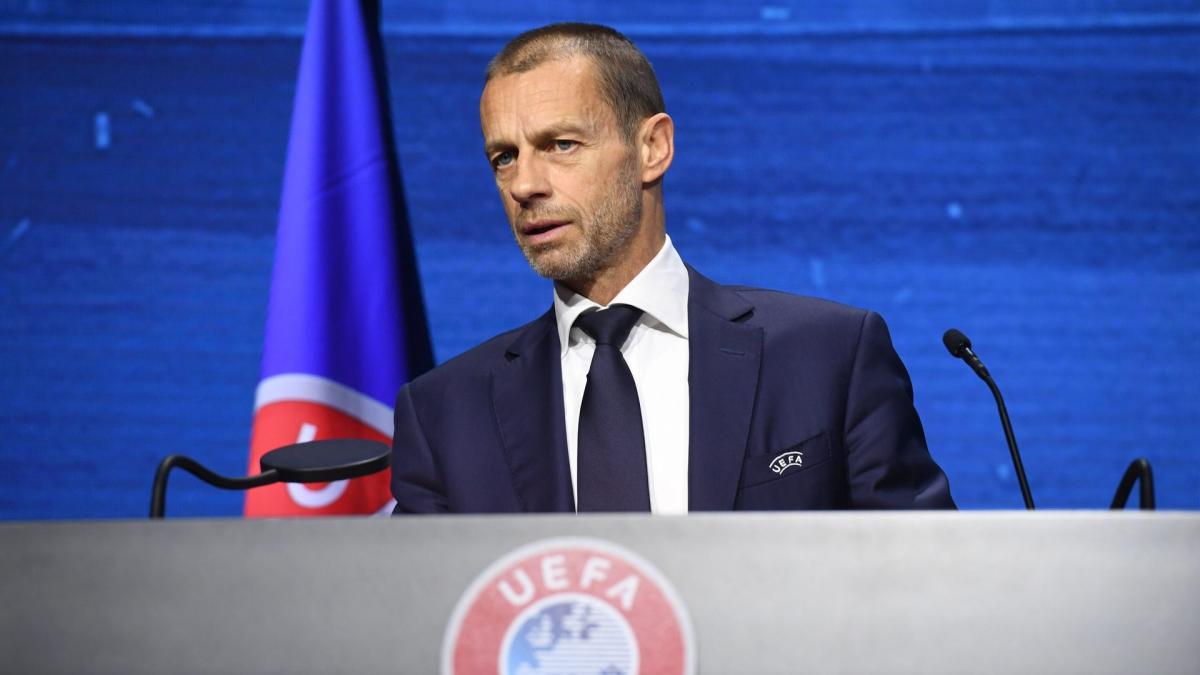
UEFA Takes Action: Fines Imposed on Clubs for Financial Fair Play Violations
In a significant move underscoring the ongoing tension between financial competitiveness and the integrity of the game, UEFA has issued sanctions against various football clubs for failing to adhere to the rules of Financial Fair Play (FFP). Announced on Friday evening, UEFA’s statement outlines the financial repercussions that several renowned clubs will face due to their non-compliance with these regulations.
A Closer Look at the Fines
Among the clubs affected, Olympique Lyonnais (OL) has been handed a fine of €12.5 million, which could escalate to €50 million depending on the club’s future compliance. Similarly, FC Barcelona faces an initial fine of €15 million, which may rise to a staggering €60 million if the club fails to achieve a financial balance in the coming seasons.
In England, the sanctions have also been applied to Chelsea. The Premier League club must pay a fine of €31 million, which may increase to €80 million when factoring in additional penalties. On the other hand, Aston Villa has received a fine of €11 million—comprised of €5 million and €6 million fines. Italian club Roma has found itself in a somewhat favorable position compared to others, with a relatively minor fine of €3 million, while Croatian club Hajduk Split faces a fine of €300,000.
The Settlement Agreements
According to UEFA’s press release, clubs such as HNK Hajduk Split, Aston Villa FC, Chelsea FC, FC Barcelona, and Olympique Lyonnais have entered into settlement agreements with the International Football Association (ICFC) over a time frame of 2, 3, or 4 years. These agreements will help the clubs navigate their financial challenges while striving to comply with regulations by deadlines set for the 2026/27, 2027/28, and 2028/29 seasons, depending on their respective agreement durations.
Each club has agreed to financial penalties that include both conditional and unconditional fines based on the extent of their violations. As part of these agreements, the clubs are required to present sustainable financial strategies aimed at aligning their financial results with UEFA’s stipulations by 2025.
The details of the sanctions are as follows:
| Clubs | Duration | Total Fine | Unconditional Fine |
|---|---|---|---|
| Chelsea FC (ENG) | 4 years | €80 million | €20 million |
| FC Barcelona (ESP) | 2 years | €60 million | €15 million |
| Olympique Lyonnais (FRA) | 4 years | €50 million | €12.5 million |
| Aston Villa FC (ENG) | 3 years | €20 million | €5 million |
| HNK Hajduk Split (CRO) | 3 years | €1.2 million | €0.3 million |
| AS Roma (ITA) | N/A | €3 million | N/A |
Understanding Financial Fair Play Regulations
The Financial Fair Play regulations were introduced to prevent clubs from spending beyond their means and to promote long-term financial stability within European football. The aim is not only to maintain competitiveness but also to ensure that clubs operate within their financial means, thus avoiding the pitfalls of excessive debt.
The introduction of such strict measures has been a topic of heated debate among football enthusiasts and experts alike. While these rules are designed to promote a level playing field, many believe that the enforcement of FFP may disproportionately affect clubs with fewer resources, thereby preserving a status quo that favors historically dominant teams.
The Broader Implications
The financial penalties imposed by UEFA signify a broader commitment to uphold FFP regulations, aiming to create a more sustainable future for football. As clubs navigate through these challenges, they will have to succeed in achieving a financial equilibrium that complies with UEFA’s standards. The intricacies of running financially sound football clubs are becoming paramount in an era where sporting success is often tied to financial muscle.
These sanctions could potentially lead to significant changes in how clubs approach transfers, contracts, and general financial management. Consequently, clubs may need to engage in more prudent spending and rethink their player recruitment strategies to mitigate the risk of incurring further penalties.
In conclusion, UEFA’s recent fines serve as a stark reminder of the importance of compliance with financial regulations. The affected clubs now face the challenge of recalibrating their financial strategies, ensuring they operate sustainably and adhere to the rules that govern European football. The road ahead will test their capability to adapt, innovate, and ultimately secure a more stable financial future while hoping to compete at the highest level of the sport.