
Remembering José Antonio García Belaúnde: A Diplomat’s Legacy
José Antonio García Belaúnde, the former Minister of Foreign Affairs of Peru during Alan García’s second administration, tragically passed away on July 4 at the age of 77. His death marks the end of a remarkable chapter in Peruvian diplomacy, where he made significant contributions, most notably during the maritime dispute with Chile, which was resolved favorably for Peru by the International Court of Justice in The Hague.
The news of his passing was confirmed by Luis Iberico, the current Peruvian Ambassador to Spain, who expressed profound sorrow over the loss of a figure affectionately known as “Joselo.” In a statement made to Panamericana TV, Iberico remarked, “He has left us this morning, and not only us but we have already complied with informing the diplomatic community here in Spain to the government authorities.” He emphasized the outpouring of condolences from various dignitaries, showing the widespread respect García Belaúnde garnered throughout his career.
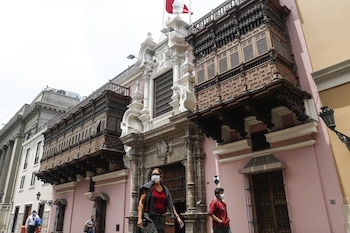
Foreign Ministry of Peru.
García Belaúnde served as an ambassador from 2016 to 2019, during which he was described as a “dynamic person” known for his extensive professional background. His contributions as Co-Agent for Peru during the maritime case against Chile solidified his reputation as an adept diplomat, steering the country’s foreign affairs during a crucial time.
Reactions to his passing have also surfaced on social media, where notable figures like Sergio Díaz Granados, Executive President of the Development Bank of Latin America and the Caribbean (CAF), acknowledged his impact on regional integration. “Thanks to Joselo, progress was made in the Andean Integration. He also planted the seed of the Pacific Alliance and led our office in Madrid,” Granados wrote on X/Twitter.
In his most recent role as the president of the EU-LAC Foundation, García Belaúnde was actively involved in preparing a report on productivity in Latin America and the Caribbean for the upcoming summit between the Community of Latin American and Caribbean States (CELAC) and the European Commission. Granados remarked, “Work for integration, countries, and peoples continues, and Joselo leaves us both legacy and inspiration.”
The esteemed diplomat hailed from a family steeped in legal tradition. His father, Domingo García Rada, served as the president of the Supreme Court, and his mother, Mercedes Belaúnde Yrigoyen, was part of a family distinguished in public service. Notably, García Belaúnde was the grandson of Víctor Andrés Belaúnde Diez Canseco, the nephew of former president Fernando Belaúnde Terry, and he shared familial ties with former congressman Victor Andrés García Belaúnde and constitutionalist Domingo García Belaúnde.
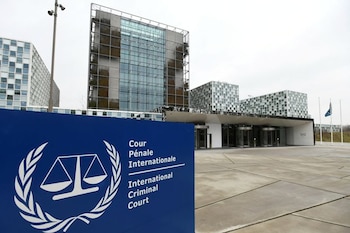
File photo. The Building of the International Criminal Court in The Hague, Netherlands. January 16, 2019. Reuters/Piroschka Van de Wouw.
His educational background includes schooling at the school of the Immaculate and the Winnetka School in Lima. Following his academic pursuits, he graduated with a law degree from the Pontifical Catholic University of Peru, where he shared classrooms with Alan García.
García Belaúnde’s diplomatic career began on May 16, 1965, when he joined the Ministry of Foreign Affairs. By January 1, 1969, he had graduated as a diplomat from the Diplomatic Academy of Peru. His advanced studies in foreign policy at Oxford University and a Master’s degree in International Law and International Relations from the Complutense University of Madrid equipped him with the skills needed to navigate complex international landscapes.
Over his illustrious career, García Belaúnde held several pivotal positions representing Peru globally and in various international organizations. Most recently, he presided over the EU-LAC International Foundation, where he contributed to strengthening and developing the Andean integration process. In recognition of his indelible contributions, the Andean Community awarded him the Honorary Order in the Degree of Great Officer this week.
García Belaúnde’s legacy continues to resonate in international diplomacy circles, highlighting the importance of diligent representation and the pursuit of regional integration. His commitment to his country will serve as an inspiration for future diplomats.