
Olympique Lyonnais: A Club in Crisis
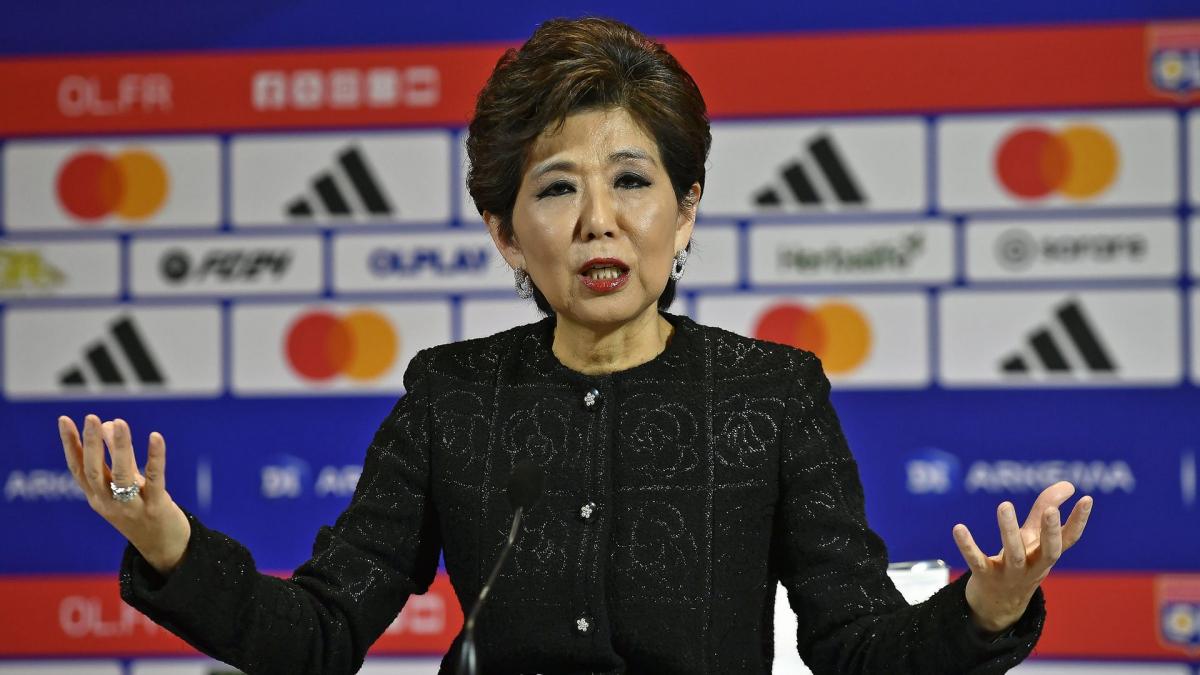
Olympique Lyonnais, once a powerhouse in French football, is currently navigating one of the most tumultuous periods in its history. Compelled by the DNCG (National Directorate of Management Control) to face consequences for severe financial mismanagement, the club has found itself relegated to Ligue 2. In response to the crisis, the club’s management has undergone a dramatic restructuring. The controversial figure of John Textor has been ousted from the presidency and replaced by Michele Kang, who will be working alongside Michael Gerlinger, the newly appointed general director of the club. Their primary objective is clear: to restore the club’s financial stability.
The Financial Mountain to Climb
Despite the shake-up at the leadership level, mere changes in governance won’t suffice to convince the DNCG. The club needs to find an astounding 200 million euros to safeguard its position in Ligue 1. This staggering sum must be sourced quickly; OL requires an immediate infusion of over 100 million euros and must secure an additional 100 million euros to ensure financial stability for the rest of the season. The urgent need for funds starkly highlights the club’s perilous financial situation. Even if the team manages to maintain its Ligue 1 status in some miraculous way, the repercussions of the current financial strain will severely limit its ambitions in the seasons to come.
Austerity Measures and Workforce Revisions
According to reports from Progress, an internal source revealed that Michele Kang plans to implement an austerity plan over the next three to four years, with the objective of positioning the team as a mid-table contender. In light of this strategy, the club will initiate significant player departures. Kang has made the bold move to remove players from the roster who are earning 200,000 euros per month or more. This decision affects prominent names like Tolisso, Nuamah, Mikautadze, Veretout, Niakhaté, Matic, and Almada. Even if OL successfully avoids relegation, retaining these players will be difficult given the stringent financial measures that lie ahead.
Sales as a Lifeline
In the quest for financial survival, the club is looking at player sales as a critical lifeline. With earlier departures of Cherki and Tagliafico, OL aims to sell additional players, including Lucas Perri, Malick Fofana, Tessmann, Kumbedi, and Caleta-Car. Just weeks ago, former president John Textor had presented a plan to the DNCG, assuring that 100 million euros would be generated from sales of players within the existing roster. This strategy underscores a widespread overhaul not just of the first team but also of the youth academy, signaling a potential loss of promising talents.
The Future: A Long Road Ahead
Michele Kang faces an uphill battle as she assumes her new role in such critical circumstances. The immediate challenge is to stabilize the club’s finances while ensuring its competitiveness on the pitch. Given the current trajectory, OL may have to recalibrate its expectations and focus on rebuilding rather than contending for the title in the near future. The reshaping of the squad, both in terms of player departures and potential acquisitions, will be crucial in defining the club’s fortunes for years to come.
The path to recovery is fraught with challenges. Michele Kang’s commitment to evaluate the existing workforce and embrace a more sustainable financial model presents a strategic shift that the club desperately needs. However, achieving this vision will require not only sound management but also the support of fans, stakeholders, and a team that is willing to adapt and evolve under adversity.
As Olympique Lyonnais embarks on this crucial phase of its history, the hope is that the club can emerge from these turbulent times. With the right decisions and a resilient mindset, OL could find its way back to the pinnacle of French football.
In summary, the financial crisis facing Olympique Lyonnais is a wake-up call for one of football’s traditional giants. With new leadership under Michele Kang and an immediate need for substantial financial restructuring, the club is on a precarious path laden with uncertainty. However, this moment of crisis could also serve as an opportunity for rebirth, with the potential to reshape OL’s identity and ambitions in a new era of financial responsibility and competitive spirit.