

Procrastination is one of the main reasons why you fail to complete everything you set out to do at the beginning of the day. Despite knowing you should tackle certain tasks and the potential consequences of not doing them, you often find yourself unable to face them.
However, there is an even more silent and powerful enemy: the mobile phone . This ubiquitous device has become a constant source of distraction that steals minutes and hours from our lives. According to data from Exploding Topics, users spend an average of about four hours and 37 minutes per day on their phones. That implies losing a day per week or 70 days a year. Imagine what you could accomplish with 70 extra days!
Take Awareness of Time
The mobile applications and services you rely on have been meticulously engineered to capture your attention . Notifications, messages, and social media alerts disrupt your focus, often leading you down a rabbit hole of distraction. Every time you check your phone, you not only interrupt your workflow but also require an average of 23 minutes to regain your original focus.
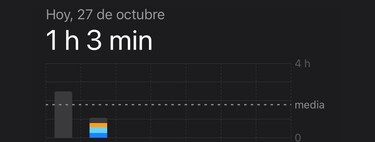
To combat this issue, it’s crucial to become aware of how much time you spend on your mobile and which applications consume most of it. Both Apple and Android devices feature a digital well-being section in settings that tracks your screen time and app usage statistics.
Check these statistics daily, and log your mobile usage. Take note of which times of day you use your phone the most. This knowledge will help you identify usage patterns and reduce phone time during crucial periods when you should be studying, exercising, or pursuing hobbies.
The Limits of Space and Time
Understanding how you use your mobile can reveal whether you are excessively engaging with non-work-related applications, whether during downtime or at times you should be winding down for sleep. This information enables you to adopt a “monk mode” approach during intense work or study periods, minimizing reliance on willpower alone to resist distractions.
To prevent your mobile from consuming your attention, implement an “Ulisses contract” . This strategy encourages you to make choices today that your future self will appreciate, avoiding the temptation to check notifications later.

The options within the digital well-being settings can be useful, allowing you to schedule focus modes or limit the use of certain applications during specific time slots, helping to automate limits and minimize interruptions.
Rediscovering Free Time
As with energy, habits are neither created nor destroyed ; they are merely transformed. Bad habits can’t simply be eliminated; they must be replaced with better ones. The same principle applies to your time.
The time you slowly reclaim from social media and videos can be redirected toward worthwhile activities: learning languages, reading, exercising, or spending quality time with friends.
Consider what you want to do with the time you are reclaiming . Recognizing that this time, once spent glued to a screen, can now be used for tangible growth gives you a purpose and a goal to work towards.
The Time Book
In the initial section, we urged you to become aware of your mobile usage and document it to identify patterns. Once you take action on this, continue to log your usage data, but this time also note how you spend the time you recover.
These records serve as proof of your small victories. If you manage to cut down your phone usage by ten minutes, document how that time was invested—whether it was reading a book, connecting with a friend, or accomplishing another meaningful task.
This practice acts as a reward for your efforts, contributing to your motivation and reinforcing your journey of transforming screen time into productive time.
By becoming more conscious of how you use your mobile phone and reclaiming your time, you can enhance your focus and productivity, leading to a more fulfilling life.