
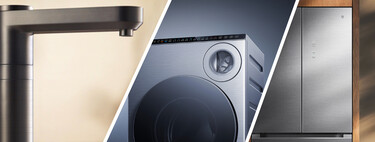
When Xiaomi celebrated its fiftieth anniversary two months ago, CEO Lei Jun presented a remarkable vision for the company’s future in consumer technology. From washing machines to smart taps, electric cars, and even cutting-edge chips, the announcements were vast and ambitious. However, what stood out notably was what was not mentioned: mobile phones.
In its fifteen-year history, Xiaomi has cemented its reputation as a company delivering functional mobile phones at a competitive price. The figures reflect its triumph: Xiaomi has consistently grown year after year in Spain, swiftly becoming the leader in mobile sales. With expectations for remarkable growth projected in the medium term remain high. Xiaomi broke the stereotypes surrounding Chinese technology, paving the way for others to follow in the Western markets.
This highlights a shift. Xiaomi’s future is not solely tied to mobile phones.
The recent events in May and June showcased products like smart glasses and the Yu7, highlighting a transformation the company has been diligently working on for years. Modern consumer technology extends beyond mobile phones (as shown by the unveiling of the Mix Flip 2), now encompassing everything we can connect. This encompasses all facets of our daily lives, from household appliances and watches to voice assistants and even electric cars.
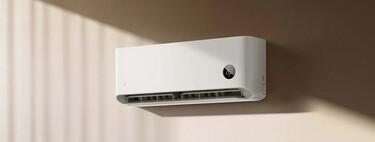
Xiaomi aspires to unify all technologies in our lives under its brand. This ambition is evident as the demand for the SU7 in China is proof that there is a significant appetite for “Xiaomi products” beyond phones—even in unexpected categories like air conditioning. Recently, Xiaomi launched a new product in Spain, positioning itself to cater to the increasing demand during the summer heatwaves: the MIJIA AIR CONDITIONER PRO ECO, available in two models—2.6 kW and 3.5 kW.
This launch represents Xiaomi’s ambition to expand into the Western market. Having established a diverse product line in China for years, Spain serves as a pivotal entrance. To delve deeper into this strategy and Xiaomi’s future path in both the global and local market, we engaged in a discussion with Borja Gómez Carrillo, the Country Manager of Xiaomi Iberia.
This is how Xiaomi earns money—they attract you and catch you
The air conditioning and Xiaomi plans
In your recent events, there has been an emphasis on appliances like washing machines and smart taps. What is Xiaomi’s overarching strategy for home solutions?
Xiaomi is predominantly recognized for its smartphones, but the ecosystem around the brand is gaining increasing significance. By “ecosystem,” we refer to our various products, such as scooters, security cameras, televisions, and of course, home appliances. This year, we’re launching air conditioning units, followed by refrigerators and washing machines at the end of the year.
Why are we doing this? As the smartphone market is highly saturated—featuring penetration rates exceeding 110%—competition has become fierce. Therefore, while Xiaomi continues to grow, our intention is to broaden the product range available to consumers, allowing for greater purchasing options.
Currently, we believe we are the only manufacturer capable of offering such a diverse selection. We aim to promote our “Human Car Home” concept, where connectivity between devices becomes seamless. For example, imagine leaving your office, connecting to your car, monitoring your home security cameras, or programming tasks in your kitchen—all from your smartphone.

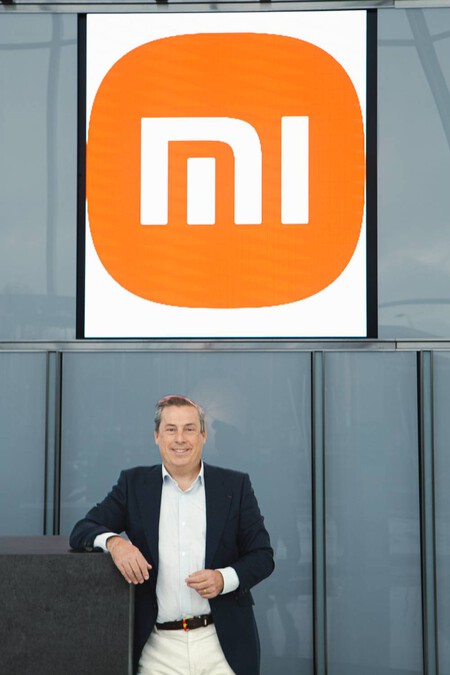
Borja Gómez, Country Manager of Xiaomi Iberia, during the interview at the Xiaomi offices in Spain.
It is interesting to note that your first product in Spain is air conditioning because it doesn’t intuitively connect to a smart home. Why prioritize this launch?
Our decision was strategic. As you know, we offer over 2,500 products in China. We assess consumer needs and viability for selling different products as we tailor our offerings. We felt an opportunity with air conditioning; it had to be launched in summer to meet market demand.
Additionally, the air conditioning units lend themselves well to connectivity. Our analysis of Spanish weather patterns and market dynamics indicates strong potential for success.
Is the decision to introduce it in Spain specific to your strategic approach?
Indeed. Not all of Europe will see the air conditioning units; the demand varies regionally. In southern Spain, the temperature dictates a larger market compared to the north.
Given the timeline with the air conditioning campaign, are you concerned about the late arrival?
While we may be slightly pressed for time, we felt the importance of launching now to show the complete ecosystem. Our timing is indeed tight; typically, campaigns are finalized early. However, our products are not complex to sell—a pivotal advantage.
Considering installation, maintenance, and after-sales service, how do you plan to manage this in Spain?
We are launching two models and will utilize our HUB for distribution. Our partners will facilitate direct delivery to consumers or distributors.
Will you consider establishing physical stores in Spain to showcase your appliances? Consumers may prefer in-person shopping for such products compared to smartphones.
Our goal is to open three stores this year, starting in Madrid. Future expansions will depend on market demands, possibly including locations in Barcelona or additional Madrid outlets. These stores will allow consumers to explore our entire product ecosystem—from smartphones to air conditioners and eventually, cars.
What to expect from Xiaomi
If I wanted to purchase the new Xiaomi air conditioner tomorrow, what would the distribution process entail? Where would I need to go?
Certainly, you can purchase it directly through our website, as well as through partnerships with retail outlets like Mediamarkt.
Will installation be mandatory with your service?
Yes, we offer a comprehensive service that includes installation as part of the air conditioner purchase. This approach ensures that the installation aligns with consumer expectations, given the complexities involved compared to smartphones.
However, at Mediamarkt, consumers do have the option to choose installation services.
Is this control over installation to maintain quality assurance?
Our primary goal is to ensure an excellent user experience. Air conditioning units are delicate products and require reliable after-sales support in case of any issues. We want to ensure every consumer has top-tier service, in every corner of Spain.
This service will cover 100% of Spain. No matter whether you buy in Seville or Santander, we aim to provide equal service and spare parts availability to every customer.

Aside from air conditioning, what other appliances are you planning to introduce in Spain this year? Do you have specific dates or models in mind?
We have not finalized dates yet, but by the end of the year, both the fridge and washing machine will be introduced. We’re currently determining which models to bring, as Spanish preferences differ from Chinese consumer expectations.
What is Xiaomi’s roadmap for 2026 and beyond?
There are several products under consideration for the Spanish market, but I can’t disclose specifics at this moment.
Given your vision of the “human car home,” do you believe Spain offers an ideal environment for testing this concept due to Xiaomi’s growing recognition?
It’s possible. Spain is an attractive market for pilot testing as consumers are open to trying new products and technologies.
With the rising trend of premium offerings in mobile markets, do you plan to extend this strategy to your entire range, including appliances?
Xiaomi has a clear policy of “honest prices.” Our strategy prioritizes delivering cutting-edge technology at consumer-friendly prices across all our products—be it smartphones, appliances, or even cars in the future.
As Xiaomi continues to innovate and expand beyond mobile phones, its focus on creating a connected ecosystem will undoubtedly reshape how consumers interact with technology in their homes. The ambition of becoming the go-to brand for not just mobile devices, but comprehensive smart living solutions, showcases the company’s vision for the future.